Archive for July 2024

Stress is contagious, even for dogs

Stress can make people pretty stinky. Humans have two main kinds of sweat glands. The eccrine glands produce sweat that we associate with exercise or warm weather – thin, watery and mostly odorless. We can thank apocrine glands for responding to stress by producing a thick fluid containing fats and proteins that skin bacteria love to digest. The result: stinky compounds somewhat reminiscent of vinegar or leeks. While humans may […]
Continue Reading →

Tiny Devils Hole pupfish make a big comeback

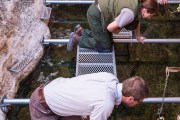
Devils Hole pupfish (Cyprinodon diabolis) are a tiny critically endangered fish that live in a pond in just one limestone cave, known as Devils Hole, in Death Valley, Nevada. In fact, their habitat is the smallest known for a vertebrate. Biologists from the Nevada Department of Wildlife, US Fish and Wildlife Service and the National Park Service have been painstakingly counting these tiny fish twice a year. Counting these fish […]

Continue Reading →

Researchers discover how hibernating ground squirrels protect their cells from self-destruction

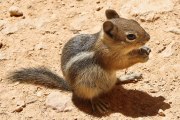
Programmed cell death, otherwise known as apoptosis, is an important physiological process that allows the body to get rid of cells that are no longer needed or are damaged. These functions help foster normal growth and development as well as prevent cancer. Apoptosis is a highly regulated process that involves various caspase enzymes, with caspase-3 being among the “executioner” enzymes responsible for the final stages of apoptosis and ultimate cellular […]

Continue Reading →

It’s all about the glucose

A lack of available food resources drives many species to forego reproduction until conditions improve. In other words, there is a trade-off between reproduction and foraging. This link was the subject of a recent study of Drosophila melanogaster published in the American Journal of Physiology – Regulatory, Integrative and Comparative Physiology.   To examine the link, researchers placed fed or food-deprived Drosophila into a testing arena with another animal of […]

Continue Reading →

New study provides more insight into the physiology of elite divers

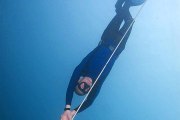
If the Olympics allowed marine mammals to compete, they would dominate free diving competitions in terms of breath holding duration and extreme physiology. Marine mammals also have adaptations that help prevent tissue damage from the lack of oxygen during such dives. For example, Weddell and northern elephant seals store large amounts of oxygen in their blood and muscles, thanks to abundant hemoglobin, which permits them to hold their breath for […]

Continue Reading →

Even shy animals find overcrowded conditions more stressful than bold animals

In a newly published study in the American Journal of Physiology – Regulatory, Integrative and Comparative Physiology, researchers examined the relationship between behavioral and physiological responses to stress in a model organism, zebrafish. Following a series of behavioral tests, the fish were classified as either shy or bold and were then exposed to either overcrowded (32 fish per liter) or control conditions (1.6 fish per liter). After 10 days, the […]

Continue Reading →