Archive for January 2025

Brain Power on a Budget: How Bullfrogs Survive Without Oxygen
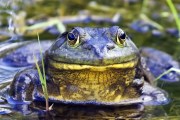
Did you know that your brain is really greedy? It uses about 5.7 kilograms of ATP every day, which is an incredible amount of energy! To keep up with such demand, the brain depends on an adequate supply of oxygen and nutrients, such as glucose. When oxygen or nutrient delivery are limited, like during a heart attack, stroke or in low-oxygen environments, the brain is unable to produce enough ATP […]

Continue Reading →

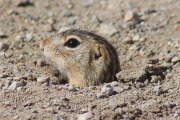
Celebrating National Squirrel Appreciation Day: Recent discoveries about ground squirrel hibernation

I am thrilled to have come across a calendar of fun and interesting “holidays” for all sorts of occasions, including celebrating nature and the animals around us. In honor of ‘National Squirrel Appreciation Day’, let’s take a moment to marvel at furry survival experts and the incredible science behind winter slumber in ground squirrels.     When temperatures drop, ground squirrels settle down for a long winter’s nap. During hibernation, their […]

Continue Reading →

Time Machine: Do horses produce more heat per day than humans, and what happened to Tusko?

In this post, we travel back to 1947 to explore a fascinating review by Dr. Max Kleiber from the University of California – Davis. Published in Physiological Reviews, this review examined the relationship between body size and metabolism. Simply asking the question of whether horses produce more heat per day than humans or rats will lead one to conclude that indeed they do because of their larger body size. However, […]

Continue Reading →

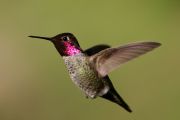
How hummingbirds beat the heat

On this National Bird Day, let’s dive into some fascinating research about one of nature’s most amazing species: hummingbirds. Last spring, Dr. Derrick Groom and his team in The Avian Energetics Lab at San Francisco State University, including students Cecilia Doan and Christian Guerzon, presented their research at the 2024 American Physiology Summit. Their study explored how these tiny birds manage water loss in a warm environment (30 degrees C). […]

Continue Reading →