
Agriculture, Aquaculture, and Livestock

Drug increases blood flow to the brain – Implications for stroke?

Researchers from Friedrich Schiller University (Jena, Germany) and Heinrich-Heine-University (Düsseldorf, Germany) teamed up to test whether a heart failure medication that is currently being tested might also improve blood flow in the brain. Their findings were published last month in the American Journal of Physiology, Heart and Circulatory Physiology. According to the study authors, the small blood vessels in the brains of sheep closely resemble those in the human brain. Using imaging techniques, they […]
Continue Reading →

Muscle Aging in American Quarter horses

Skeletal muscle function and structure change as we age. Humans typically experience a loss of muscle mass or muscle weakness which can greatly reduce mobility and stability. While much is known about aging skeletal muscle in humans and rodents, less is known about horses, which are rather athletic animals that are living longer due to advancements in veterinary care and retirement programs. Researchers from the University of Florida decided to explore how aging effects skeletal […]

Continue Reading →

Heat stress in livestock

With the approach of summer, a timely study was published in the American Journal of Physiology – Regulatory, Integrative and Comparative Physiology on whether inflammation plays a role in heat stress-related complications in muscles. Heat stress is a major problem in the livestock industry. In the United States alone it is reportedly associated with a loss of approximately $158 billion annually in the swine industry. To cool off, swine seek shade and often mud baths […]

Continue Reading →

Genetic regulation of horse conformation

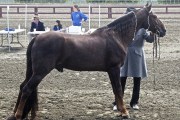
In a new study published in Physiological Genomics, researchers explored the role of genetics in the conformation of Tennessee Walking Horses. In other words, how close each animal they sampled looked to an “ideal” Tennessee Walking Horse.  According to Kylee Jo Duberstein (Department of Animal and Dairy Science, University of Georgia), there are five criteria that are examined when evaluating the conformation of a horse. These include “balance, structural correctness, way of going, […]

Continue Reading →