Climate Change

Primed for survival: How sea hares inspire new clues to protect the brain from low oxygen conditions such as stroke

Sea hares (Aplysia californica) live in coastal environments where oxygen levels can fluctuate unpredictably. Knowing this, researchers set out to explore how these animals tolerate regular exposure to hypoxia (low oxygen) with the hope of discovering clues that could teach us how to protect humans from hypoxia-related conditions, such as stroke. To do this, they compared offspring from two types of parents: those collected from the wild that likely experienced […]
Continue Reading →

Brown adipose tissue: not just a heater or fat-burning machine

Once dismissed as a feature only babies possess, brown adipose tissue (BAT), is widely recognized as the body’s metabolism-boosting, heat-generating fat. This Time Machine episode takes a look back at early research and new discoveries about this metabolism-boosting fat. According to a 2007 paper published in the American Journal of Physiology – Endocrinology and Metabolism, it was the ability for BAT to take up glucose that enabled its discovery in […]

Continue Reading →

Time Machine: Keeping it hot…or not

In todays’ Time Machine, we are taking a look back at a paper written by Dr. Henry Gray Barbour during his time in the Department of Pharmacology at Yale University School of Medicine. Published in Physiological Reviews in 1921, his paper examined how body heat is regulated in various species. In this review, Dr. Barbour explains that water is the best medium for conducting heat throughout the body. This is […]

Continue Reading →

Discovered by accident: Queen bumblebees can hibernate underwater!

Dr. Sabrina Rondeau, a postdoctoral fellow at the University of Ottawa, made a surprising discovery that has created quite the buzz. While checking on queen bumblebees hibernating in the refrigerator, she noticed that condensation had formed inside some of the containers housing the queen bumblebees. Interestingly, the bees survived the ordeal. Intrigued by how exposure to water might affect queen bees during hibernation, Dr. Rondeau conducted an experiment in Bombus […]

Continue Reading →

Surviving the heat: How humans and animals adapt to hot environments

Heat is a major physiological stressor that can damage proteins in the body, promote dehydration and even lead to death. Organisms living in hot environments must develop both behavioral and physiological mechanisms to prevent heat-related damage or illness. A recent review published in Physiology examined how humans and experimental animals adapt to heat (Laitano et al., 2025).    Organisms that tolerate heat effectively can maintain normal physiological functions even when […]

Continue Reading →

Celebrating National Squirrel Appreciation Day: Recent discoveries about ground squirrel hibernation

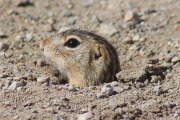
I am thrilled to have come across a calendar of fun and interesting “holidays” for all sorts of occasions, including celebrating nature and the animals around us. In honor of ‘National Squirrel Appreciation Day’, let’s take a moment to marvel at furry survival experts and the incredible science behind winter slumber in ground squirrels.     When temperatures drop, ground squirrels settle down for a long winter’s nap. During hibernation, their […]

Continue Reading →

How hummingbirds beat the heat

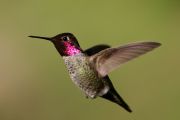
On this National Bird Day, let’s dive into some fascinating research about one of nature’s most amazing species: hummingbirds. Last spring, Dr. Derrick Groom and his team in The Avian Energetics Lab at San Francisco State University, including students Cecilia Doan and Christian Guerzon, presented their research at the 2024 American Physiology Summit. Their study explored how these tiny birds manage water loss in a warm environment (30 degrees C). […]

Continue Reading →

When Earth Roars: How Volcanoes Shape Life and Biodiversity

Two days ago, as families around the world gathered for the holidays, Mount Ruang in Indonesia erupted, sending ash and smoke high into the atmosphere. This highly active volcano has erupted more than 60 times since the 16th century, with several considered major events. This eruption marked the 4th in a series of eruptions in the last several days around the world including Nicaragua (Mount Masaya), Hawaii (Mount Kilauea), and […]

Continue Reading →

Time Machine: Homeostasis and ‘The Wisdom of the Body’

In this time machine post, we travel back to 1929 to discuss an article written by Dr. Walter B. Cannon, published in Physiological Reviews. Among other achievements, Dr. Cannon is perhaps best known for being the first to coin the term “homeostasis” and to describe “fight or flight responses” in organisms. As a review article, Dr. Cannon summarized observations made by others about how organisms appear to “maintain their own […]

Continue Reading →

Tiny Devils Hole pupfish make a big comeback

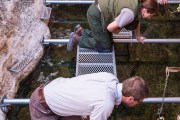
Devils Hole pupfish (Cyprinodon diabolis) are a tiny critically endangered fish that live in a pond in just one limestone cave, known as Devils Hole, in Death Valley, Nevada. In fact, their habitat is the smallest known for a vertebrate. Biologists from the Nevada Department of Wildlife, US Fish and Wildlife Service and the National Park Service have been painstakingly counting these tiny fish twice a year. Counting these fish […]

Continue Reading →