Climate Change

Domestic zebrafish are less plastic
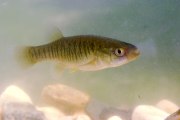
Zebrafish have been used in medical research since at least the 1970’s as their anatomy, physiology, as well as genetics are similar to humans. Other advantages to studying zebrafish is that they are inexpensive to raise, and they reproduce well in captivity. The ability to adjust one’s physiology in response to varying environments is called plasticity. An organism may encounter any number of environmental fluctuations (light/dark, temperatures, predation risk, noise, […]
Continue Reading →

Are declines in food availability to blame for the menu change?

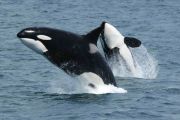
Yesterday, we marveled over the recent sightings of two killer whales targeting sharks off the coast of South Africa. The recent uptick in shark hunting has scientists wondering how the loss of great white sharks will impact the ecosystem. But it also has some wondering why the orcas are targeting so many sharks when their diets typically consist of a variety of fish and marine mammals.   Clues may lie […]

Continue Reading →

Killer whales scare off sharks

A pair of killer whales, nicknamed ‘Port and Starboard’, has been terrorizing great white sharks. In recent years as many as 8 sharks (possibly more) have succumbed to the pair. Many of the discovered sharks were missing their fatty liver and sometimes their heart. While orca hunting escapades are not particularly newsworthy, the antics of these orcas have attracted the attention of scientists as they are altering the ecosystem. Once […]

Continue Reading →

More than milk

Prolactin is an important pituitary hormone in mammals that works with oxytocin to provide milk for offspring. It also plays a role in promoting bonding between new mothers and their offspring. But did you know that non-mammalian vertebrates have prolactin too? Considering non-mammalian organisms do not have mammary glands, it must serve a different purpose in these animals.   As it turns out, prolactin is very important in the ability […]

Continue Reading →

EB2022: Facing Oxygen Challenges

I learned a lot about how animals adapt to changing environmental oxygen levels in the Experimental Biology symposium on “Functional Integration across the Oxygen Cascade in the Face of Challenging Environments.” Here is what I learned… The first presenter, Dr. Lara do Amaral-Silva (postdoctoral fellow at the University of North Carolina at Greensboro working with Dr. Joseph (Joe) Santin), spoke about her research on adaptations in the bullfrog “super-brain” that […]

Continue Reading →

EB 2022: Adapting to a changing climate

EB 2022 was a fantastic meeting (as usual) for comparative physiology. This meeting marked the last Experimental Biology conference as each society will be hosting their own meetings going forward. I soaked up as much as I could and will be sharing what I learned at the meeting over the coming weeks. “Predicting Species Physiological Responses to a Changing Climate” The first speaker in this symposium was Dr. Hollie Putnam […]

Continue Reading →

Stranger than science fiction: treefrogs that freeze and live to tell the story

Today we have a guest blog written by Elizabeth Evans (pictured above), a graduate student at the University of Dayton working in the laboratory of Dr. Carissa Krane. She presented her research on freeze tolerance today at the 2022 Experimental Biology conference in Philadelphia. She wrote the award-winning blog entry below which earned the 2022 Dr. Dolittle Travel Award to attend the conference. Congratulations Elizabeth!! Stranger than science fiction: treefrogs […]

Continue Reading →

2022 August Krogh Distinguished Lecturer, Dr. Patricia Schulte

Each year, the Comparative and Evolutionary Physiology section of the American Physiological Society presents their highest award, the August Krogh Distinguished Lecture, to a comparative physiologist who “has made major and meritorious contributions” to the field. Dr. August Krogh (1874-1949) was a physiologist who won the Nobel Prize in Physiology or Medicine in 1920. He was very interested in zoology and joined the University of Copenhagen as an Associate Professor […]

Continue Reading →

Surviving environmental challenges

Red tides happen when dinoflagellate algae populations increase and turn the water a shade of red due their red pigments. These algae consume oxygen in the water and release carbon dioxide and other acidic products that make the surrounding water acidic and hypoxic. These events are becoming more common with climate change. In fact, the most recent event off the coast of Sothern California occurred in 2020 and resulted in […]

Continue Reading →

Shape-shifting animals adapting to climate change

A recent review of the existing scientific literature found evidence suggesting that warm-blooded animals may be literally shape-shifting to adapt to climate changes. According to Allen’s rule, animals living in warmer climates have larger appendages than those living in cold climates, which helps increase the available surface area for heat loss to the environment. Such heat exchange mechanisms are very important in thermoregulation to avoid retaining excess heat. The authors […]

Continue Reading →