Diet and Exercise

Surviving the heat: How humans and animals adapt to hot environments

Heat is a major physiological stressor that can damage proteins in the body, promote dehydration and even lead to death. Organisms living in hot environments must develop both behavioral and physiological mechanisms to prevent heat-related damage or illness. A recent review published in Physiology examined how humans and experimental animals adapt to heat (Laitano et al., 2025).    Organisms that tolerate heat effectively can maintain normal physiological functions even when […]

Continue Reading →

The gatekeepers of life: Exploring the complex role of GPCRs

Cell membranes are incredibly complex environments that play crucial roles in interacting with other cells, sensing specific molecules in the body, controlling what crosses the membrane, and other vital functions. The composition of these membranes varies between organs in an animal, between similar organs in different species, and even between individuals of the same species. Think of cell membranes as gatekeepers, responsible for detecting various chemical signals (such as ions […]

Continue Reading →

To eat or not to eat, that is the question

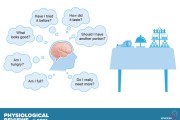
Ever wonder how your body knows when, what and how much to eat, what to crave, or when to stop? Have you ever found yourself indulging in a little extra during the holidays, even though you’re not actually hungry? It turns out, the science behind our eating habits is far more complicated than we realize— and it’s not just about willpower or self-control. A fascinating comprehensive review published by Watts […]

Continue Reading →

The Science Behind Human Endurance Capabilities

Among mammals, humans are known for having exceptional endurance. For example, persistence hunters can run for 2-5 hours to wear out their prey, while marathoners routinely run ~4.5 hours on average (Schulte et al., 2015). Sure, a cheetah can run fast, but it can’t run as long as a human. How did humans develop such exceptional endurance? When vertebrates moved to dry land, they needed to develop lungs to extract […]

Continue Reading →

Time Machine: Nutritive significance of amino acids

In this Time Machine post, we travel back to 1938 to check out a manuscript on the importance of amino acids in nutrition authored by Dr. William Cumming Rose (1887-1985), professor of biochemistry at the University of Illinois, published in Physiological Reviews. His research on the importance of amino acids in the physiology of an organism culminated in 124 research, review or biographical articles and his receipt of the National […]

Continue Reading →

Finches and flies with a taste for blood

Predators with a taste for blood abound on the remote Galapagos Islands… Meet the Vampire Ground Finch 19 different species of finches can be found on the Galapagos Islands. Observations of their various beak shapes, specialized for different diets and purposes, helped Charles Darwin develop the theory of evolution. One species I do not recall learning about in Biology class, however, is the vampire ground finch (Geospiza septentrionalis), which can […]

Continue Reading →

Physiology on the Road: Midland physiologists search for answers

The Midland Society of Physiological Sciences, comprised of physiologists in Nebraska, South Dakota, and North Dakota is hosting their annual chapter meeting this weekend at the University of South Dakota. Dr. Javier Stern, Distinguished University Professor and Director of the Center for Neuroinflammation and Cardiometabolic Diseases at Georgia State University will present the Keynote lecture on the role of neuropeptides in the hypothalamus of the brain. The title of his […]

Continue Reading →

From Hibernation to Healing: Unlocking Genomic Secrets for Human Therapies

I was just cleaning my desk and came across an issue of The Physiologist Magazine from March that had ended up under a pile of papers., some of which were admittedly much older. Clearly, I should clean my desk more often. Anyway, in perusing the issue I came across a gem… The March issue featured Dr. Joanna Kelley, associate professor at the University of California Santa Cruz. Dr. Cruz was […]

Continue Reading →

Physiology on the Road: Mophys 2024!

The Missouri Physiological Society (mophys) is holding their annual chapter meeting tomorrow at the University of Missouri, Kansas City (UMKC) campus! Here are just some of the highlights showcasing ways in which physiologists in Missouri are advancing science and medicine: Felix Yang (Graduate student at the University of Missouri, Kansas City; Mentor: Dr. Xiang-Ping Chu) will present research on certain ion channels in the brain that are associated with detecting […]

Continue Reading →

Guest Blog: Fasting as a strategy to build athletic diving capacity

Kaitlin Allen is a graduate student at the University of California, Berkeley where she studies the physiology of elephant seals in the laboratory of Dr. José Pablo Vázquez-Medina. She received the 2024 Dr. Dolittle Travel Award from the Comparative and Evolutionary Physiology section of the American Physiological Society to attend the 2024 American Physiology Summit in Long Beach, CA (April 4-7). Kaitlin prepared this award-winning guest blog entry to describe […]

Continue Reading →