Environment

Reducing gas emissions…from cows

No joke: California Governor Jerry Brown signed a bill to regulate ‘gas’ emissions from cows along with other sources of greenhouse gases, of course. According to an interview from NPR, dairy cows are the number one producer of methane in California. The problem with methane is that it is a major component of smog, although according to scientists at the University of California Santa Barbara, it is not the leading cause of global warming. In fact, agriculture-related […]
Continue Reading →

Pigeons in the lead mine?

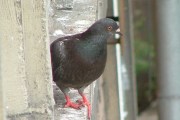
With reported lead poisonings in cities such as Flint Michigan, methods to detect risk of exposure are desperately needed. Since pigeons live in close proximity to humans, could pigeons be the ‘canary in the lead mine’? Researchers at Columbia University in New York City measured the concentrations of lead in the blood of 825 ill or injured feral pigeons to determine whether the animals could serve as bioindicators of levels in the environment. Their results were published […]

Continue Reading →

How the rectum helps prevent dehydration in saltwater

Teleost fish living in saltwater environments are constantly compensating for water loss. This happens because their surroundings have higher concentrations of salts than their plasma and the rule of thumb in Biology is: water follows salt.  Thus these fish must somehow compensate for water loss in order to prevent dehydration. One way they do this is by drinking a lot of water. Ions are then removed from the water in the intestines which […]

Continue Reading →

Protecting the Great Lakes

In a prior post summarizing the annual Michigan Physiological Society Meeting, I briefly mentioned the work from Adrian Vasquez, Milad Qazazi, Andrew Failla, Sanjay Rama, Samuel Randall, and Jeffrey Ram from Wayne State University, Detroit, MI). They were exploring the diversity of water mites, a type of arachnid, in Western Lake Erie and they found a mixture of both native and invasive species. Dr. Jeffrey Ram, Professor at the School of Medicine at […]

Continue Reading →

Cartilaginous fish need to regulate sulfate too

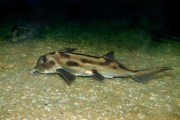
Seawater contains sulfate concentrations that are nearly 40 times those measured in plasma. Therefore, it is easy to see why fish would need to develop mechanisms to keep sulfate within a physiologically normal range. The kidneys of teleost fish have been known to excrete excess sulfate in the urine. However until now, it was not known whether the kidneys of cartilaginous fish do the same thing as their kidneys are rather complex. In a new […]

Continue Reading →

Recap of 2016 Michigan Physiological Society

The Michigan Physiological Society, a chapter of the American Physiological Society, held their 3rd annual meeting last week. As mentioned in a prior post, the keynote address was given by Comparative Physiologist Dr. Hannah Carey (University of Wisconsin School of Veterinary Medicine). You can read about her research in the prior post. Here are other highlights from the meeting: Seminars: or as I prefer to view them… Kelsy Kusch (Undergraduate Student, […]

Continue Reading →

Experimental Biology 2016 – Day 4

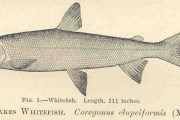
Still going strong…here are the highlights from several sessions held on Day 4: John Eme (California State University, San Marcos) presented data testing the effects of varying temperatures mimicking overwintering conditions on embryonic development of Lake whitefish. He found that indeed exposure to variable incubation temperatures between 2-8 deg C resulted in increased mortality. Moreover, the embryos hatched earlier and were smaller than animals exposed to constant temperatures. Nariman Hossein-Javaheri et al., (University […]

Continue Reading →

Experimental Biology 2016 – August Krogh Distinguished Lecturer: Dr. Jon Harrison

This year’s August Krogh Distinguished lecture, the highest award given to an accomplished Comparative Physiologist from the Comparative and Evolutionary Physiology section of the American Physiological Society was awarded to Dr. Jon Harrison, Arizona State University. Dr. Harrison gave an outstanding seminar in which he reviewed some of his major research discoveries. His work has included examining how insects tolerate various temperatures and how changes in the levels of atmospheric […]

Continue Reading →

Experimental Biology 2016 – Day 2

Today was a great day for trainees in comparative physiology! Here are some of the highlights from their sessions: Poster presentations: Alexis MacDonald et al., (Union College – Mentor Dr. Scott Kirkton) presented research showing that grasshopper skeletal muscles may use lactate for energy! Similarly, Dongying Wang et al., (Saint Louis University – Mentor Dr. Daniel Warren) also showed that skeletal muscle from painted turtles may use lactate. I guess it […]

Continue Reading →

Heat stress in livestock

With the approach of summer, a timely study was published in the American Journal of Physiology – Regulatory, Integrative and Comparative Physiology on whether inflammation plays a role in heat stress-related complications in muscles. Heat stress is a major problem in the livestock industry. In the United States alone it is reportedly associated with a loss of approximately $158 billion annually in the swine industry. To cool off, swine seek shade and often mud baths […]

Continue Reading →