Environment

Microplastic Filters Inspired by Nature

Researchers have recently developed an innovative filter capable of removing over 95% of microplastics from water. This “biomass fibrous” foam filter, made from cotton-derived cellulose and chitin sourced from squid, retains its efficiency across at least five cycles of filtering lake, coastal, irrigation, and still water (Wu et al., 2024). Meanwhile, other scientists are studying the natural filtration mechanisms of marine animals like manta rays, whales, and fish gills to […]

Continue Reading →

When Earth Roars: How Volcanoes Shape Life and Biodiversity

Two days ago, as families around the world gathered for the holidays, Mount Ruang in Indonesia erupted, sending ash and smoke high into the atmosphere. This highly active volcano has erupted more than 60 times since the 16th century, with several considered major events. This eruption marked the 4th in a series of eruptions in the last several days around the world including Nicaragua (Mount Masaya), Hawaii (Mount Kilauea), and […]

Continue Reading →

Physiology on the road: 17th annual Arizona Physiological Society conference

Physiologists in Arizona also shared their research this past weekend at the 17th annual Arizona Physiological Society conference held at the University of Arizona in Tucson. 2024 Arizona Physiological Society Established Scientist Keynote Address The Established Scientist Keynote Address was given by Dr. Meredith Hay, Professor and former Executive Vice President and Provost of The University of Arizona in Tucson. Dr. Hay also served as President of the American Physiological […]

Continue Reading →

Physiologists in California meet today to discuss the latest research

The California Society of Physiologists is hosting their annual meeting today at the University of California Davis campus! Adapting to high altitude The keynote address will be given this evening by Dr. Tatum Simonson (Associate Professor, University of California San Diego) who will speak about, “Variation in human responses to low oxygen: Insights from Mount Everest to Machu Picchu.” Together with Dr. Francisco Villafuerte (Universidad Peruana Cayetano Heredia, Lima, Peru) […]

Continue Reading →

Time Machine: Homeostasis and ‘The Wisdom of the Body’

In this time machine post, we travel back to 1929 to discuss an article written by Dr. Walter B. Cannon, published in Physiological Reviews. Among other achievements, Dr. Cannon is perhaps best known for being the first to coin the term “homeostasis” and to describe “fight or flight responses” in organisms. As a review article, Dr. Cannon summarized observations made by others about how organisms appear to “maintain their own […]

Continue Reading →

From Hibernation to Healing: Unlocking Genomic Secrets for Human Therapies

I was just cleaning my desk and came across an issue of The Physiologist Magazine from March that had ended up under a pile of papers., some of which were admittedly much older. Clearly, I should clean my desk more often. Anyway, in perusing the issue I came across a gem… The March issue featured Dr. Joanna Kelley, associate professor at the University of California Santa Cruz. Dr. Cruz was […]

Continue Reading →

Time Machine: What in the world is ‘anhydremia’?

You’ve probably heard the term “dehydration”, but have you heard about “anhydremia”? We obtain water through food and drinks as well as metabolism. In fact, metabolic processes account for about 5-10% of water input (Lorenzo et al., 2019). We lose water daily through evaporation, breathing, urine, and feces. If an organism loses more water than they ingest, or can produce through metabolic processes, the water volume in their blood declines […]

Continue Reading →

Tiny Devils Hole pupfish make a big comeback

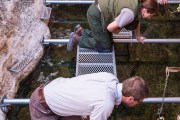
Devils Hole pupfish (Cyprinodon diabolis) are a tiny critically endangered fish that live in a pond in just one limestone cave, known as Devils Hole, in Death Valley, Nevada. In fact, their habitat is the smallest known for a vertebrate. Biologists from the Nevada Department of Wildlife, US Fish and Wildlife Service and the National Park Service have been painstakingly counting these tiny fish twice a year. Counting these fish […]

Continue Reading →

Researchers discover how hibernating ground squirrels protect their cells from self-destruction

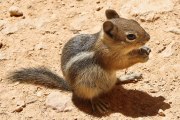
Programmed cell death, otherwise known as apoptosis, is an important physiological process that allows the body to get rid of cells that are no longer needed or are damaged. These functions help foster normal growth and development as well as prevent cancer. Apoptosis is a highly regulated process that involves various caspase enzymes, with caspase-3 being among the “executioner” enzymes responsible for the final stages of apoptosis and ultimate cellular […]

Continue Reading →

Even shy animals find overcrowded conditions more stressful than bold animals

In a newly published study in the American Journal of Physiology – Regulatory, Integrative and Comparative Physiology, researchers examined the relationship between behavioral and physiological responses to stress in a model organism, zebrafish. Following a series of behavioral tests, the fish were classified as either shy or bold and were then exposed to either overcrowded (32 fish per liter) or control conditions (1.6 fish per liter). After 10 days, the […]

Continue Reading →