Extreme Animals

How Animals Deal with Stress

  Victor Zhang (Graduate Student working with Dr. Loren Buck at Northern Arizona University) gave an interesting talk on his research to measure stress and activity patterns in free living arctic ground squirrels. They found overall that females were less stressed than males although stress levels and activity varied during lactation. I think some human mothers can agree with those observations. Oliver Wearing (Graduate student working with Dr. Graham Scott […]

Continue Reading →

Physiology in Arizona – Part 1

This past weekend the Arizona Physiological Society held their 11th annual conference on the Tempe campus of Arizona State University. There were so many oral and poster presentations on comparative physiology that I will spend this entry focusing on the oral sessions. The Keynote address was given by Dr. Michael Joyner (Mayo Clinic, Rochester) who spoke about the importance of not just focusing research efforts on reductionist approaches, including many […]

Continue Reading →

Ohio is talking about fixing broken hearts, the physiology of freezing, combating opioid addiction and more

The Ohio Physiological Society held their 33rd Annual Meeting at the University of Cincinnati this weekend. The keynote address was given by Dr. Mark Sussman from San Diego State University. He spoke about current research strategies that aim to improve the ability for the heart to repair itself after heart failure. Dr. Perwez Alam (University of Cincinnati) also spoke about using siRNA to try to repair heart tissue after heart attacks and […]

Continue Reading →

Extreme fasting

  Northern Elephant seals (Mirounga angustirostris) are pretty extreme animals, at least when it comes to fasting. Pups nurse for about 1 month, during which time they greatly increase their body fat. After nursing, they typically fast for up to 3 months. A new study was designed to explore how their adipose (fat) tissue changes after this prolonged fast. Researchers at the University of California at Merced were able to […]

Continue Reading →

The ultimate fathers

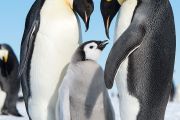
On this Father’s Day, I would like to pay tribute to a few of nature’s most ‘devoted’ fathers. Take the emperor penguin for example. If you have ever watched the movie March of the Penguins, or even Happy Feet, then you know these avian fathers are rock stars of parenting. Males are responsible for keeping the eggs warm for two months while the females go away to feed. They do […]

Continue Reading →

Sleep vs torpor

  I read an interesting review article published in Physiology comparing the low metabolic states of non-rapid eye movement sleep (NREM) and torpor. According to the article, all mammals experience NREM sleep patterns during which energy expenditure is decreased and body as well as brain temperatures decline. Animals that experience torpor (hummingbirds, arctic ground squirrels, some mice, bears, etc) have reduced metabolic rates and body temperatures that dip below baseline. NREM […]

Continue Reading →

Green-blooded lizards

Researchers have known that some lizards have green blood due to bile pigments: In fact, six species of lizards found in New Guinea are known to have green blood. The levels of bile found in their blood are four times higher than the toxic level for humans. New research shows that green blood evolved independently 4 times in evolutionary history. These findings suggest that high levels of circulating green bile […]

Continue Reading →

Brine shrimp tolerance of environmental changes

Brine shrimp, Artemia franciscana, are neat little aquatic crustaceans. According to the University of Utah, these tiny creatures grow to about 1cm in length. They are a favorite meal choice of some migratory birds and they are often sold for use as food for fish destined for human consumption. Christopher Melendez, a graduate student in the lab of Dr. Casey Mueller at California State University San Marcos, presented his research on brine […]

Continue Reading →

What lurks in the water…

Dr. Craig Franklin from the University of Queensland spoke yesterday about his research with crocodiles. After evaluating hundreds of recordings from telemetry instrumentation and satellite tags of the animals, the data showed that crocodiles regulate their body temperature much like fish. This means that crocodile body temperature is often dictated by their surrounding water temperature. Dr. Iskander Ismailov, a Research Assistant Professor from lab of Dr. Michael Friedlander at Virginia […]

Continue Reading →