Extreme Animals

Big-brained birds

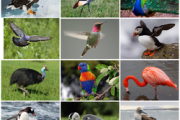
Birds get such a bad rap when it comes to intelligence. Sure they have relatively small brains, but scientists have known they are similar to primates with respect to their cognitive abilities. New research published in the Proceedings of the National Academy of Sciences presents data showing how this apparent dichotomy is possible. They found that the brains of songbirds and parrots pack two times the number of neurons as a primate […]
Continue Reading →

Limb regeneration in brittle stars

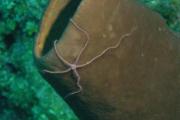
A new study published in Frontiers in Zoology examined the developmental process involved in regulating limb regeneration in brittle stars (Amphiura filiformis) following amputation of an arm. Limb regeneration is a multi-stage process involving initial healing and repair of the wounded site, initial growth of the limb followed by development of more complex layers of cells until ultimately the limb has been fully regenerated. Understanding this process in brittle stars may lead to […]

Continue Reading →

Experimental Biology – Day 3

I LOVE THIS MEETING! DAY 3 included several very interesting comparative physiology sessions. Eldon Braun (University of Arizona) spoke about how birds have a unique way to prevent water loss and thereby dehydration. In mammals, the kidneys are responsible for recovering water from the urine. However when birds are well-hydrated, the urine enters the colon and moves backwards up the gastrointestinal tract to facilitate water reabsorption prior to voiding the […]

Continue Reading →

Experimental Biology 2016 – Day 4

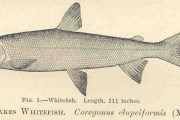
Still going strong…here are the highlights from several sessions held on Day 4: John Eme (California State University, San Marcos) presented data testing the effects of varying temperatures mimicking overwintering conditions on embryonic development of Lake whitefish. He found that indeed exposure to variable incubation temperatures between 2-8 deg C resulted in increased mortality. Moreover, the embryos hatched earlier and were smaller than animals exposed to constant temperatures. Nariman Hossein-Javaheri et al., (University […]

Continue Reading →

Experimental Biology 2016 – Day 2

Today was a great day for trainees in comparative physiology! Here are some of the highlights from their sessions: Poster presentations: Alexis MacDonald et al., (Union College – Mentor Dr. Scott Kirkton) presented research showing that grasshopper skeletal muscles may use lactate for energy! Similarly, Dongying Wang et al., (Saint Louis University – Mentor Dr. Daniel Warren) also showed that skeletal muscle from painted turtles may use lactate. I guess it […]

Continue Reading →

Flight advantages in older hummingbirds

In a new study published in The Auk, scientists report that well-fueled older tiny Ruby-throated Hummingbirds (Archilochus colubris) might be capable of non-stop flights of over 4,000 kilometers, wind conditions permitting. They made this remarkable observation while studying birds from 2010-2014 as the animals made stopovers at a wildlife refuge during their annual migration to South America. In general, older birds not only showed up at the wildlife refuge in Alabama earlier than younger birds, they also tended […]

Continue Reading →

Beware of freezing hearts

Thirteen-lined ground squirrels (Ictidomys tridecemlineatus) are really cute when they hibernate (above). During torpor bouts, their body temperature decreases to a few degrees Celsius and their metabolism drops by as much as 95% with heart rates ranging from only 3-10 beats per minute. These bouts of torpor are interrupted by periodic arousals every couple of weeks during which their metabolism increases as body temperature elevates to 37 degrees Celsius. What is so fascinating is […]

Continue Reading →

The amazing cockroach

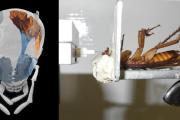
Testing the bite force of American cockroaches. Image from: Tom Weihmann | University of Cambridge I’ll admit I get a bit squeamish when I see a cockroach. However, after reading new research about the “ew” inspiring creatures, I have a bit more respect for them. Not only can these bugs run vertically up walls, survive nuclear war and live without their head for weeks (thus I suggest squishing the whole body), new […]

Continue Reading →

The seal of enigma!

I am excited to present this guest blog from Bridget Martinez, graduate student from the University of California, Merced. She has been studying elephant seals in the laboratory of Dr. Rudy Ortiz. She had presented her research at the 2015 Experimental Biology conference in Boston, MA which was mentioned in a prior blog . Here is her description of her research: Bridget Martinez, Graduate Student, University of California – Merced […]

Continue Reading →

T. Rex – Just a ‘big angry chicken’?

If you have not already had a chance to see it, the T. Rex Autopsy airing on the National Geographic channel is a must-see! They literally created a model of T. Rex based on available evidence about T. Rex and other dinosaurs as well as evidence from modern birds and then performed an “autopsy”. The conclusion: T. Rex was basically a ‘big angry chicken’ – Love it!! It will be airing again […]

Continue Reading →