Extreme Animals

From Hibernation to Healing: Unlocking Genomic Secrets for Human Therapies

I was just cleaning my desk and came across an issue of The Physiologist Magazine from March that had ended up under a pile of papers., some of which were admittedly much older. Clearly, I should clean my desk more often. Anyway, in perusing the issue I came across a gem… The March issue featured Dr. Joanna Kelley, associate professor at the University of California Santa Cruz. Dr. Cruz was […]

Continue Reading →

Time Machine: What in the world is ‘anhydremia’?

You’ve probably heard the term “dehydration”, but have you heard about “anhydremia”? We obtain water through food and drinks as well as metabolism. In fact, metabolic processes account for about 5-10% of water input (Lorenzo et al., 2019). We lose water daily through evaporation, breathing, urine, and feces. If an organism loses more water than they ingest, or can produce through metabolic processes, the water volume in their blood declines […]

Continue Reading →

Lungless frogs are not so lungless after all

An article describing a “lungless” frog species residing in Borneo was retracted at the request of the lead author earlier this month in light of new data. Using traditional dissection and histology techniques, Dr. David Bickford (who worked at the National University of Singapore at the time) and colleagues had described the apparent lack of lungs in Barbourula kalimantanensis frogs, which would place this species among only a few known […]

Continue Reading →

Out of the cave and into the lab: Why it’s time to go bat-ty in research!

As we talked about previously, bats are amazing mammals. Like Batman, they fly and fight off many potential enemies. – albeit their enemies are typically microscopic as opposed to cartoon-like super-villains. Their remarkable resilience to cancers and various pathogens has attracted the attention of scientists and even resulted in the formation of the Bat1K Consortium aimed at sequencing the genome of various species of bats to search for clues that […]

Continue Reading →

Tiny Devils Hole pupfish make a big comeback

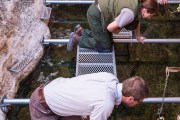
Devils Hole pupfish (Cyprinodon diabolis) are a tiny critically endangered fish that live in a pond in just one limestone cave, known as Devils Hole, in Death Valley, Nevada. In fact, their habitat is the smallest known for a vertebrate. Biologists from the Nevada Department of Wildlife, US Fish and Wildlife Service and the National Park Service have been painstakingly counting these tiny fish twice a year. Counting these fish […]

Continue Reading →

Researchers discover how hibernating ground squirrels protect their cells from self-destruction

Programmed cell death, otherwise known as apoptosis, is an important physiological process that allows the body to get rid of cells that are no longer needed or are damaged. These functions help foster normal growth and development as well as prevent cancer. Apoptosis is a highly regulated process that involves various caspase enzymes, with caspase-3 being among the “executioner” enzymes responsible for the final stages of apoptosis and ultimate cellular […]

Continue Reading →

New study provides more insight into the physiology of elite divers

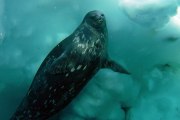
If the Olympics allowed marine mammals to compete, they would dominate free diving competitions in terms of breath holding duration and extreme physiology. Marine mammals also have adaptations that help prevent tissue damage from the lack of oxygen during such dives. For example, Weddell and northern elephant seals store large amounts of oxygen in their blood and muscles, thanks to abundant hemoglobin, which permits them to hold their breath for […]

Continue Reading →

Researchers discover a biological signature that can be used to predict the maximum lifespan of mammals

With the multitude of anti-aging products on the market today, it may be hard to believe that humans are one of the longest-living mammals. Why organisms age and how to slow down this process, or at least ensure that organisms stay healthy as they age, has been on the minds of many researchers over the years. Now, an international team of researchers called the Mammalian Methylation Consortium, led by Dr. […]

Continue Reading →

Speaking of hypoxia tolerance…

Amy Klink, a graduate student working in the laboratory of Dr. Allyson Hindle at the University of Nevada, Las Vegas, has been studying hypoxia tolerance of Weddell seals. These remarkable animals can hold their breath for 90 minutes and dive as deep as 900 meters! During such long and deep dives, these seals slow down their heart rate and constrict blood vessels in visceral as well as peripheral organs. As […]

Continue Reading →

What sea turtles can teach us about hypoxia tolerance

Imagine being able to explore the Earth’s oceans without needing special oxygen equipment. Loggerhead sea turtles have this ability and can actually hold their breath for up to 7 hours! According to the Guiness Book of World Records, Budimir Šobat from Croatia set the record in 2021 for being able to hold his breath for 24 minutes and 37.36 seconds underwater. While quite remarkable, he would need to hold his […]

Continue Reading →