Extreme Animals

Sleep prolongs lifespan

If only all mammals could hibernate. Studies have shown that some species of hibernating animals live longer and age more slowly than animals that do not hibernate. In fact, a recent study has shown that hibernation slows biological aging in yellow-bellied marmots. During hibernation, an animal’s metabolism slows to conserve energy. In the case of the yellow-bellied marmots, metabolism drops to only 1% of non-hibernating levels. The researchers observed that […]

Continue Reading →

Physiological Desalination

Ellie Runiewicz, an undergraduate student in the laboratory of Dr. Jason Breves at Skidmore College presented research on osmoregulation in teleost fish at the American Physiology Summit last month. Ellie’s research examined how Atlantic salmon are able to remove salts from the water they drink. When these fish live in marine environments, they are constantly drinking saltwater. Processing the water to remove the salts is therefore really important to their […]

Continue Reading →

2023 August Krogh Distinguished Lecturer – Dr. Tobias Wang, Aarhus University

Congratulations to Dr. Tobias Wang (Aarhus University), recipient of the 2023 August Krogh Distinguished Lectureship at the American Physiology Summit. Dr. Wang’s lecture, titled Digesting snakes are a feast for integrative physiology”, was fascinating! This was such a well-deserved honor. In fact, not only did he give a lecture describing his research on the digestive physiology of snakes, but he also gave an invited talk about blood pressure regulation in […]

Continue Reading →

How snakes fight infection quickly

In honor of St. Patrick’s Day today, I thought we’d talk about snakes today. Vertebrates defend themselves from infections with the help of the adaptive and innate immune systems. The first responder to an infection is typically the innate immune system, which is not specific to a particular pathogen. This system helps to prevent the infection from spreading and uses various toxins to kill pathogens. The adaptive immune response, on […]

Continue Reading →

Infertility is not an issue for naked mole rats

Naked mole-rats have attracted the attention of scientists once again. Not only do they live very long lives (30+ years), while typically avoiding cancer, females remain fertile their whole life. Unlocking their secrets to avoiding menopause may lead to new ways to treat infertility. New research has identified their tricks for lifelong fertility. It turns out that female naked mole-rats have 1.5 million egg cells (oocytes) when they are born, […]

Continue Reading →

Now we know how life underground reduces metabolism

…at least for mole-rats. African mole-rats live in dark underground dwellings where oxygen and food are scarce, and humidity and temperatures are high. These animals have low metabolic rates and body temperatures uniquely adapted to their life underground. Metabolism is controlled in part by thyroid hormones. To understand the role of thyroid hormone in mole-rats, researchers examined the thyroid gland and hormones in naked mole-rats (Heterocephalus glaber) as well as […]

Continue Reading →

Hummingbirds can choose how deep to sleep

Could you imagine drinking a can of soda every minute just to support your high metabolism? Amazingly, that is the equivalent to how much sugar a hummingbird needs to support their rapid wingbeats during flight. In fact, hummingbird flight muscles are the fastest on record, allowing the birds to flap their wings at a rate of up to 200 beats per second! That explains why they are always at my […]

Continue Reading →

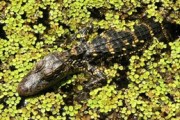
Hypoxia gives alligators a big heart: Q&A with Dr. Dane Crossley, University of North Texas

We recently interviewed Dr. Dane Crossley, Professor of Physiology in the College of Biological Sciences at the University of North Texas about the research his laboratory presented at the recent APS Intersociety meeting, Comparative Physiology: From Organisms to Omics in an Uncertain World. The title of his presentation was, “A large heart: How does developmental hypoxia affect individual cardiomyocyte performance in the American alligator, Alligator mississippiensis.” Thank you for taking time […]

Continue Reading →

Migratory birds create their own water to prevent dehydration

Migratory birds are amazingly adapted for long-distance flights and can switch the fuels they rely on to support their endurance activities. Unlike humans that burn mainly carbohydrates for endurance exercise, avian flight is fueled mainly by fats and some proteins. In a recent study published in the American Journal of Physiology – Regulatory, Integrative and Comparative Physiology researchers examined how white-throated sparrows (Zonotrichia albicollis) prepared for migration. By altering the […]

Continue Reading →

Physiology in the Midlands

Fall is an exciting time as many of the chapters of the American Physiological Society host regional conferences. The Midlands Society of Physiological Sciences hosted their annual meeting earlier this month. Here are some highlights from their meeting. Symposia highlights: The meeting was kicked off by a Keynote Lecture presented by Dr. David A Kass from Johns Hopkins University who presented his research on obesity and heart failure. Here is […]

Continue Reading →