Hibernation and Hypoxia

Discovered by accident: Queen bumblebees can hibernate underwater!

Dr. Sabrina Rondeau, a postdoctoral fellow at the University of Ottawa, made a surprising discovery that has created quite the buzz. While checking on queen bumblebees hibernating in the refrigerator, she noticed that condensation had formed inside some of the containers housing the queen bumblebees. Interestingly, the bees survived the ordeal. Intrigued by how exposure to water might affect queen bees during hibernation, Dr. Rondeau conducted an experiment in Bombus […]

Continue Reading →

Some like it hot: Genetic twists in warm hibernation

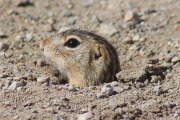
Hibernation was also a hot…I mean warm…topic at the American Physiology Summit last month in Baltimore, MD. Thomas Crippen presented research conducted with team members Dr. Dylan Barth, Zac Carlson, Dr. Frank van Breukelen, and Dr. Allyson Hindle at the University of Nevada, Las Vegas. Their study focused on golden-mantled ground squirrels, Callospermophilus lateralis, which are remarkable even among hibernators. These squirrels can enter torpor across a range of environmental […]

Continue Reading →

No air? No problem: Nature’s ultimate survivalists

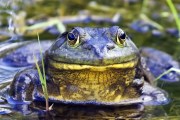
Hypoxia and anoxia tolerance was a hot topic at the 2025 American Physiology Summit last month. Here are the highlights: Hafsa Yaseen and Natalie Anne Heath presented their research from Dr. Joseph Santin’s laboratory at the University of Missouri exploring how adult bullfrogs (Aquarana catesbeianus) protect their brain function following hibernation, a period when oxygen and glucose levels are often very low. The team discovered that bullfrogs could adjust their […]

Continue Reading →

Weddell seals dampen inflammatory response to combat dive induced hypoxemia injury

We are very excited to share this winning guest blog post from Amy Klink, doctoral student at the University of Nevada – Las Vegas. Amy received the Dr. Dolittle travel award to present this research at the 2025 American Physiology Summit in Baltimore. Congratulations Amy! As a kid growing up in Lake County, Illinois, I spent more than half of my summer in some lake or body of water competing […]

Continue Reading →

Even small birds fly high

Dr. Catherine Ivy (Assistant Professor, University of Saskatchewan, Canada), shared research this morning at the 2025 APS Summit on the remarkable hypoxia tolerance of birds. Although bar-headed geese (above) are the poster-birds for research on extreme hypoxia tolerance, I was surprised to learn that even many small migratory species of birds fly at relatively high altitude. Tiny migratory yellow-rumped warblers (~12g), for example, travel for about 6-8 hours at a […]

Continue Reading →

Ever wonder how polar bears stay warm?

On this “National Polar Bear Day”, we explore how these formidable animals keep warm. Arctic polar bears, Ursus maritimus, live in very cold environments where temperatures are often colder than a home freezer and can dip as low as -40 degrees C. They thrive on ice and routinely hunt and swim in ice-cold water. Unlike humans, and many other mammals for that matter, polar bears have several characteristics that help […]

Continue Reading →

The gatekeepers of life: Exploring the complex role of GPCRs

Cell membranes are incredibly complex environments that play crucial roles in interacting with other cells, sensing specific molecules in the body, controlling what crosses the membrane, and other vital functions. The composition of these membranes varies between organs in an animal, between similar organs in different species, and even between individuals of the same species. Think of cell membranes as gatekeepers, responsible for detecting various chemical signals (such as ions […]

Continue Reading →

Brain Power on a Budget: How Bullfrogs Survive Without Oxygen

Did you know that your brain is really greedy? It uses about 5.7 kilograms of ATP every day, which is an incredible amount of energy! To keep up with such demand, the brain depends on an adequate supply of oxygen and nutrients, such as glucose. When oxygen or nutrient delivery are limited, like during a heart attack, stroke or in low-oxygen environments, the brain is unable to produce enough ATP […]

Continue Reading →

Celebrating National Squirrel Appreciation Day: Recent discoveries about ground squirrel hibernation

I am thrilled to have come across a calendar of fun and interesting “holidays” for all sorts of occasions, including celebrating nature and the animals around us. In honor of ‘National Squirrel Appreciation Day’, let’s take a moment to marvel at furry survival experts and the incredible science behind winter slumber in ground squirrels.     When temperatures drop, ground squirrels settle down for a long winter’s nap. During hibernation, their […]

Continue Reading →

To eat or not to eat, that is the question

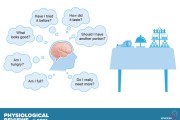
Ever wonder how your body knows when, what and how much to eat, what to crave, or when to stop? Have you ever found yourself indulging in a little extra during the holidays, even though you’re not actually hungry? It turns out, the science behind our eating habits is far more complicated than we realize— and it’s not just about willpower or self-control. A fascinating comprehensive review published by Watts […]

Continue Reading →