Hibernation and Hypoxia

White Nose Syndrome – What do we know now?

You may recall prior Lifelines posts discussing the devastating effects of white nose syndrome (WNS) in bats. WNS, Pseudogymnoascus destructans is a fungus responsible for the deaths of millions of North American bats over the last ten years. In a new study published in the American Journal of Physiology – Regulatory, Integrative and Comparative Physiology, Dr. Craig Willis examined the effects of repeated arousals from hibernation induced by the fungal infection. […]

Continue Reading →

Experimental Biology 2017 – Day 5

Here are the highlights from the final day of the meeting: Carbon monoxide (CO) is not all that bad: Michael Tift, graduate student at Scripps Institute of Oceanography, described how the body naturally produces CO when red blood cells are broken down and CO can actually be protective against inflammation at low doses. His research was focused on measuring whether species that have more hemoglobin (from living in hypoxic environments) also have […]

Continue Reading →

Experimental Biology – Day 4

The August Krogh Distinguished lecture was awarded to Dr. Warren Burggren, who gave a fantastic lecture on epigenetics, or modifications to gene expression. He discussed how epigenetic changes to our genes are reversible. So when a stimulus like hypoxia changes our genes, these epigenetic changes to the genes go away rather quickly when the hypoxic insult is gone, which contrasts genetic mutations that arise from modifications to the genetic code leading […]

Continue Reading →

Experimental Biology – Day 3

Highlights from today’s sessions included: Norelia Ordonez-Castillo, undergraduate student from Fort Hays State University, presented her research on channel catfish. According to Norelia, these fish can become obese so her research was geared towards trying to find out how their receptor for LDL cholesterol differs from rodents and humans. But what I want to know is whether the obese catfish tastes better… Christine Schwartz, Investigator from University of Wisconsin-La Crosse, studied how […]

Continue Reading →

Experimental Biology – Day 2

Yesterday was a great day for comparative physiology! Highlights from the seminars on comparative physiology: Melissa Reiterer, graduate student from Florida Atlantic University, presented her research on how freshwater turtles (Trachemys scripta) survive for long periods of time without oxygen and do not develop oxidative stress after oxygen is restored. The turtles are able to do this by creating their own antioxidants as well as eliminating oxidative stress. In contrast, mammals including humans, develop […]

Continue Reading →

In the meantime, I think I’ll hibernate

I just read an interesting blog from the I Spy Physiology website sponsored by the American Physiological Society which described results from a recent study suggesting that chronic fatigue syndrome (CFS) might be a human equivalent to hibernation. Chronic fatigue syndrome reportedly affects over 2.5 million people in the United States alone. People with this condition have the type of fatigue that does not seem to improve, even with adequate sleep. By examining the blood […]

Continue Reading →

How to grow a bigger heart…

…in alligators at least. Researchers from the University of Manchester, University of North Texas – Denton, and the Rockefeller Wildlife Refuge – Grand Chenier, Louisiana teamed up to explore the effects of exposure to low oxygen on embryonic American alligators (Alligator mississippiensis). Alligator eggs are often laid in nests where oxygen concentrations can reportedly vary between 11-20% (21% is normal atmospheric levels). This is really important as issues related to embryonic development could continue to affect animals throughout their adult lives […]

Continue Reading →

What do ‘peeps’ and ‘yo-yos’ have to do with diving?

Until now I had assumed that a “peep” was that squishy sugar-covered marshmallow treat that we enjoyed as kids and a “yo-yo” was a toy on a string. As it turns out, peep and yo-yo are also term used to described types of diving patterns. A square dive is one in which there are no excursions to the surface, known as a “peep”, except at the end of the dive, of course. This is in contrast […]

Continue Reading →

Frigatebirds and lambs

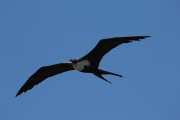
I was checking out the award-winning American Physiological Society’s I Spy Physiology blog and came across a couple of really interesting posts about animals: “If Only Birds Could Compete in the Summer Games” This post reported a study of how frigatebirds manage to sleep during flights out at sea that can last for weeks. By measuring brain activity, the research team found that the birds were capable of actual sleep, during which time both […]

Continue Reading →

Physiology 2016

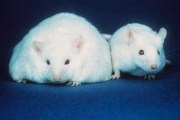
I am very excited to report that the American Physiological Society in partnership with The Physiological Society held a joint meeting from July 29-31 in Dublin, Ireland. The keynote lectures were given by Dr. Jerry Friedman from Rockefeller University and Dr. W Jon Lederer from the University of Maryland.   Dr. Friedman spoke about his research on obesity and how genetic factors might play a role. In fact, his team was […]

Continue Reading →