Hibernation and Hypoxia

Snorkeling snails

Scientists have been wondering why Asian Alycaeidae snails have a snorkel that was seemingly functionless. While other snails that live on land have a similar tube with an opening that allows them to breathe while inside the shell, the end of the breathing tube (i.e. snorkel) on the Asian snails appeared to be sealed. A new study published in Biology Letters shows that the tube of Alycaeus conformis is not sealed after all. […]
Continue Reading →

Male hamsters pack on the pounds while females stockpile food for winter

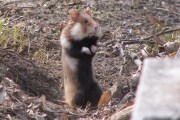
During hibernation common hamsters (Cricetus cricetus) alternate their time between bouts of torpor during which their metabolic rate drops and body temperature is low and arousal during which body temperature is normal. Hibernation allows animals to conserve energy although it is not without costs as it often results in memory deficits, cell damage and reduced immune function. Thus some studies have suggested that animals with sufficient food stores will not undergo hibernation […]

Continue Reading →

Secret to safer stem cell therapy or cure for cancer?

Researchers trying to find cures for cancer find naked mole rats rather interesting. Not only are these animals long-lived by rodent standards, they are also resistant to the development of cancer. By long-lived, we are talking up to 30 years! A team of researchers from Hokkaido University and Keio University in Japan have now isolated stem cells from the skin of naked mole rats and induced them to revert back to pluripotent stem […]

Continue Reading →

Keeping arteries healthy, lessons from seals?

Heart rate decreases during diving in seals and other animals. Thus the ascending aorta becomes very important during diving as it helps to maintain blood pressure during prolonged dives. A new study published in the American Journal of Physiology – Regulatory, Integrative and Comparative Physiology was designed to examine the ascending aorta of hooded seals (Cystophora cristata) and the tiny blood vessels that supply nutrients to it, called the vasa vasorum. The […]

Continue Reading →

Recap of 2016 Michigan Physiological Society

The Michigan Physiological Society, a chapter of the American Physiological Society, held their 3rd annual meeting last week. As mentioned in a prior post, the keynote address was given by Comparative Physiologist Dr. Hannah Carey (University of Wisconsin School of Veterinary Medicine). You can read about her research in the prior post. Here are other highlights from the meeting: Seminars: or as I prefer to view them… Kelsy Kusch (Undergraduate Student, […]

Continue Reading →

2016 Michigan Physiological Society Meeting

I am very excited about the upcoming 3rd annual Michigan Physiological Society Meeting on May 12-13 in Detroit. This society is a local chapter of the American Physiological Society. I am most excited by their choice of a Comparative Physiologist for the keynote address: Dr. Hannah V. Carey from the University of Wisconsin School of Veterinary Medicine. Dr. Carey is a Past-President of the American Physiological Society. She will be presenting […]

Continue Reading →

Experimental Biology – Day 5

Today was the final day of the meeting. Dr. Joe Thompson (Franklin and Marshall College) spoke about oblique striated muscles, which get their name from the diagonal pattern formed by the location of the Z-lines. This type of muscle is common among cephalopods, nematodes, tunicates, molluscs, etc. Dr. John Whiteman (University of Wyoming) gave a fascinating talk about polar bears and whether hunting on the shore as compared to the sea […]

Continue Reading →

Experimental Biology 2016 – Day 4

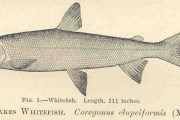
Still going strong…here are the highlights from several sessions held on Day 4: John Eme (California State University, San Marcos) presented data testing the effects of varying temperatures mimicking overwintering conditions on embryonic development of Lake whitefish. He found that indeed exposure to variable incubation temperatures between 2-8 deg C resulted in increased mortality. Moreover, the embryos hatched earlier and were smaller than animals exposed to constant temperatures. Nariman Hossein-Javaheri et al., (University […]

Continue Reading →

Experimental Biology 2016 – August Krogh Distinguished Lecturer: Dr. Jon Harrison

This year’s August Krogh Distinguished lecture, the highest award given to an accomplished Comparative Physiologist from the Comparative and Evolutionary Physiology section of the American Physiological Society was awarded to Dr. Jon Harrison, Arizona State University. Dr. Harrison gave an outstanding seminar in which he reviewed some of his major research discoveries. His work has included examining how insects tolerate various temperatures and how changes in the levels of atmospheric […]

Continue Reading →

Experimental Biology 2016 – Day 2

Today was a great day for trainees in comparative physiology! Here are some of the highlights from their sessions: Poster presentations: Alexis MacDonald et al., (Union College – Mentor Dr. Scott Kirkton) presented research showing that grasshopper skeletal muscles may use lactate for energy! Similarly, Dongying Wang et al., (Saint Louis University – Mentor Dr. Daniel Warren) also showed that skeletal muscle from painted turtles may use lactate. I guess it […]

Continue Reading →