Hibernation and Hypoxia

Thriving at high altitude

Humans have occupied high altitude environments for over 10,000 years, allowing ample time for some remarkable adaptations to hypoxia. Such adaptations we have already discussed in people living on the Tibetan Plateau (elevation: 4,500 meters on average) include higher breathing rates combined with lower levels of hemoglobin, the molecule that carries oxygen in the blood, compared to lowland populations, which helps prevent mountain sickness as well as the formation of […]

Continue Reading →

Physiologists in California meet today to discuss the latest research

The California Society of Physiologists is hosting their annual meeting today at the University of California Davis campus! Adapting to high altitude The keynote address will be given this evening by Dr. Tatum Simonson (Associate Professor, University of California San Diego) who will speak about, “Variation in human responses to low oxygen: Insights from Mount Everest to Machu Picchu.” Together with Dr. Francisco Villafuerte (Universidad Peruana Cayetano Heredia, Lima, Peru) […]

Continue Reading →

From Hibernation to Healing: Unlocking Genomic Secrets for Human Therapies

I was just cleaning my desk and came across an issue of The Physiologist Magazine from March that had ended up under a pile of papers., some of which were admittedly much older. Clearly, I should clean my desk more often. Anyway, in perusing the issue I came across a gem… The March issue featured Dr. Joanna Kelley, associate professor at the University of California Santa Cruz. Dr. Cruz was […]

Continue Reading →

2024 “Ig Nobel” prize-winning research

The results are in (drumroll please). Here are some highlights from the 34th First Annual “Ig Nobel” Prize ceremony held on September 12th at the Massachusetts Institute of Technology. The Ig Nobel prize is designed to recognize “achievements that first make people laugh and then make them think”. Physiology Following the Covid-19 pandemic, an international team of researchers published a study in 2021 eloquently titled, “Mammalian enteral ventilation ameliorates respiratory […]

Continue Reading →

Tiny Devils Hole pupfish make a big comeback

Devils Hole pupfish (Cyprinodon diabolis) are a tiny critically endangered fish that live in a pond in just one limestone cave, known as Devils Hole, in Death Valley, Nevada. In fact, their habitat is the smallest known for a vertebrate. Biologists from the Nevada Department of Wildlife, US Fish and Wildlife Service and the National Park Service have been painstakingly counting these tiny fish twice a year. Counting these fish […]

Continue Reading →

Researchers discover how hibernating ground squirrels protect their cells from self-destruction

Programmed cell death, otherwise known as apoptosis, is an important physiological process that allows the body to get rid of cells that are no longer needed or are damaged. These functions help foster normal growth and development as well as prevent cancer. Apoptosis is a highly regulated process that involves various caspase enzymes, with caspase-3 being among the “executioner” enzymes responsible for the final stages of apoptosis and ultimate cellular […]

Continue Reading →

New study provides more insight into the physiology of elite divers

If the Olympics allowed marine mammals to compete, they would dominate free diving competitions in terms of breath holding duration and extreme physiology. Marine mammals also have adaptations that help prevent tissue damage from the lack of oxygen during such dives. For example, Weddell and northern elephant seals store large amounts of oxygen in their blood and muscles, thanks to abundant hemoglobin, which permits them to hold their breath for […]

Continue Reading →

What dolphins can teach us about healthy aging

The risk of developing cardiovascular disease increases with aging as arteries can become increasingly stiff and the inner lining, called the endothelium, can become dysfunctional. Postdoctoral fellow Dr. Yara Bernaldo De Quiros Miranda (University of Las Palmas de Gran Canaria) is interested in understanding how bottlenose dolphins, Tursiops truncatus, protect their cardiovascular system during aging. She is currently a visiting scholar at the University of Colorado at Boulder where she […]

Continue Reading →

Speaking of hypoxia tolerance…

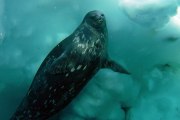
Amy Klink, a graduate student working in the laboratory of Dr. Allyson Hindle at the University of Nevada, Las Vegas, has been studying hypoxia tolerance of Weddell seals. These remarkable animals can hold their breath for 90 minutes and dive as deep as 900 meters! During such long and deep dives, these seals slow down their heart rate and constrict blood vessels in visceral as well as peripheral organs. As […]

Continue Reading →

What sea turtles can teach us about hypoxia tolerance

Imagine being able to explore the Earth’s oceans without needing special oxygen equipment. Loggerhead sea turtles have this ability and can actually hold their breath for up to 7 hours! According to the Guiness Book of World Records, Budimir Šobat from Croatia set the record in 2021 for being able to hold his breath for 24 minutes and 37.36 seconds underwater. While quite remarkable, he would need to hold his […]

Continue Reading →