Hibernation and Hypoxia

High altitude deer mice have less stress?

Animals that live at high altitude have evolved a number of physiological adaptations to deal with the low atmospheric oxygen concentrations (hypoxia). For low altitude acclimated animals, short exposures to high altitude results in activation of the sympathetic nervous system (i.e. the fight or flight response). This is a good thing because activation of this system results in more blood flow, especially to the heart and brain to help protect oxygen […]

Continue Reading →

Polar bears summering on land exposed to more pathogens

Polar bears (Ursus maritimus) living near the southern Beaufort Sea are spending more time on land during the summer months than in years past as a result of climate change and melting sea ice. Researchers wanted to know whether bears that spent more time on land were exposed to more pathogens compared to those who spent more time on sea ice. Their results, published in the journal Physiological and Biochemical Zoology, showed […]

Continue Reading →

Rapid switches in metabolism of hibernating animals

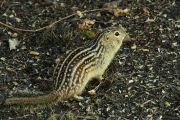
  In a new study published in the American Journal of Physiology – Regulatory, Integrative and Comparative Physiology, researchers examined how changes in metabolism during torpor are regulated in 13-lined ground squirrels (Ictidomys tridecemlineatus). During hibernation, these animals cycle between bouts of torpor (about 2 weeks each) when their metabolism is reduced by 95% and body temperature can drop to 5degC and short states of interbout euthermia when both temperature […]

Continue Reading →

Editor’s picks for 2018

The Editor’s Picks for 2018 have been released for the American Journal of Physiology – Regulatory, Integrative and Comparative Physiology. According to the editorial team, the focus of this journal is on “the regulation of whole organismal function that requires the interplay of multiple organ and tissue systems.” The top comparative physiology articles of 2018 included: An article by Hersh et al., who provided evidence that little skates may be useful […]

Continue Reading →

Blood flow shifts during diving

In many mammals exposure to hypoxic conditions results in the release of a vasodilator called nitric oxide, which improves blood flow and protects oxygen delivery to tissues throughout the body. Diving animals appear to be unique in that some of their blood vessels stay constricted while they are diving even though they experience hypoxia. A new study published in the American Journal of Physiology – Regulatory, Integrative and Comparative Physiology explored […]

Continue Reading →

Working towards prolonged spaceflight

Spaceflight has always fascinated me. While long distance spaceflight looks so routine in science fiction shows, the reality is much different as we have yet to conquer the complications surrounding long duration deep-space flight. One issue is how to feed astronauts traveling long distances as we do not yet have replicator technologies. If we did, I would have coffee whenever I wanted it. In a new article published in Physiology, […]

Continue Reading →

Lactate directly increases breathing

Hypoxic environments increase ventilation in animals. This helps to bring in more oxygen when environmental levels may be limited. With limited oxygen availability, the body turns to anaerobic metabolism, resulting in the production of lactate ions. These ions are known to indirectly stimulate breathing by lowering blood pH and were more recently discovered to directly stimulate the carotid body to increase breathing. For this reason, lactate ions are thought to […]

Continue Reading →

Highlights from EB 2019

There were so many poster presentations on comparative and evolutionary physiology today at the 2019 Experimental Biology conference that it was impossible to see them all. Here are some highlights: Dr. Michael Hedrick from California State University – East Bay, presented his research on African cheetahs (Acinonyx jubatus) examining adaptations that cheetahs have evolved to supply their muscles with oxygen so efficiently, given they maintain the world record for being […]

Continue Reading →

How ground squirrels recycle nitrogen

Hibernation is a rather remarkable strategy some animals use to survive winter when food availability is limited. Dr. Matthew Regan, a postdoctoral fellow in the laboratory of Dr. Hannah Carey at the University of Wisconsin in Madison, presented research at the Experimental Biology 2019 conference today that explored how 13-lined ground squirrels (Ictidomys tridecemlineatus) regulate protein metabolism during hibernation. What is remarkable about 13-lined ground squirrels in particular is that they […]

Continue Reading →

Alligator snorkeling

I read an interesting article in Live Science about a unique way a group of American alligators use to survive periods of freezing water, for a few days at least. As the temperature drops, the animals stick their nose out of the water and are thus able to breathe through the ice. During cold months the alligators also reduce their metabolism, a process called brumation, which is different from hibernation […]

Continue Reading →