Most Popular

Best Friend or Stress Test? What Pets Do to Our Bodies

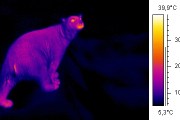
According to the National Institutes of Health (NIH), 68% of households in the United States have a pet. Pets are thought to help people by decreasing stress and improving cardiovascular health. The NIH and Mar’s Corporation WALTHAM Centre for Pet Nutrition have teamed up to support research examining such questions, but the results have been mixed. According to Dr. Layla Esposito, who leads the NIH Human-Animal Interaction Research Program, people […]


Continue Reading →

When fasting bites back: The bile dilemma in tiger sharks

Happy Shark Week!! In this post, we take a look at how fasting may harm young tiger sharks. Sharks LOVE to eat fish, which are packed with protein and fats. In fact, fat is a major energy source for sharks and high levels of circulating fats are associated with better body conditions in tiger sharks. To handle their diet, sharks need healthy livers and gallbladders to produce and release bile, […]

Continue Reading →

Understanding Giant Pandas’ Unique Bamboo Diet

Happy National Panda Day!! Today, we celebrate one of the most beloved animals around the world. Giant pandas, Ailuropoda melanoleuca, are native to China and are the only living member of the genus, Ailuropoda. Pandas are members of the carnivorous Ursidae bear family. However, they have evolved to eat a diet consisting of close to 99% bamboo. Their jaws, teeth, digestive system and even their paws with a “false thumb” […]

Continue Reading →

Ever wonder how polar bears stay warm?

On this “National Polar Bear Day”, we explore how these formidable animals keep warm. Arctic polar bears, Ursus maritimus, live in very cold environments where temperatures are often colder than a home freezer and can dip as low as -40 degrees C. They thrive on ice and routinely hunt and swim in ice-cold water. Unlike humans, and many other mammals for that matter, polar bears have several characteristics that help […]

Continue Reading →

Celebrating National Squirrel Appreciation Day: Recent discoveries about ground squirrel hibernation

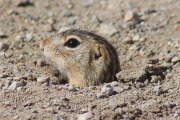
I am thrilled to have come across a calendar of fun and interesting “holidays” for all sorts of occasions, including celebrating nature and the animals around us. In honor of ‘National Squirrel Appreciation Day’, let’s take a moment to marvel at furry survival experts and the incredible science behind winter slumber in ground squirrels.     When temperatures drop, ground squirrels settle down for a long winter’s nap. During hibernation, their […]

Continue Reading →

Time Machine: Do horses produce more heat per day than humans, and what happened to Tusko?

In this post, we travel back to 1947 to explore a fascinating review by Dr. Max Kleiber from the University of California – Davis. Published in Physiological Reviews, this review examined the relationship between body size and metabolism. Simply asking the question of whether horses produce more heat per day than humans or rats will lead one to conclude that indeed they do because of their larger body size. However, […]

Continue Reading →

Males are not always bigger…unless they are northern elephant seals

A new study published in Nature Communications challenges the popular notion that males are usually bigger than females – at least in mammals. Their findings are consistent with Dr. Katherine Ralls who also challenged this idea in the late 1970s. In this new study, researchers looked at data collected for 429 species of animals. Rather than using averaged values from the literature, they turned to large-published datasets that included values […]

Continue Reading →

Roses are red, violets are blue, beluga whales and dolphins have higher carbon monoxide than you

The lifespan of a red blood cell (RBC) in a healthy human is about 120 days and approximately 200 billion red blood cells (RBCs) are replaced every day in healthy adult humans! Most (80%) of the carbon monoxide produced in humans comes from the breakdown of heme which is released when these red blood cells (RBC) are broken down through normal homeostatic processes. Sickle cell anemia shortens the lifespan of […]

Continue Reading →

Inaugural American Physiology Summit!!

I am very excited to be a part of the 2023 Inaugural American Physiology Summit sponsored by the American Physiological Society! The meeting kicked off Thursday with a Keynote address presented by Dr. David Julius, 2021 Nobel Laureate in Physiology or Medicine. Dr. Julius is currently Professor and Chair of the Department of Physiology and Morris Herzstein Chair in Molecular Biology and Medicine at the University of California, San Francisco. […]

Continue Reading →

Hydrogen sulfide – the gas we hate to smell, but can’t live without

Although hydrogen sulfide (H2S) is most often associated with manure and the smells of rotten eggs, research has shown it plays important physiological roles. In fact, our bodies actually produce H2S within our cells. Other source of H2S include sulfate-producing bacteria in our gut and dietary intake (such as garlic and cruciferous vegetables). H2S is a member of a group of gasotransmitters, referred to as the ‘reactive species interactome’, that […]

Continue Reading →