Nature’s Solutions

Highlights from EB 2019

There were so many poster presentations on comparative and evolutionary physiology today at the 2019 Experimental Biology conference that it was impossible to see them all. Here are some highlights: Dr. Michael Hedrick from California State University – East Bay, presented his research on African cheetahs (Acinonyx jubatus) examining adaptations that cheetahs have evolved to supply their muscles with oxygen so efficiently, given they maintain the world record for being […]

Continue Reading →

Obese Horses

Abigail Harms, an undergraduate student at Beloit College working with Dr. Kathryn Johnson, also presented her research today at the Experimental Biology 2019 conference examining the effects of obesity in horses. Just like humans and pets, horses are increasingly becoming obese. Her research is seeking ways to measure hormonal changes that occur with obesity in different breeds of horses.  

Continue Reading →

Mourning doves do not need to watch their figures

So jealous. Research presented by Anthony Basile, graduate student in the laboratory of Dr. Karen Sweazea at Arizona State University, at Experimental Biology 2019 examined how mourning doves would respond to a diet high in saturated fats. He reported on how mice fed a similar diet develop pathological changes in hormones and metabolism, as would be expected. But, doves fed a similar diet did not seem to show any notable […]

Continue Reading →

Dietary carotenoids and oxidative stress- What can we learn from birds?

Congratulations to this year’s Dr. Dolittle Travel Award winner, Alex Mohr from Arizona State University! Alex is presenting his research at the annual Experimental Biology conference in Orlando, FL (Mohr AE, Girard M, Rowe M, McGraw KJ, Sweazea KL. Varied Effects of Dietary Carotenoid Supplementation on Oxidative Damage in Tissues of Two Waterfowl Species).  Here is his award-winning blog entry describing his research on carotenoids in ducks: In relation to tissue […]

Continue Reading →

How ground squirrels recycle nitrogen

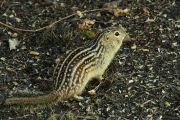
Hibernation is a rather remarkable strategy some animals use to survive winter when food availability is limited. Dr. Matthew Regan, a postdoctoral fellow in the laboratory of Dr. Hannah Carey at the University of Wisconsin in Madison, presented research at the Experimental Biology 2019 conference today that explored how 13-lined ground squirrels (Ictidomys tridecemlineatus) regulate protein metabolism during hibernation. What is remarkable about 13-lined ground squirrels in particular is that they […]

Continue Reading →

Dogs can sniff out epileptic seizures

A new study published by researchers at the University of Rennes in France shows that epileptic seizures produce a distinct body odor profile that can be detected by dogs, opening up the possibility of training the animals to predict (and warn their owners about) these types of seizures. Sources: Video: YouTube Catala A, Grandgeorge M, Schaff J-L, Cousillas H, Hausberger M, Cattet J. Dogs demonstrate the existence of an epileptic […]

Continue Reading →

Historical perspectives on homeostasis

In a new article published in the American Journal of Physiology – Regulatory, Integrative and Comparative Physiology, Dr. David S. Goldstein (National Institutes of Health) presents an elegant historical perspective on homeostasis. Walter B. Cannon (1871-1945) was a physiologist at Harvard Medical School who is credited with coining the term “homeostasis” to describe how the body attempts to regulate itself to stay healthy. The ability for the body to regulate the […]

Continue Reading →

Sleep = better DNA repair

I read an interesting article published in Nature Communications that described how zebrafish larvae need sleep to help fix damaged DNA that accumulates in their brains during the day. The researchers engineered zebrafish larvae to have fluorescent chromosomes in a single neuron, which allowed them to observe double-strand breaks in the DNA build-up during wakefulness. In contrast, chromosome activity necessary for repair increased when the animals were sleeping. If the researchers disrupted […]

Continue Reading →

Sniffing out cancer?

I just saw an interesting review article published in Physiological Reviews that discussed the presence of olfactory (i.e. smell) receptors located outside of the nose. Say what? It turns out that these “smell” receptors are not unique to our nostrils. In fact they are found throughout our bodies. Those found in the heart may be responsible for regulating heart function, those in the immune system are thought to help destroy types […]

Continue Reading →

Adapting to rising temperatures

In a new review article published in Physiology, Dr. Jonathon Stillman from San Francisco State University explores how populations of animals and humans may respond to increasing frequency of heat waves. According to Dr. Stillman, the past decade has produced some of the hottest years on record, resulting in the loss of human and animal life. Both the length and intensity of these heat waves are expected to increase, which […]

Continue Reading →