Nature’s Solutions

Extreme Physiology: Radiation Tolerance

  Don’t let their small size fool you. Tardigrades, or ‘water bears’, are really tough animals. According to a review published in the American Scientist, these microscopic invertebrates can survive extreme variations in temperature from near absolute zero (-459 deg F) up to +302 deg F. They can also tolerate pressures that are 6 times greater than the deepest ocean, exposure to ionizing radiation (UV and x-ray) and the vacuum of space, as well as exposure to […]

Continue Reading →

Cancer resistance developing in Tasmanian devils

Tasmanian devils are rather large carnivorous marsupials. By large, I mean the world’s largest. In only 2 decades, the population of Tasmanian devils have declined by about 85%, landing these animals on the endangered species list. The cause: an infectious cancer called devil facial tumor disease (DFTD). As the name implies, this cancer causes facial tumors that grow so large, the victims starve to death in as little as 6 […]

Continue Reading →

Snorkeling snails

Scientists have been wondering why Asian Alycaeidae snails have a snorkel that was seemingly functionless. While other snails that live on land have a similar tube with an opening that allows them to breathe while inside the shell, the end of the breathing tube (i.e. snorkel) on the Asian snails appeared to be sealed. A new study published in Biology Letters shows that the tube of Alycaeus conformis is not sealed after all. […]

Continue Reading →

Male hamsters pack on the pounds while females stockpile food for winter

During hibernation common hamsters (Cricetus cricetus) alternate their time between bouts of torpor during which their metabolic rate drops and body temperature is low and arousal during which body temperature is normal. Hibernation allows animals to conserve energy although it is not without costs as it often results in memory deficits, cell damage and reduced immune function. Thus some studies have suggested that animals with sufficient food stores will not undergo hibernation […]

Continue Reading →

Secret to safer stem cell therapy or cure for cancer?

Researchers trying to find cures for cancer find naked mole rats rather interesting. Not only are these animals long-lived by rodent standards, they are also resistant to the development of cancer. By long-lived, we are talking up to 30 years! A team of researchers from Hokkaido University and Keio University in Japan have now isolated stem cells from the skin of naked mole rats and induced them to revert back to pluripotent stem […]

Continue Reading →

Keeping arteries healthy, lessons from seals?

Heart rate decreases during diving in seals and other animals. Thus the ascending aorta becomes very important during diving as it helps to maintain blood pressure during prolonged dives. A new study published in the American Journal of Physiology – Regulatory, Integrative and Comparative Physiology was designed to examine the ascending aorta of hooded seals (Cystophora cristata) and the tiny blood vessels that supply nutrients to it, called the vasa vasorum. The […]

Continue Reading →

Cartilaginous fish need to regulate sulfate too

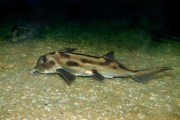
Seawater contains sulfate concentrations that are nearly 40 times those measured in plasma. Therefore, it is easy to see why fish would need to develop mechanisms to keep sulfate within a physiologically normal range. The kidneys of teleost fish have been known to excrete excess sulfate in the urine. However until now, it was not known whether the kidneys of cartilaginous fish do the same thing as their kidneys are rather complex. In a new […]

Continue Reading →

Limb regeneration in brittle stars

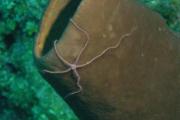
A new study published in Frontiers in Zoology examined the developmental process involved in regulating limb regeneration in brittle stars (Amphiura filiformis) following amputation of an arm. Limb regeneration is a multi-stage process involving initial healing and repair of the wounded site, initial growth of the limb followed by development of more complex layers of cells until ultimately the limb has been fully regenerated. Understanding this process in brittle stars may lead to […]

Continue Reading →

Experimental Biology – Day 3

I LOVE THIS MEETING! DAY 3 included several very interesting comparative physiology sessions. Eldon Braun (University of Arizona) spoke about how birds have a unique way to prevent water loss and thereby dehydration. In mammals, the kidneys are responsible for recovering water from the urine. However when birds are well-hydrated, the urine enters the colon and moves backwards up the gastrointestinal tract to facilitate water reabsorption prior to voiding the […]

Continue Reading →