Nature’s Solutions

The gatekeepers of life: Exploring the complex role of GPCRs

Cell membranes are incredibly complex environments that play crucial roles in interacting with other cells, sensing specific molecules in the body, controlling what crosses the membrane, and other vital functions. The composition of these membranes varies between organs in an animal, between similar organs in different species, and even between individuals of the same species. Think of cell membranes as gatekeepers, responsible for detecting various chemical signals (such as ions […]
Continue Reading →

Brain Power on a Budget: How Bullfrogs Survive Without Oxygen

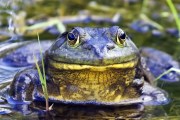
Did you know that your brain is really greedy? It uses about 5.7 kilograms of ATP every day, which is an incredible amount of energy! To keep up with such demand, the brain depends on an adequate supply of oxygen and nutrients, such as glucose. When oxygen or nutrient delivery are limited, like during a heart attack, stroke or in low-oxygen environments, the brain is unable to produce enough ATP […]

Continue Reading →

Celebrating National Squirrel Appreciation Day: Recent discoveries about ground squirrel hibernation

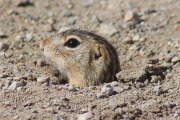
I am thrilled to have come across a calendar of fun and interesting “holidays” for all sorts of occasions, including celebrating nature and the animals around us. In honor of ‘National Squirrel Appreciation Day’, let’s take a moment to marvel at furry survival experts and the incredible science behind winter slumber in ground squirrels.     When temperatures drop, ground squirrels settle down for a long winter’s nap. During hibernation, their […]

Continue Reading →

Microplastic Filters Inspired by Nature

Researchers have recently developed an innovative filter capable of removing over 95% of microplastics from water. This “biomass fibrous” foam filter, made from cotton-derived cellulose and chitin sourced from squid, retains its efficiency across at least five cycles of filtering lake, coastal, irrigation, and still water (Wu et al., 2024). Meanwhile, other scientists are studying the natural filtration mechanisms of marine animals like manta rays, whales, and fish gills to […]

Continue Reading →

When Earth Roars: How Volcanoes Shape Life and Biodiversity

Two days ago, as families around the world gathered for the holidays, Mount Ruang in Indonesia erupted, sending ash and smoke high into the atmosphere. This highly active volcano has erupted more than 60 times since the 16th century, with several considered major events. This eruption marked the 4th in a series of eruptions in the last several days around the world including Nicaragua (Mount Masaya), Hawaii (Mount Kilauea), and […]

Continue Reading →

The Science Behind Human Endurance Capabilities

Among mammals, humans are known for having exceptional endurance. For example, persistence hunters can run for 2-5 hours to wear out their prey, while marathoners routinely run ~4.5 hours on average (Schulte et al., 2015). Sure, a cheetah can run fast, but it can’t run as long as a human. How did humans develop such exceptional endurance? When vertebrates moved to dry land, they needed to develop lungs to extract […]

Continue Reading →

Little-known functions of the spleen: Q&A with Dr. Frank van Breukelen and Gilbecca Smith, University of Las Vegas

We are excited to feature Dr. Frank van Breukelen and his graduate student, Gilbecca Rae Smith, from the University of Las Vegas, Nevada. They presented exciting new research at the 2024 American Physiology Summit examining some little-known functions of the spleen.  Q: We often associate the spleen with its ability to filter blood and make white blood cells to fight infections. We don’t often consider the importance of its ability to […]

Continue Reading →

Finches and flies with a taste for blood

Predators with a taste for blood abound on the remote Galapagos Islands… Meet the Vampire Ground Finch 19 different species of finches can be found on the Galapagos Islands. Observations of their various beak shapes, specialized for different diets and purposes, helped Charles Darwin develop the theory of evolution. One species I do not recall learning about in Biology class, however, is the vampire ground finch (Geospiza septentrionalis), which can […]

Continue Reading →

On the path to preventing white-nose syndrome

This Halloween, we are checking in with our “bat-ty” friends. North American populations of bats have been severely decreased by a deadly fungus, known as Pseudogymnoascus destructans, which results in a disease called ‘white-nose syndrome’. There are currently 13 species of hibernating bats known to have been impacted by the disease (Center for Biological Diversity). Having toured a cave recently, our guide ensured that everyone decontaminated their shoes before entering […]

Continue Reading →

Thriving at high altitude

Humans have occupied high altitude environments for over 10,000 years, allowing ample time for some remarkable adaptations to hypoxia. Such adaptations we have already discussed in people living on the Tibetan Plateau (elevation: 4,500 meters on average) include higher breathing rates combined with lower levels of hemoglobin, the molecule that carries oxygen in the blood, compared to lowland populations, which helps prevent mountain sickness as well as the formation of […]

Continue Reading →