Nature’s Solutions

What dolphins can teach us about healthy aging

The risk of developing cardiovascular disease increases with aging as arteries can become increasingly stiff and the inner lining, called the endothelium, can become dysfunctional. Postdoctoral fellow Dr. Yara Bernaldo De Quiros Miranda (University of Las Palmas de Gran Canaria) is interested in understanding how bottlenose dolphins, Tursiops truncatus, protect their cardiovascular system during aging. She is currently a visiting scholar at the University of Colorado at Boulder where she […]
Continue Reading →

Speaking of hypoxia tolerance…

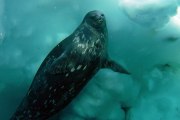
Amy Klink, a graduate student working in the laboratory of Dr. Allyson Hindle at the University of Nevada, Las Vegas, has been studying hypoxia tolerance of Weddell seals. These remarkable animals can hold their breath for 90 minutes and dive as deep as 900 meters! During such long and deep dives, these seals slow down their heart rate and constrict blood vessels in visceral as well as peripheral organs. As […]

Continue Reading →

What sea turtles can teach us about hypoxia tolerance

Imagine being able to explore the Earth’s oceans without needing special oxygen equipment. Loggerhead sea turtles have this ability and can actually hold their breath for up to 7 hours! According to the Guiness Book of World Records, Budimir Šobat from Croatia set the record in 2021 for being able to hold his breath for 24 minutes and 37.36 seconds underwater. While quite remarkable, he would need to hold his […]

Continue Reading →

Gut-temperature axis in high altitude deer mice?

Dr. Graham Scott (McMaster University) presented intriguing research at the American Physiology Summit earlier this month in Long Beach, CA. His laboratory has been examining a potential link between the gut microbiome and the ability for deer mice to help regulate body temperature. Deer mice live in high elevations where atmospheric oxygen levels are low. This presents a physiological challenge as they have to use a lot of energy to […]

Continue Reading →

Flexible hypoxia tolerance in frogs

In a new study published in The Journal of Neuroscience and presented at the American Physiology Summit earlier this month, graduate student Nikolaus Bueschke, postdoctoral fellow Dr. Lara Amaral-Silva and Dr. Joseph Santin (University of Missouri, Columbia) together with researchers Min Hu and Alvaro Alvarez (University of North Carolina at Greensboro), explored how bullfrogs (Lithobates catesbeianus) emerging from hibernation tolerate hypoxia while they kickstart physiological functions in ice-covered ponds. This […]

Continue Reading →

Guest Blog: Fasting as a strategy to build athletic diving capacity

Kaitlin Allen is a graduate student at the University of California, Berkeley where she studies the physiology of elephant seals in the laboratory of Dr. José Pablo Vázquez-Medina. She received the 2024 Dr. Dolittle Travel Award from the Comparative and Evolutionary Physiology section of the American Physiological Society to attend the 2024 American Physiology Summit in Long Beach, CA (April 4-7). Kaitlin prepared this award-winning guest blog entry to describe […]

Continue Reading →

Nematodes exhibit signs of cancer resilience

Like the wolves of Chernobyl, small nematodes (Oscheius tipulae) in the area appear to be resistant to developing radiation-induced genetic mutations. In fact, scientists have been unable to detect any changes in their genome, in comparison to individuals living in other parts of the world, despite their highly radioactive environment. Source: SC Tintori, D Cağlar, P Ortiz, MV Rockman. Environmental radiation exposure at Chornobyl has not systematically affected the genomes […]

Continue Reading →

Gray wolves living within the Chernobyl Exclusion Zone develop cancer resilience

Like humans, dogs are at risk of spontaneously developing cancer as they age. In fact, cancer is the leading cause of death for dogs (Gardner et al., 2016). Research suggests that dogs may better model cancer than rodents because the disease progression is similar to humans including involvement of the immune system, molecular pathways, variations between animals, tumor resistance to chemotherapy, and metastasis (Gardner et al., 2016). Thus, understanding and […]

Continue Reading →

New research shows that muscles in hibernating animals consume energy

Hibernation allows animals to reduce their energy needs during winter, when food may be scarce and high amounts of energy would be required to maintain body temperature. These animals prepare for winter by storing body fat that can be used as fuel during hibernation. Skeletal muscles in particular have high energy needs as they make up nearly half of an animal’s body mass. They also play important roles in regulating […]

Continue Reading →

Let’s stop lactate-shaming

As wisely stated in an editorial by Dr. George Brooks, UC Berkeley (2001), “Nature is smarter, and things are more complex than we mortals imagine.” Sure lactate is produced during exercise and is often blamed for causing muscles to fatigue, but there is much more to the story. In fact, research has shown that lactate plays many important physiological roles in the body such as serving as a metabolic fuel […]

Continue Reading →