Nature’s Solutions

Roses are red, violets are blue, beluga whales and dolphins have higher carbon monoxide than you

The lifespan of a red blood cell (RBC) in a healthy human is about 120 days and approximately 200 billion red blood cells (RBCs) are replaced every day in healthy adult humans! Most (80%) of the carbon monoxide produced in humans comes from the breakdown of heme which is released when these red blood cells (RBC) are broken down through normal homeostatic processes. Sickle cell anemia shortens the lifespan of […]

Continue Reading →

Adapting to a fruit diet

In an interesting new study published in Nature Communications, researchers compared gene expression of Jamaican fruit bats (Artibeus jamaicensis) and insectivorous big brown bats (Eptesicus fuscus) to humans with diabetes. Fruit eating bats, in particular, intrigued researchers as their diet is high in sugars requiring the animals to rapidly regulate glucose to prevent diabetes-like complications. In fact, fruit bats are able to lower their blood sugar faster after a meal […]

Continue Reading →

“Gatorcicles”

Freezing temperatures are no match for alligators. Recent images emerging from Texas and North Carolina show frozen ponds and swamps dotted with alligators. Similar to animals that experience torpor, alligators are able to reduce their metabolism and heart rate to as little as three beats per minute to survive freezing temperatures. This torpor-like state is called brumation. Poking their snouts above the ice before it freezes, allows them to continue […]

Continue Reading →

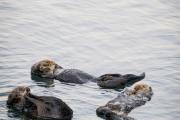
Keeping fur clean

Dr. Andrew Dickerson and colleagues at the University of Tennessee wondered why underwater surfaces collect algae and bacteria whereas the fur of semiaquatic mammals, such as otters and beavers, do not. The collection of bacteria, slime, plants, and organisms such as mussels on underwater surfaces is called “biofouling” In a new study, scientists discovered that the fur of semiaquatic animals has a unique property: each hair is able to move […]

Continue Reading →

Researchers discover starfish are even more strange than previously thought

If you asked a starfish (aka: sea star) to pick “heads or tails”, and they could understand what you were talking about, they would pick heads every time. In fact, researchers recently discovered that starfish are simply heads without a body: It gets better…starfish do not even have a brain or blood, and they eject their stomach out of their mouth to eat. Terrible table manners. Aside from these extreme […]

Continue Reading →

New paper explores how our complex kidneys evolved

The kidneys are remarkable organs responsible for filtering blood and creating urine. To learn more about how they do this, check out this YouTube video: The evolution of glomerular filtration is what allows animals to regulate the disposal of ions such as calcium, magnesium, sodium, potassium, and sulfate. Some solutes are reabsorbed from the urine and returned to the body with the help of sodium ions, whereas other solutes are […]

Continue Reading →

Physiology on the Road: “Physiology in Ohio, The Heart of it All!”

The Ohio Physiological Society met October 6-7th at The University of Toledo located in Toledo, OH. True to the name of this year’s conference, the Keynote address was given by Dr. Joseph Wu, Director of the Stanford Cardiovascular Institute and current president of the American Heart Association. His research focuses on congenital heart disease in adults as well as cardiovascular imaging. His most recent clinical trials involve testing bone-derived stem […]

Continue Reading →

Immune to cancer

Bats are known for their strong immune systems and impressive longevity. In fact, some species live 20 years or more in the wild. Unlike many long-lived species, however, cancer is a rare occurrence in bats. A new study published in Genome Biology and Evolution examined the link between immune function and cancer resistance in bats. The team characterized the genome of Jamaican fruit bats (Artibeus jamaicensis) and Mesoamerican mustached bats […]

Continue Reading →

The physiology of ‘frogsicles’ and the quest for life after death

Cope’s gray treefrogs, Dryophytes chrysoscelis, are remarkable animals that can actually survive being frozen…multiple times each year. In fact, these animals live in an environment in which temperatures commonly dip below freezing. When temperatures drop, up to 65% of their body water literally freezes. In anticipation of freezing temperatures, they begin to accumulate cryoprotectant chemicals during the fall to help protect their organs. Until now, the effects of repeated cycles […]

Continue Reading →

Scientists find clues to tissue regeneration and aging in Hydractinia

Most complex animals, like humans, lack the ability to regenerate. In contrast, some simpler life forms are able to regenerate tissues and sometimes their whole body, if necessary. In a new study published in Cell Reports, scientists discover clues to tissue and whole-body regeneration in cnidarian Hydractinia symbiolongicarpus. They discovered that aging cells send out signals that transform neighboring cells into stem cells. These stem cells are then able to […]

Continue Reading →