Ocean Life

What dolphins can teach us about healthy aging

The risk of developing cardiovascular disease increases with aging as arteries can become increasingly stiff and the inner lining, called the endothelium, can become dysfunctional. Postdoctoral fellow Dr. Yara Bernaldo De Quiros Miranda (University of Las Palmas de Gran Canaria) is interested in understanding how bottlenose dolphins, Tursiops truncatus, protect their cardiovascular system during aging. She is currently a visiting scholar at the University of Colorado at Boulder where she […]
Continue Reading →

Speaking of hypoxia tolerance…

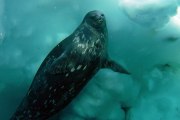
Amy Klink, a graduate student working in the laboratory of Dr. Allyson Hindle at the University of Nevada, Las Vegas, has been studying hypoxia tolerance of Weddell seals. These remarkable animals can hold their breath for 90 minutes and dive as deep as 900 meters! During such long and deep dives, these seals slow down their heart rate and constrict blood vessels in visceral as well as peripheral organs. As […]

Continue Reading →

What sea turtles can teach us about hypoxia tolerance

Imagine being able to explore the Earth’s oceans without needing special oxygen equipment. Loggerhead sea turtles have this ability and can actually hold their breath for up to 7 hours! According to the Guiness Book of World Records, Budimir Šobat from Croatia set the record in 2021 for being able to hold his breath for 24 minutes and 37.36 seconds underwater. While quite remarkable, he would need to hold his […]

Continue Reading →

2024 August Krogh Award Recipient: Dr. Martin Grosell

Congratulations to Dr. Martin Grosell, recipient of the 2024 August Krogh Distinguished Lectureship from the Comparative and Evolutionary Physiology section of the American Physiological Society! Dr. Grosell is professor and chair of the Department of Marine Biology and Ecology at the University of Miami Rosenstiel School of Marine, Atmospheric, and Earth Science in Florida. The Krogh award is sponsored by Novo Nordisk Foundation and is awarded to a member of […]

Continue Reading →

Guest Blog: Fasting as a strategy to build athletic diving capacity

Kaitlin Allen is a graduate student at the University of California, Berkeley where she studies the physiology of elephant seals in the laboratory of Dr. José Pablo Vázquez-Medina. She received the 2024 Dr. Dolittle Travel Award from the Comparative and Evolutionary Physiology section of the American Physiological Society to attend the 2024 American Physiology Summit in Long Beach, CA (April 4-7). Kaitlin prepared this award-winning guest blog entry to describe […]

Continue Reading →

Roses are red, violets are blue, beluga whales and dolphins have higher carbon monoxide than you

The lifespan of a red blood cell (RBC) in a healthy human is about 120 days and approximately 200 billion red blood cells (RBCs) are replaced every day in healthy adult humans! Most (80%) of the carbon monoxide produced in humans comes from the breakdown of heme which is released when these red blood cells (RBC) are broken down through normal homeostatic processes. Sickle cell anemia shortens the lifespan of […]

Continue Reading →

Researchers discover starfish are even more strange than previously thought

If you asked a starfish (aka: sea star) to pick “heads or tails”, and they could understand what you were talking about, they would pick heads every time. In fact, researchers recently discovered that starfish are simply heads without a body: It gets better…starfish do not even have a brain or blood, and they eject their stomach out of their mouth to eat. Terrible table manners. Aside from these extreme […]

Continue Reading →

New paper explores how our complex kidneys evolved

The kidneys are remarkable organs responsible for filtering blood and creating urine. To learn more about how they do this, check out this YouTube video: The evolution of glomerular filtration is what allows animals to regulate the disposal of ions such as calcium, magnesium, sodium, potassium, and sulfate. Some solutes are reabsorbed from the urine and returned to the body with the help of sodium ions, whereas other solutes are […]

Continue Reading →

Meet the monkeyface prickleback (that is not a typo):

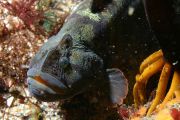
Someone must have seen a resemblance to monkeys when naming these animals. Adult monkeyface pricklebacks, Cebidichthys violaceus, weigh around 6 pounds and can grow up to 2.5 feet long. They can live up to about 18 years of age. Despite their appearance, they are not eels, although their eel-like shape allows them to hide in crevices. They are native to the California coast and their home range is only a […]

Continue Reading →

Scientists find clues to tissue regeneration and aging in Hydractinia

Most complex animals, like humans, lack the ability to regenerate. In contrast, some simpler life forms are able to regenerate tissues and sometimes their whole body, if necessary. In a new study published in Cell Reports, scientists discover clues to tissue and whole-body regeneration in cnidarian Hydractinia symbiolongicarpus. They discovered that aging cells send out signals that transform neighboring cells into stem cells. These stem cells are then able to […]

Continue Reading →