Ocean Life

Wait, what? A warm-blooded, plankton-eating shark?

During this year’s Shark Week, I came across an article published in Endangered Species Research that reported on warm-blooded basking sharks (Cetorhinus maximus). While the majority of fish and sharks are cold-blooded, researchers found that the core body temperature of these endangered basking sharks is 1-1.5 degrees celsius warmer than the water in which they swim. Because not all tissues are warm, they are ‘regionally endothermic’. While it makes sense […]

Continue Reading →

Ever wonder how a swim bladder works?

Swim bladders are special organs filled with air that help regulate the buoyancy of some bony fish, like teleosts. Check out this YouTube video which explains how the swim bladder works: Because the inner surface of this organ is lined with mucosa, researchers suspected it may contain immune cells and microbes – similar to the inner lining of mammalian lungs. In a study published in Cell Discovery, researchers confirmed the […]

Continue Reading →

Physiological Desalination

Ellie Runiewicz, an undergraduate student in the laboratory of Dr. Jason Breves at Skidmore College presented research on osmoregulation in teleost fish at the American Physiology Summit last month. Ellie’s research examined how Atlantic salmon are able to remove salts from the water they drink. When these fish live in marine environments, they are constantly drinking saltwater. Processing the water to remove the salts is therefore really important to their […]

Continue Reading →

You Can Sweat, But the Seals Can’t!

Congratulations to this year’s Dr. Dolittle Travel Award winner, Emily Lam from the University of California, Berkeley! Emily presented her research at the inaugural American Physiology Summit conference this past weekend in Long Beach, California (Lam E, Mouly M, Congdon C, Henderson K, Vazquez-Medina J. Physiological and behavioral responses of northern elephant seals (Mirounga angustirostris) to global change among three northern California rookeries). Here is a guest blog describing her […]

Continue Reading →

Aging and Immortality

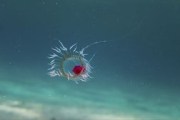
Have you ever heard of the ‘immortal’ jellyfish, Turritopsis dohrnii? These tiny creatures (about 4.5 mm) are aptly named for their ability to essentially live forever. According to the Natural History Museum, when these jellyfish are damaged, they can actually revert to a prior life cycle as a polyp and become an adult jellyfish (aka, medusa) all over again. This process is called transdifferentiation. Check out this video from the […]

Continue Reading →

Are declines in food availability to blame for the menu change?

Yesterday, we marveled over the recent sightings of two killer whales targeting sharks off the coast of South Africa. The recent uptick in shark hunting has scientists wondering how the loss of great white sharks will impact the ecosystem. But it also has some wondering why the orcas are targeting so many sharks when their diets typically consist of a variety of fish and marine mammals.   Clues may lie […]

Continue Reading →

Killer whales scare off sharks

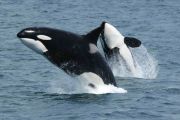
A pair of killer whales, nicknamed ‘Port and Starboard’, has been terrorizing great white sharks. In recent years as many as 8 sharks (possibly more) have succumbed to the pair. Many of the discovered sharks were missing their fatty liver and sometimes their heart. While orca hunting escapades are not particularly newsworthy, the antics of these orcas have attracted the attention of scientists as they are altering the ecosystem. Once […]

Continue Reading →

Buoyancy and Balance

Existing species of coelacanths (pictured above) are descendants of a group of fish that existed about 410 million years ago, during the early Devonian period. They can be found in the Western Indian Ocean off the coast of Indonesia. These fish are really interesting because they have very low metabolic rates. In fact, their metabolism is among the lowest of any other existing vertebrate. Even sloths are jealous of their […]

Continue Reading →

EB 2022: Seals, seals, and more seals

Several posters at EB 2022 in Philadelphia this month were focused on understanding the remarkable physiology of diving seals. Although we may think of the image below when we picture seals, they really are quite the athletes in water. Kaitlin Allen (a graduate student working in the laboratory of Dr. José Pablo Vázquez-Medina at the University of California Berkeley) presented her research on Northern elephant seals and how these animals […]

Continue Reading →

EB2022: Facing Oxygen Challenges

I learned a lot about how animals adapt to changing environmental oxygen levels in the Experimental Biology symposium on “Functional Integration across the Oxygen Cascade in the Face of Challenging Environments.” Here is what I learned… The first presenter, Dr. Lara do Amaral-Silva (postdoctoral fellow at the University of North Carolina at Greensboro working with Dr. Joseph (Joe) Santin), spoke about her research on adaptations in the bullfrog “super-brain” that […]

Continue Reading →