Reproduction and Development

Physiology on the Road: Midland physiologists search for answers

The Midland Society of Physiological Sciences, comprised of physiologists in Nebraska, South Dakota, and North Dakota is hosting their annual chapter meeting this weekend at the University of South Dakota. Dr. Javier Stern, Distinguished University Professor and Director of the Center for Neuroinflammation and Cardiometabolic Diseases at Georgia State University will present the Keynote lecture on the role of neuropeptides in the hypothalamus of the brain. The title of his […]


Continue Reading →

Physiology on the road: 17th annual Arizona Physiological Society conference

Physiologists in Arizona also shared their research this past weekend at the 17th annual Arizona Physiological Society conference held at the University of Arizona in Tucson. 2024 Arizona Physiological Society Established Scientist Keynote Address The Established Scientist Keynote Address was given by Dr. Meredith Hay, Professor and former Executive Vice President and Provost of The University of Arizona in Tucson. Dr. Hay also served as President of the American Physiological […]

Continue Reading →

Time Machine: Multitasking Melatonin

Back in 2012, the American Physiological Society put together an amazing list of the top ten articles cited in each of their journals every quarter of a century in honor of their 125th anniversary. In looking through the website this week, I stumbled upon this collection and was reminded about the amazing early foundational work and excellence in physiology research found within this body of work. So, I’d like to […]

Continue Reading →

It’s all about the glucose

A lack of available food resources drives many species to forego reproduction until conditions improve. In other words, there is a trade-off between reproduction and foraging. This link was the subject of a recent study of Drosophila melanogaster published in the American Journal of Physiology – Regulatory, Integrative and Comparative Physiology.   To examine the link, researchers placed fed or food-deprived Drosophila into a testing arena with another animal of […]

Continue Reading →

Some organisms self-destruct after reproduction

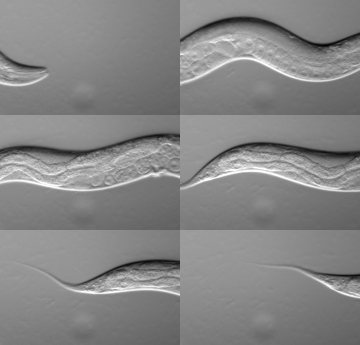
Most mammals are iteroparous, meaning they can undergo multiple cycles of reproduction and gradually advance in age. In stark contrast, semelparous species only reproduce once before they die, as the physiological toll of mating is quite high. Examples of semelparous species include Pacific salmon, which swim upstream where they die after spawning, thus becoming nutrients for their own offspring and the environment. By only 10 months of age, male kalutas […]

Continue Reading →

What do you get when you cross a dog and a fox?

Answer: A really cool hybrid (above). In 2021, someone brought a “dog” to a rehabilitation center in Vacaria, Brazil that had been injured by a car. However, upon further examination, they discovered she wasn’t a dog. She also preferred to eat rats over boring dog food. Disruptions of natural habitats in South America have led to increasing interactions between wild canids and domestic dogs. In this case, scientists discovered the […]

Continue Reading →

Benefits of reproduction outweigh costs to locomotion

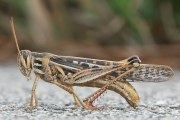
Christopher Ringer, an undergraduate student in the laboratory of Dr. Kate Feller at Union College also shared his research at the American Physiology Summit last month. His research examined the impact of reproductive weight gain on a female locust’s ability to jump. Gravid female locusts (Schistocerca americana) carrying eggs gain as much as 40% additional body mass. Despite this weight gain, they can still jump high and far when necessary. […]

Continue Reading →

Hydrogen sulfide – the gas we hate to smell, but can’t live without

Although hydrogen sulfide (H2S) is most often associated with manure and the smells of rotten eggs, research has shown it plays important physiological roles. In fact, our bodies actually produce H2S within our cells. Other source of H2S include sulfate-producing bacteria in our gut and dietary intake (such as garlic and cruciferous vegetables). H2S is a member of a group of gasotransmitters, referred to as the ‘reactive species interactome’, that […]

Continue Reading →

Infertility is not an issue for naked mole rats

Naked mole-rats have attracted the attention of scientists once again. Not only do they live very long lives (30+ years), while typically avoiding cancer, females remain fertile their whole life. Unlocking their secrets to avoiding menopause may lead to new ways to treat infertility. New research has identified their tricks for lifelong fertility. It turns out that female naked mole-rats have 1.5 million egg cells (oocytes) when they are born, […]

Continue Reading →

Aging and Immortality

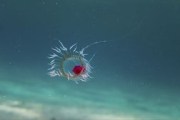
Have you ever heard of the ‘immortal’ jellyfish, Turritopsis dohrnii? These tiny creatures (about 4.5 mm) are aptly named for their ability to essentially live forever. According to the Natural History Museum, when these jellyfish are damaged, they can actually revert to a prior life cycle as a polyp and become an adult jellyfish (aka, medusa) all over again. This process is called transdifferentiation. Check out this video from the […]

Continue Reading →