Stress

High altitude deer mice have less stress?

Animals that live at high altitude have evolved a number of physiological adaptations to deal with the low atmospheric oxygen concentrations (hypoxia). For low altitude acclimated animals, short exposures to high altitude results in activation of the sympathetic nervous system (i.e. the fight or flight response). This is a good thing because activation of this system results in more blood flow, especially to the heart and brain to help protect oxygen […]

Continue Reading →

Polar bears summering on land exposed to more pathogens

Polar bears (Ursus maritimus) living near the southern Beaufort Sea are spending more time on land during the summer months than in years past as a result of climate change and melting sea ice. Researchers wanted to know whether bears that spent more time on land were exposed to more pathogens compared to those who spent more time on sea ice. Their results, published in the journal Physiological and Biochemical Zoology, showed […]

Continue Reading →

Chronic pain after an injury

A new study published in Science Advances reveals that fruit flies may feel chronic pain after an injury. While researchers have known that insects can feel pain (evidenced by their avoidance of stimuli that may be perceived as painful), they did not know whether insects developed chronic pain like people sometimes do after an injury. The research team studied fruit flies with an amputated leg resulting in damage to the […]

Continue Reading →

Chronic stress impacts everyone around us

A new study examined how our stress impacts our best friend’s mental health.  The researchers studied Shetland sheepdogs, border collies and their owners and found that dogs living with people who had high levels of stress hormone (cortisol) in their hair follicles, similarly had high levels of cortisol in their fur. In contrast, canine anxiety does not appear to run off on people. That’s good news for those of us […]

Continue Reading →

Misery loves company

A new study published in the Proceedings of the National Academy of Sciences shows that ravens appear to share negative emotions. The researchers started with offering birds two boxes placed on the left and right sides of the animals. While one box was empty, the other contained a piece of cheese (yum!). They then placed a box in a new location and examined how the birds responded. If a bird acted […]

Continue Reading →

Dr. Terrie Williams, 2019 August Krogh Distinguished Lecture

This year’s August Krogh Distinguished Lecture was awarded to Dr. Terrie Williams from the University of California at Santa Cruz. She gave an excellent lecture on her research with dolphins, narwhals and Weddell seals examining their physiological responses to diving, which includes a remarkable ability to reduce heart rate. He current research is aimed at identifying physiological mechanisms that could explain the increasing incidence of cetaceans becoming stranded on beaches […]

Continue Reading →

Historical perspectives on homeostasis

In a new article published in the American Journal of Physiology – Regulatory, Integrative and Comparative Physiology, Dr. David S. Goldstein (National Institutes of Health) presents an elegant historical perspective on homeostasis. Walter B. Cannon (1871-1945) was a physiologist at Harvard Medical School who is credited with coining the term “homeostasis” to describe how the body attempts to regulate itself to stay healthy. The ability for the body to regulate the […]

Continue Reading →

Sleep = better DNA repair

I read an interesting article published in Nature Communications that described how zebrafish larvae need sleep to help fix damaged DNA that accumulates in their brains during the day. The researchers engineered zebrafish larvae to have fluorescent chromosomes in a single neuron, which allowed them to observe double-strand breaks in the DNA build-up during wakefulness. In contrast, chromosome activity necessary for repair increased when the animals were sleeping. If the researchers disrupted […]

Continue Reading →

If only I were a fruit fly…

  Oh, to be a Drosophila. A new study published in Science Advances reports that male Drosophila have an amazing tolerance for sleep deprivation. I wish I could say the same about humans. Like people, sleep duration in flies varies between individuals, with some animals getting only a few minutes of sleep a day. In many other species, chronic sleep deprivation is associated with shorter lifespans. In this new study, researchers […]

Continue Reading →

Lack of sleep stresses out birds too

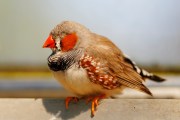
Birds show signs of stress resulting from sleep loss. A new study published in Physiological and Biochemical Zoology shows that zebra finches who are sleep deprived have increased expression of inflammatory genes in their fat tissues, spleen and hippocampus region of the brain along with  increased levels of circulating stress hormones. The hippocampus is the region of the brain associated with long term memory formation. I wonder if sleep deprived birds are […]

Continue Reading →