Time Machine

Brown adipose tissue: not just a heater or fat-burning machine
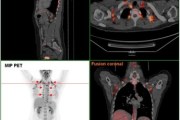
Once dismissed as a feature only babies possess, brown adipose tissue (BAT), is widely recognized as the body’s metabolism-boosting, heat-generating fat. This Time Machine episode takes a look back at early research and new discoveries about this metabolism-boosting fat. According to a 2007 paper published in the American Journal of Physiology – Endocrinology and Metabolism, it was the ability for BAT to take up glucose that enabled its discovery in […]

Continue Reading →

Mosquitoes suck! (and pee, too)

As if sucking our blood wasn’t bad enough, I was horrified to learn that mosquitoes also pee on us while they’re drinking. Yuck! In this time machine, we revisit a 1987 paper published in Physiology that explains why. Female mosquitoes require blood meals to obtain the proteins necessary for egg production. During a single meal, they can consume up to twice their body mass in blood. That’s like a 150-pound […]

Continue Reading →

Time Machine: Is lactic acid really to blame for muscle fatigue?

Have you ever experienced muscle fatigue? You know the feeling where your muscles start to burn and no matter how hard you try, you simply cannot summon any more strength? It is often assumed that the burning sensation associated with muscle fatigue is due to lactic acid building up in the muscles. But is that the full story? In this time machine post, we examine the science behind muscle fatigue […]

Continue Reading →

Time Machine: Keeping it hot…or not

In todays’ Time Machine, we are taking a look back at a paper written by Dr. Henry Gray Barbour during his time in the Department of Pharmacology at Yale University School of Medicine. Published in Physiological Reviews in 1921, his paper examined how body heat is regulated in various species. In this review, Dr. Barbour explains that water is the best medium for conducting heat throughout the body. This is […]

Continue Reading →

Time Machine: Do horses produce more heat per day than humans, and what happened to Tusko?

In this post, we travel back to 1947 to explore a fascinating review by Dr. Max Kleiber from the University of California – Davis. Published in Physiological Reviews, this review examined the relationship between body size and metabolism. Simply asking the question of whether horses produce more heat per day than humans or rats will lead one to conclude that indeed they do because of their larger body size. However, […]

Continue Reading →

Time machine: The discovery of heparin

In this post, we take a step back in time to feature two legacy articles published in the American Journal of Physiology, written by Jay McClean and Dr. William Howell who studied the physiology of blood clotting. With the 2025 American Physiology Summit taking place in Baltimore, it is only fitting that we take a step back in time to celebrate their important discoveries. Dr. Howell was born in Baltimore, […]

Continue Reading →

Time Machine: Nutritive significance of amino acids

In this Time Machine post, we travel back to 1938 to check out a manuscript on the importance of amino acids in nutrition authored by Dr. William Cumming Rose (1887-1985), professor of biochemistry at the University of Illinois, published in Physiological Reviews. His research on the importance of amino acids in the physiology of an organism culminated in 124 research, review or biographical articles and his receipt of the National […]

Continue Reading →

Time Machine: Homeostasis and ‘The Wisdom of the Body’

In this time machine post, we travel back to 1929 to discuss an article written by Dr. Walter B. Cannon, published in Physiological Reviews. Among other achievements, Dr. Cannon is perhaps best known for being the first to coin the term “homeostasis” and to describe “fight or flight responses” in organisms. As a review article, Dr. Cannon summarized observations made by others about how organisms appear to “maintain their own […]

Continue Reading →

Time Machine: Destruction of Red Corpuscles

In 1966, Dr. Peyton Rous of The Rockefeller Institute for Medical Research received the Nobel Prize in Physiology or Medicine for his discoveries on viral origins of some cancers. In an experiment, he collected cancerous connective tissue from a hen. He then filtered the tissue to remove bacteria as well as cancer cells and administered the purified filtrate to healthy chickens. The chickens that received the filtered substance began to […]

Continue Reading →

Time Machine: What in the world is ‘anhydremia’?

You’ve probably heard the term “dehydration”, but have you heard about “anhydremia”? We obtain water through food and drinks as well as metabolism. In fact, metabolic processes account for about 5-10% of water input (Lorenzo et al., 2019). We lose water daily through evaporation, breathing, urine, and feces. If an organism loses more water than they ingest, or can produce through metabolic processes, the water volume in their blood declines […]

Continue Reading →