Nature’s medicines

Although they look furry and fun to pet, larvae of asp caterpillars (like the one pictured above) would inflict pain on anyone bold enough to touch them. Underneath their “fur” lay venomous spines containing toxins that cause intense burning pain. Although other caterpillars and insects are also venomous, the particular venom produced by asp caterpillars is different. In fact, researchers at the University of Queensland in Australia think that these […]

Continue Reading →

Wait, what? A warm-blooded, plankton-eating shark?

During this year’s Shark Week, I came across an article published in Endangered Species Research that reported on warm-blooded basking sharks (Cetorhinus maximus). While the majority of fish and sharks are cold-blooded, researchers found that the core body temperature of these endangered basking sharks is 1-1.5 degrees celsius warmer than the water in which they swim. Because not all tissues are warm, they are ‘regionally endothermic’. While it makes sense […]

Continue Reading →

Understanding aging in dogs may help us all live longer

“Dog Aging Project” was founded by aging researchers Drs. Matt Kaeberlein and Daniel Promislow (University of Washington) along with Kate Creevy who is currently the Chief Veterinary Officer. The goal of the project is to examine how the environment affects healthy aging and longevity in dogs and to test anti-aging treatments. This research has the potential to also impact how we understand environmental risk factors for aging in humans as […]

Continue Reading →

Ever wonder how a swim bladder works?

Swim bladders are special organs filled with air that help regulate the buoyancy of some bony fish, like teleosts. Check out this YouTube video which explains how the swim bladder works: Because the inner surface of this organ is lined with mucosa, researchers suspected it may contain immune cells and microbes – similar to the inner lining of mammalian lungs. In a study published in Cell Discovery, researchers confirmed the […]

Continue Reading →

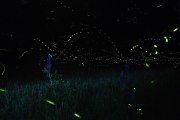
More than just “fireworks” – Fireflies may advance the treatment of epilepsy and other diseases

Ever wonder how fireflies light up the night? This Youtube video explains the physiology and biochemistry of firefly bioluminescence: Optogenetics Optogenetics is a field of science aimed at using light to activate, or inactivate, neurons and other cells. In exciting new research, scientists at Central Michigan University and Brown University are advancing the field of optogenetics by understanding the physiology of fireflies and other bioluminescent organisms. With this new research, […]

Continue Reading →

Understanding hypoxia tolerance

Hypoxia associated with ischemic stroke, heart attacks, and solid tumors causes significant pathologies in humans. However, some populations of humans that have lived at high altitudes for generations have adaptations that provide some measures of hypoxia tolerance that may lend insight into treatments for pathological hypoxia in disease states.    Researchers seeking to understand hypoxia tolerance compared the genome of Andean and Ethiopian highlander populations with the genome of Drosophila […]

Continue Reading →

Sniffing out pathogens

Rainbow trout are able to mount an immune response after simply smelling a virus or bacteria, even before they are infected. In a new study shared at the 2023 American Physiology Summit, researchers examined whether smell-induced activation of the immune response also triggers avoidance behaviors in the fish. By creating a maze that included a pathogen at one end, they discovered that the fish do in fact avoid the smell […]

Continue Reading →

Sodium is necessary to absorb some dietary nutrients

As frogs develop, their intestines become shorter and the cells on the inner lining of the intestine change. Researchers have suspected that these changes help the animals transition from a diet consisting of mainly algae as a tadpole to a carnivorous diet in adulthood. This was the subject of a recent study published in the American Journal of Physiology – Regulatory, Integrative and Comparative Physiology, which examined how the intestine […]

Continue Reading →

Targeting smells to fight obesity

Admittedly, this is not necessarily a comparative physiology topic. But I couldn’t help exploring this idea as I am munching on a chocolate chip cookie that smelled just too appetizing to walk by. Some restaurants have been accused of intentionally “pumping” out enticing smells to attract customers. After all, the aromas of cooking and baking can attract hungry customers, as well as those who had no intention of seeking out […]

Continue Reading →

Sleep prolongs lifespan

If only all mammals could hibernate. Studies have shown that some species of hibernating animals live longer and age more slowly than animals that do not hibernate. In fact, a recent study has shown that hibernation slows biological aging in yellow-bellied marmots. During hibernation, an animal’s metabolism slows to conserve energy. In the case of the yellow-bellied marmots, metabolism drops to only 1% of non-hibernating levels. The researchers observed that […]

Continue Reading →