Migratory birds create their own water to prevent dehydration

Migratory birds are amazingly adapted for long-distance flights and can switch the fuels they rely on to support their endurance activities. Unlike humans that burn mainly carbohydrates for endurance exercise, avian flight is fueled mainly by fats and some proteins. In a recent study published in the American Journal of Physiology – Regulatory, Integrative and Comparative Physiology researchers examined how white-throated sparrows (Zonotrichia albicollis) prepared for migration. By altering the […]

Continue Reading →

One reason why fish and mammals lose their appetite during stress

I don’t know about you, but sometimes I lose my appetite when I am really stressed. The endocrine system is responsible for controlling our stress responses and involves three main endocrine glands – the hypothalamus, pituitary, and adrenal gland. Hence, the stress pathway is often referred to as the “HPA axis”. When we are stressed, the hypothalamus releases a hormone called corticotropin releasing factor (CRF), which triggers the release of […]

Continue Reading →

Arizona physiologists gathered recently for their annual meeting

The Arizona Physiological Society, a chapter of the American Physiological Society, hosted their 15th annual scientific meeting this past weekend! Here are some highlights… The Keynote Address was presented by Dr. Harold D Schultz, Professor in the Department of Cellular and Integrative Physiology at the University of Nebraska. His talk focused on the physiology of heart failure and how the nervous system regulates blood pressure. This year’s Arizona Distinguished Physiologist […]

Continue Reading →

Physiology in the Midlands

Fall is an exciting time as many of the chapters of the American Physiological Society host regional conferences. The Midlands Society of Physiological Sciences hosted their annual meeting earlier this month. Here are some highlights from their meeting. Symposia highlights: The meeting was kicked off by a Keynote Lecture presented by Dr. David A Kass from Johns Hopkins University who presented his research on obesity and heart failure. Here is […]

Continue Reading →

Ever wonder why humans are attracted to the smell of fatty foods?

There has been a lot of speculation that fast food establishments and bakeries intentionally waft smells that attract customers. I’ll admit I find the smell of cheeseburgers quite tempting. Researchers are seeking to understand what draws humans to the smell of fatty foods in an effort to target those sensations as a way to combat obesity and obesity-related diseases. The approach seems reasonable. If I couldn’t smell a juicy grilled […]

Continue Reading →

It’s getting cold outside…what’s a squirrel to do?

As the weather cools down, animals must find ways to stay warm. This is especially important for small animals as they lose body heat faster than larger animals. One way to stay warm is by increasing your metabolism to create body heat, although this process requires a lot of energy. That can be a problem in areas where food may be scarce in the winter. Although some animals, like the […]

Continue Reading →

Goldfish learn how to drive and target similar visual cues as humans

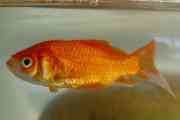
Researchers at Ben-Gurion University of the Negev constructed a tank on wheels that goldfish actually learned how to “drive”. Using cameras, the “car” was able to move in the direction the fish swam. They then tested whether the fish could purposefully navigate the car towards a target and observed that the fish could indeed swim towards a target in return for a treat, of course. In a prior study, the […]

Continue Reading →

Mice have special ‘jumping genes’ that help them survive viral infections

Researchers at the University of New South Wales (UNSW), Sydney discovered a ‘jumping gene’ that prevents the immune system of mice from overreacting to a viral infection. Jumping genes are movable nucleic acids, or transposable elements, that make up nearly 2/3 of the genome in mammals. They help regulate the expression of genes. Some transposable elements in the genome are new and some originated in ancient times. In the new […]

Continue Reading →

Aging and Immortality

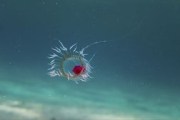
Have you ever heard of the ‘immortal’ jellyfish, Turritopsis dohrnii? These tiny creatures (about 4.5 mm) are aptly named for their ability to essentially live forever. According to the Natural History Museum, when these jellyfish are damaged, they can actually revert to a prior life cycle as a polyp and become an adult jellyfish (aka, medusa) all over again. This process is called transdifferentiation. Check out this video from the […]

Continue Reading →

Making heat to lose weight

There are many ways to stay warm on a cold day. We can seek shelter, turn up the thermostat, and huddle close together. Obvious physical adaptations to cold include fur, feathers, and clothing in the case of humans…and some pampered dogs. Blood vessels near the skin may also constrict to prevent heat loss and some animals develop a layer fat under the skin that acts like insulation. We may also […]

Continue Reading →