Zebrafish as models for human disease and drug development

Who would have thought tiny fish could lead to big advances in medicine? Zebrafish (Danio rerio) and mammals have similar anatomy and physiology of the brain, eyes, gut, and cardiovascular systems. Some of the reasons why these fish are good models to understand cardiovascular physiology were recently explored in a new article published in Physiological Reviews. Animal models are used in research that seeks to understand both normal physiological mechanisms as well […]

Continue Reading →

How bird eggs got their shape

Ever wonder why bird eggs are shaped the way they are and what drives the variations in egg shapes across species? I never really wondered that either until I saw an article in Science that explained a possible reason…then I just HAD to know. Some theories had been proposed suggesting that their shape prevented eggs from rolling out of nests or otherwise sustaining damage, and so on. According to the new study, the […]

Continue Reading →

Kea “laughter” is contagious too

Most of us have heard the phrase: Laughter is contagious. When we hear other people laughing, we often smile even if we have no idea why they are laughing. Dr. Sophie Scott from the University College of London and her colleagues played both positive sounds (like laughter) and negative sounds (like retching or screaming) to subjects and found the sounds activated the premotor cortical region of the brain. This area of the […]

Continue Reading →

Oh, the many things estrogens can do…in males

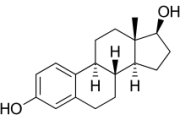
I came across an article published in Physiological Reviews with a title so irresistible (Estrogens in Male Physiology), I just had to read it. While I knew that males have estrogen, this article impressed me with the numerous things estrogens are associated with, some of which were new to me and highlight how important estrogens are to male reproductive and non-reproductive physiology. As early as the 1930’s researchers discovered that stallions had high […]

Continue Reading →

Improving endurance exercise

  We all know that aerobic exercise is good for us because it helps improve muscle function and our ability to move well. For fish, aerobic exercise helps animals escape predators, catch prey as well as improve reproduction success. When we exercise, our muscles adapt by altering the metabolism of energy, the way calcium is handled as well as the type of contractile proteins present in the muscle. Together these changes […]

Continue Reading →

Why flamingos stand on one leg

Scientists think they have discovered the reason why flamingos (Phoenicopteridae) stand on one leg. In a new study published in Biology Letters scientists studied both live flamingos and carcasses. What they found was that standing on leg requires less energy or effort than standing on both legs. In fact, the researchers found carcasses could be made to stand on one leg quite easily. As stated in the article: “By contrast, the cadaveric flamingo could not […]

Continue Reading →

Obesity gene found in Labrador retrievers

Researchers at the University of Cambridge in Britain recently studied ‘willpower’ in pet Labrador retrievers. After allowing each dog to smell a hot dog, the researchers placed the hot dog in a hamster cage and sealed it shut with duct tape. While some dogs showed only mild interest in the sealed-up hot dog, others were fixated on the out-of-reach treat. One dog, named Ash, broke apart the contraption to obtain the treat. This […]

Continue Reading →

Competition horses calmed by lavender

While lavender aromatherapy has been documented to reduce stress in humans, little is known about its potential for reducing stress in veterinary medicine. Horses can develop elevated heart rates and stress hormone levels when they are confined to horse trailers and transported to new competition venues. Therapies to reduce stress in competition horses are regulated and often prohibit the use of sedatives or oral supplements. Kylie Heitman, an undergraduate student at […]

Continue Reading →