Reducing gas emissions…from cows

No joke: California Governor Jerry Brown signed a bill to regulate ‘gas’ emissions from cows along with other sources of greenhouse gases, of course. According to an interview from NPR, dairy cows are the number one producer of methane in California. The problem with methane is that it is a major component of smog, although according to scientists at the University of California Santa Barbara, it is not the leading cause of global warming. In fact, agriculture-related […]
Continue Reading →

Extreme Physiology: Radiation Tolerance

  Don’t let their small size fool you. Tardigrades, or ‘water bears’, are really tough animals. According to a review published in the American Scientist, these microscopic invertebrates can survive extreme variations in temperature from near absolute zero (-459 deg F) up to +302 deg F. They can also tolerate pressures that are 6 times greater than the deepest ocean, exposure to ionizing radiation (UV and x-ray) and the vacuum of space, as well as exposure to […]

Continue Reading →

The cost of male pheromones

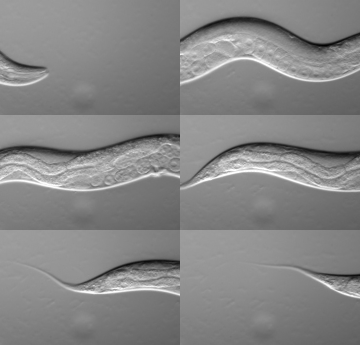
A new study conducted by researchers at Northwestern University examined the costs of reproduction in roundworms, otherwise known as C. elegans. They discovered that male roundworms can send two kinds of pheromones that prime females for reproduction. One type of pheromone they studied sparks the onset of puberty in young female worms while the other prolongs fertility in aging females.  The problem is that these changes come at a cost as it shortens the lifespan of […]

Continue Reading →

What do ‘peeps’ and ‘yo-yos’ have to do with diving?

Until now I had assumed that a “peep” was that squishy sugar-covered marshmallow treat that we enjoyed as kids and a “yo-yo” was a toy on a string. As it turns out, peep and yo-yo are also term used to described types of diving patterns. A square dive is one in which there are no excursions to the surface, known as a “peep”, except at the end of the dive, of course. This is in contrast […]

Continue Reading →

Rodent Birth Control

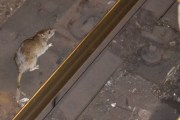
News out of Flagstaff, Arizona reports that a biotechnology company in the area, SenesTech, has developed a birth control for rats that was recently cleared by the Environmental Protection Agency. The new drug comes in the form of a sweetened liquid bait that has been shown to reduce rodent populations by as much as 40%. It works in female rats by inducing loss of eggs whereas in male rats it disrupts development of sperm. The drug is […]

Continue Reading →

Cancer resistance developing in Tasmanian devils

Tasmanian devils are rather large carnivorous marsupials. By large, I mean the world’s largest. In only 2 decades, the population of Tasmanian devils have declined by about 85%, landing these animals on the endangered species list. The cause: an infectious cancer called devil facial tumor disease (DFTD). As the name implies, this cancer causes facial tumors that grow so large, the victims starve to death in as little as 6 […]

Continue Reading →

Drug increases blood flow to the brain – Implications for stroke?

Researchers from Friedrich Schiller University (Jena, Germany) and Heinrich-Heine-University (Düsseldorf, Germany) teamed up to test whether a heart failure medication that is currently being tested might also improve blood flow in the brain. Their findings were published last month in the American Journal of Physiology, Heart and Circulatory Physiology. According to the study authors, the small blood vessels in the brains of sheep closely resemble those in the human brain. Using imaging techniques, they […]

Continue Reading →

Preventing muscle wasting in space?

I recently went on a trip to visit the Endeavour space shuttle currently on display in Los Angeles. Seeing the shuttle up close brought back memories of watching the space shuttle launches on TV and the childhood dream of visiting other planets…a dream that also inspires Hollywood to continue to produce movies and TV shows about space exploration. Turns out, The Martian movie may soon become reality. In fact, NASA is working towards sending astronauts to […]

Continue Reading →

Frigatebirds and lambs

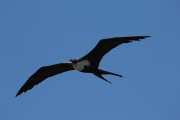
I was checking out the award-winning American Physiological Society’s I Spy Physiology blog and came across a couple of really interesting posts about animals: “If Only Birds Could Compete in the Summer Games” This post reported a study of how frigatebirds manage to sleep during flights out at sea that can last for weeks. By measuring brain activity, the research team found that the birds were capable of actual sleep, during which time both […]

Continue Reading →