Tag Archive for ‘American Physiological Society’

Sodium is necessary to absorb some dietary nutrients

As frogs develop, their intestines become shorter and the cells on the inner lining of the intestine change. Researchers have suspected that these changes help the animals transition from a diet consisting of mainly algae as a tadpole to a carnivorous diet in adulthood. This was the subject of a recent study published in the American Journal of Physiology – Regulatory, Integrative and Comparative Physiology, which examined how the intestine […]

Continue Reading →

Targeting smells to fight obesity

Admittedly, this is not necessarily a comparative physiology topic. But I couldn’t help exploring this idea as I am munching on a chocolate chip cookie that smelled just too appetizing to walk by. Some restaurants have been accused of intentionally “pumping” out enticing smells to attract customers. After all, the aromas of cooking and baking can attract hungry customers, as well as those who had no intention of seeking out […]

Continue Reading →

Physiological Desalination

Ellie Runiewicz, an undergraduate student in the laboratory of Dr. Jason Breves at Skidmore College presented research on osmoregulation in teleost fish at the American Physiology Summit last month. Ellie’s research examined how Atlantic salmon are able to remove salts from the water they drink. When these fish live in marine environments, they are constantly drinking saltwater. Processing the water to remove the salts is therefore really important to their […]

Continue Reading →

Benefits of reproduction outweigh costs to locomotion

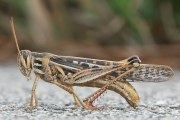
Christopher Ringer, an undergraduate student in the laboratory of Dr. Kate Feller at Union College also shared his research at the American Physiology Summit last month. His research examined the impact of reproductive weight gain on a female locust’s ability to jump. Gravid female locusts (Schistocerca americana) carrying eggs gain as much as 40% additional body mass. Despite this weight gain, they can still jump high and far when necessary. […]

Continue Reading →

Mechanisms behind hornworm self-defense discussed at the 2023 American Physiology Summit

Graduate student Christian Valtierra presented research conducted in Dr. Megumi Fuse’s lab (San Francisco State University) at the 2023 American Physiology Summit last month. The research was focused on examining the defensive strike response in Manduca sexta hornworms. Animals respond to potentially damaging stimuli with the help of sensory neurons, called nociceptors, that specialize in detecting these stimuli. In humans, activation of these receptors is what causes us to perceive […]

Continue Reading →

2023 August Krogh Distinguished Lecturer – Dr. Tobias Wang, Aarhus University

Congratulations to Dr. Tobias Wang (Aarhus University), recipient of the 2023 August Krogh Distinguished Lectureship at the American Physiology Summit. Dr. Wang’s lecture, titled Digesting snakes are a feast for integrative physiology”, was fascinating! This was such a well-deserved honor. In fact, not only did he give a lecture describing his research on the digestive physiology of snakes, but he also gave an invited talk about blood pressure regulation in […]

Continue Reading →

You Can Sweat, But the Seals Can’t!

Congratulations to this year’s Dr. Dolittle Travel Award winner, Emily Lam from the University of California, Berkeley! Emily presented her research at the inaugural American Physiology Summit conference this past weekend in Long Beach, California (Lam E, Mouly M, Congdon C, Henderson K, Vazquez-Medina J. Physiological and behavioral responses of northern elephant seals (Mirounga angustirostris) to global change among three northern California rookeries). Here is a guest blog describing her […]

Continue Reading →

Inaugural American Physiology Summit!!

I am very excited to be a part of the 2023 Inaugural American Physiology Summit sponsored by the American Physiological Society! The meeting kicked off Thursday with a Keynote address presented by Dr. David Julius, 2021 Nobel Laureate in Physiology or Medicine. Dr. Julius is currently Professor and Chair of the Department of Physiology and Morris Herzstein Chair in Molecular Biology and Medicine at the University of California, San Francisco. […]

Continue Reading →

Researchers discover a way to improve glucose regulation in fish

Many species of carnivorous fish have a difficult time metabolizing carbohydrates, resulting in hyperglycemia. In these affected species, lipids and glycogen (the storage form of glucose) build up in tissues and their growth is slowed when they are fed carbohydrate-rich diets. In addition, these fish continue to produce glucose (through gluconeogenesis) even if they consume it in their diets, which worsens their hyperglycemia. This is a major concern in the […]

Continue Reading →

Hydrogen sulfide – the gas we hate to smell, but can’t live without

Although hydrogen sulfide (H2S) is most often associated with manure and the smells of rotten eggs, research has shown it plays important physiological roles. In fact, our bodies actually produce H2S within our cells. Other source of H2S include sulfate-producing bacteria in our gut and dietary intake (such as garlic and cruciferous vegetables). H2S is a member of a group of gasotransmitters, referred to as the ‘reactive species interactome’, that […]

Continue Reading →