Tag Archive for ‘American Physiology Summit’

“Hummingbirds of the Night”

A reference to nectar-feeding bats as “hummingbirds of the night” in a presentation at the 2025 American Physiology Summit in Baltimore last month caught my eye. What an appropriate nickname for bats that can have blood sugar levels exceeding 750 mg/dl after a meal! Sure, a hummingbird would think this was normal, but for a human these levels would warrant a trip to the emergency room. New research shared by […]


Continue Reading →

The electrophysiology of sudden cardiac death in high-performance athletes

Humans and racehorses have something in common when it comes to risk of sudden cardiac death. In fact, sudden cardiac death is the 2nd most common cause of death during exercise among these athletes. Although rare, it typically affects young, seemingly healthy individuals. Research suggests that exercise itself is not to blame, but rather an underlying predisposition for irregular heart rates that exercise uncovers. The most common inherited causes of […]

Continue Reading →

Some like it hot: Genetic twists in warm hibernation

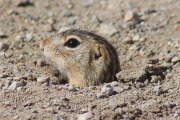
Hibernation was also a hot…I mean warm…topic at the American Physiology Summit last month in Baltimore, MD. Thomas Crippen presented research conducted with team members Dr. Dylan Barth, Zac Carlson, Dr. Frank van Breukelen, and Dr. Allyson Hindle at the University of Nevada, Las Vegas. Their study focused on golden-mantled ground squirrels, Callospermophilus lateralis, which are remarkable even among hibernators. These squirrels can enter torpor across a range of environmental […]

Continue Reading →

No air? No problem: Nature’s ultimate survivalists

Hypoxia and anoxia tolerance was a hot topic at the 2025 American Physiology Summit last month. Here are the highlights: Hafsa Yaseen and Natalie Anne Heath presented their research from Dr. Joseph Santin’s laboratory at the University of Missouri exploring how adult bullfrogs (Aquarana catesbeianus) protect their brain function following hibernation, a period when oxygen and glucose levels are often very low. The team discovered that bullfrogs could adjust their […]

Continue Reading →

2025 August Krogh Distinguished Lecturer, Dr. Michael Hedrick

We are delighted to announce that Dr. Michael Hedrick (Emeritus Professor, California State University – East Bay) received the 2025 August Krogh Distinguished Lectureship award at the 2025 American Physiology Summit! He shared his body of research on how frogs and toads (anurans) regulate their lymphatic system in a lecture entitled, “What Goes Down Must Come Up: Regulation of Lymph Movement in Anuran Amphibians.” Dr. Hedrick earned his Ph.D. in […]

Continue Reading →

Weddell seals dampen inflammatory response to combat dive induced hypoxemia injury

We are very excited to share this winning guest blog post from Amy Klink, doctoral student at the University of Nevada – Las Vegas. Amy received the Dr. Dolittle travel award to present this research at the 2025 American Physiology Summit in Baltimore. Congratulations Amy! As a kid growing up in Lake County, Illinois, I spent more than half of my summer in some lake or body of water competing […]

Continue Reading →

Celebrating National Squirrel Appreciation Day: Recent discoveries about ground squirrel hibernation

I am thrilled to have come across a calendar of fun and interesting “holidays” for all sorts of occasions, including celebrating nature and the animals around us. In honor of ‘National Squirrel Appreciation Day’, let’s take a moment to marvel at furry survival experts and the incredible science behind winter slumber in ground squirrels.     When temperatures drop, ground squirrels settle down for a long winter’s nap. During hibernation, their […]

Continue Reading →

How hummingbirds beat the heat

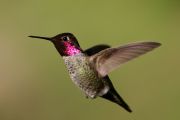
On this National Bird Day, let’s dive into some fascinating research about one of nature’s most amazing species: hummingbirds. Last spring, Dr. Derrick Groom and his team in The Avian Energetics Lab at San Francisco State University, including students Cecilia Doan and Christian Guerzon, presented their research at the 2024 American Physiology Summit. Their study explored how these tiny birds manage water loss in a warm environment (30 degrees C). […]

Continue Reading →

What dolphins can teach us about healthy aging

The risk of developing cardiovascular disease increases with aging as arteries can become increasingly stiff and the inner lining, called the endothelium, can become dysfunctional. Postdoctoral fellow Dr. Yara Bernaldo De Quiros Miranda (University of Las Palmas de Gran Canaria) is interested in understanding how bottlenose dolphins, Tursiops truncatus, protect their cardiovascular system during aging. She is currently a visiting scholar at the University of Colorado at Boulder where she […]

Continue Reading →

Speaking of hypoxia tolerance…

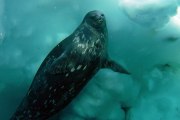
Amy Klink, a graduate student working in the laboratory of Dr. Allyson Hindle at the University of Nevada, Las Vegas, has been studying hypoxia tolerance of Weddell seals. These remarkable animals can hold their breath for 90 minutes and dive as deep as 900 meters! During such long and deep dives, these seals slow down their heart rate and constrict blood vessels in visceral as well as peripheral organs. As […]

Continue Reading →