Tag Archive for ‘animal’

Understanding Giant Pandas’ Unique Bamboo Diet

Happy National Panda Day!! Today, we celebrate one of the most beloved animals around the world. Giant pandas, Ailuropoda melanoleuca, are native to China and are the only living member of the genus, Ailuropoda. Pandas are members of the carnivorous Ursidae bear family. However, they have evolved to eat a diet consisting of close to 99% bamboo. Their jaws, teeth, digestive system and even their paws with a “false thumb” […]
Continue Reading →

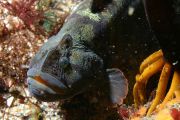
Meet the monkeyface prickleback (that is not a typo):

Someone must have seen a resemblance to monkeys when naming these animals. Adult monkeyface pricklebacks, Cebidichthys violaceus, weigh around 6 pounds and can grow up to 2.5 feet long. They can live up to about 18 years of age. Despite their appearance, they are not eels, although their eel-like shape allows them to hide in crevices. They are native to the California coast and their home range is only a […]

Continue Reading →

Seagulls pick up on human cues to find food

Have you ever experienced seagulls seemingly begging for food from you? It is not your imagination. A new study finds that seagulls really do prefer foods that have been handled by humans. The study conducted Madeleine Goumas (University of Exeter, UK) examined whether seagulls picked up on cues from humans or were simply looking for food. While standing about 8 meters away from herring gulls, the team placed two plastic-wrapped […]

Continue Reading →

Sleep = better DNA repair

I read an interesting article published in Nature Communications that described how zebrafish larvae need sleep to help fix damaged DNA that accumulates in their brains during the day. The researchers engineered zebrafish larvae to have fluorescent chromosomes in a single neuron, which allowed them to observe double-strand breaks in the DNA build-up during wakefulness. In contrast, chromosome activity necessary for repair increased when the animals were sleeping. If the researchers disrupted […]

Continue Reading →

New study shows mussels are “hot and bothered”

Freshwater organisms are especially vulnerable to environmental changes as they are exposed to both atmospheric changes as well as run-off from nearby cities; in particular, rising temperatures and increasing carbon dioxide levels from both natural factors (rainfall, geology, etc) as well as human influence (deforestatin, agriculture, urbanization). For example, studies of rivers around the world have found that carbon dioxide levels vary from 647 – 38,000 µatm. Higher levels are […]

Continue Reading →

Individuality in woodpeckers

Animals, like people, have unique sounds that allow them to recognize individuals. For example, you can hear a great spotted woodpecker calling in the first portion of this YouTube video below. In another YouTube video, we see a great spotted woodpecker doing what woodpeckers do best…pecking at wood. Woodpeckers peck (i.e. drum) to ward off rivals as well as attract mates. In a new study published in PLoS ONE, researchers examined […]

Continue Reading →

Do negative facial expressions impact dogs?

As a dog owner, it seems to me as if my canine pal understands when I am happy or mad. But, is that seeming awareness due to my facial expressions or the tone of my voice? In a new study published in Behavioural Processes, researchers at the University of Lincoln and University of Sao Paulo attempted to unravel this mystery of how angry or happy human facial expressions might make […]

Continue Reading →

Man catches rare warm-blooded fish

This past weekend a man caught a very rare fish, called an opah (aka moonfish), off the coast of Ocean City, Maryland. What makes this fish so rare is that it is the only known warm-blooded fish. In fact, they are able to keep their whole body about 5 degrees Celsius above the water they swim in. Other fish lose heat generated from muscle movements to the environment as the […]

Continue Reading →

Amazing longevity of Greenland sharks

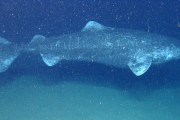
A multi-national team of scientists sought to determine the age of Greenland sharks (Somniosus microcephalus). These animals grow rather slowly (about 1cm per year) and are the largest fish in the arctic (>500 cm long), but their longevity was not yet known. The team used radiocarbon dating of crystalline proteins found within the nuclei of the eye lens. Because these proteins are formed prenatally, they offer a rather accurate way to […]

Continue Reading →