Tag Archive for ‘bird’

Why leadership stresses everyone out: From birds to bosses

From birds to people, research demonstrates that leadership roles can be really stressful. In this post, let’s explore the physiology of stress and how it affects such relationships. Stress as defined by the founder of Stress Theory, Dr. Hans Selye (1907-1982), is the “nonspecific response of the body to any demand” (Tan and Yip, 2018). Our bodies were designed to deal will short bouts of stress by releasing special stress […]

Continue Reading →

Even small birds fly high

Dr. Catherine Ivy (Assistant Professor, University of Saskatchewan, Canada), shared research this morning at the 2025 APS Summit on the remarkable hypoxia tolerance of birds. Although bar-headed geese (above) are the poster-birds for research on extreme hypoxia tolerance, I was surprised to learn that even many small migratory species of birds fly at relatively high altitude. Tiny migratory yellow-rumped warblers (~12g), for example, travel for about 6-8 hours at a […]

Continue Reading →

How hummingbirds beat the heat

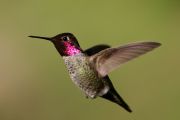
On this National Bird Day, let’s dive into some fascinating research about one of nature’s most amazing species: hummingbirds. Last spring, Dr. Derrick Groom and his team in The Avian Energetics Lab at San Francisco State University, including students Cecilia Doan and Christian Guerzon, presented their research at the 2024 American Physiology Summit. Their study explored how these tiny birds manage water loss in a warm environment (30 degrees C). […]

Continue Reading →

What happens in a forest doesn’t always stay in the forest…

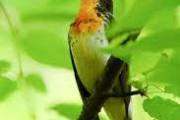
So, a male scarlet tanager flies into a forest where he meets an irresistible rose-breasted grosbeak. They share some tasty insects, and the rest is history. Or is it? What happens in a forest, doesn’t always stay in a forest. In fact, this encounter resulted in a hybrid: This male bird, found in Pennsylvania, is the hybrid offspring of a male scarlet tanager (Piranga olivacea) and a female rose-breasted grosbeak […]

Continue Reading →

Scientists witness magpies showing signs of altruism

What better way to study an animal’s movements, schedules, and behaviors than to attach a tiny tracking device that can record where they go? At least that was the intention when scientists attached tiny tracking devices to several Australian magpies. They had planned to train the birds to visit a special feeding station that was designed to charge the tracker, download data, or release it, all using a magnet. Instead, […]

Continue Reading →

Arizona Physiological Society’s annual conference: Part 2

Arizona’s physiologists met in October to talk about Rocky Mountain Spotted Fever, urbanization, the evolution of walking and vocalizations, snow leopards, and diet. Here are the highlights… Oral Presentations: Graduate student Luke Endicott from the Arizona College of Medicine at Midwestern University, working with R. Potter and Dr. C.R. Olson presented their research exploring how zebra finches learn to sing and the importance of vitamin A in this process. Does […]

Continue Reading →

Now featuring: Arizona Physiological Society

Now featuring the Arizona Physiological Society, who held their annual meeting October 29-30. In attendance were students, postdocs, and faculty from the Downtown, Tempe and West campuses of Arizona State University, AT Still University, Glendale University, Midwestern University, Northern Arizona University, as well as the Phoenix and Tucson campuses of the University of Arizona. The Keynote Address was given by Dr. William Karasov, from the University of Wisconsin Department of […]

Continue Reading →

Birds may stay warm with the help of red blood cells

Researchers at Lund University in Sweden were interested in understanding how birds adapted to cold weather. Birds can’t turn up the heat in their birdhouse, so it is important for them to find physiological ways to stay warm. While they can store body fat and grow more feathers for insulation, metabolism is the primary way endothermic animals create body heat. Mitochondria produce cellular energy (ATP) but can also create heat […]

Continue Reading →

Shape-shifting animals adapting to climate change

A recent review of the existing scientific literature found evidence suggesting that warm-blooded animals may be literally shape-shifting to adapt to climate changes. According to Allen’s rule, animals living in warmer climates have larger appendages than those living in cold climates, which helps increase the available surface area for heat loss to the environment. Such heat exchange mechanisms are very important in thermoregulation to avoid retaining excess heat. The authors […]

Continue Reading →

Scientists have come up with a word to describe birds stealing animal fur

Some birds are well-known to grab hair from living animals for use in their nests. In fact, you can spend quite a bit of time perusing YouTube video clips of birds taking hair off the back of animals and even people. The new term for this behavior is ‘kleptotrichy’, which in Greek means “to steal hair”. Check out this brave little titmouse stealing hair from a sleeping fox: Source: Science […]

Continue Reading →