
Tag Archive for ‘dehydration’

Surviving the heat: How humans and animals adapt to hot environments

Heat is a major physiological stressor that can damage proteins in the body, promote dehydration and even lead to death. Organisms living in hot environments must develop both behavioral and physiological mechanisms to prevent heat-related damage or illness. A recent review published in Physiology examined how humans and experimental animals adapt to heat (Laitano et al., 2025).    Organisms that tolerate heat effectively can maintain normal physiological functions even when […]

Continue Reading →

How hummingbirds beat the heat

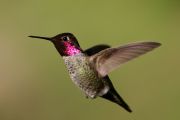
On this National Bird Day, let’s dive into some fascinating research about one of nature’s most amazing species: hummingbirds. Last spring, Dr. Derrick Groom and his team in The Avian Energetics Lab at San Francisco State University, including students Cecilia Doan and Christian Guerzon, presented their research at the 2024 American Physiology Summit. Their study explored how these tiny birds manage water loss in a warm environment (30 degrees C). […]

Continue Reading →

Time Machine: What in the world is ‘anhydremia’?

You’ve probably heard the term “dehydration”, but have you heard about “anhydremia”? We obtain water through food and drinks as well as metabolism. In fact, metabolic processes account for about 5-10% of water input (Lorenzo et al., 2019). We lose water daily through evaporation, breathing, urine, and feces. If an organism loses more water than they ingest, or can produce through metabolic processes, the water volume in their blood declines […]

Continue Reading →

New paper explores how our complex kidneys evolved

The kidneys are remarkable organs responsible for filtering blood and creating urine. To learn more about how they do this, check out this YouTube video: The evolution of glomerular filtration is what allows animals to regulate the disposal of ions such as calcium, magnesium, sodium, potassium, and sulfate. Some solutes are reabsorbed from the urine and returned to the body with the help of sodium ions, whereas other solutes are […]

Continue Reading →

Migratory birds create their own water to prevent dehydration

Migratory birds are amazingly adapted for long-distance flights and can switch the fuels they rely on to support their endurance activities. Unlike humans that burn mainly carbohydrates for endurance exercise, avian flight is fueled mainly by fats and some proteins. In a recent study published in the American Journal of Physiology – Regulatory, Integrative and Comparative Physiology researchers examined how white-throated sparrows (Zonotrichia albicollis) prepared for migration. By altering the […]

Continue Reading →

Extreme tolerance of dehydration stress

Talk about an extreme animal. During the rainy season annual killifish, Austrofundulus limnaeus, lay eggs that are resistant to droughts. This is an important attribute for a fish that lives in temporary pools of water. The stress-resistant embryos within the eggs literally shut down their metabolism to survive months – possibly years without water. For many fish, exposure to air (and oxygen) can cause profound oxidative stress. Remarkably, this is […]

Continue Reading →

Physiology in Arizona – Part 2

Now for highlights from the Arizona Physiological Society poster session that took place on October 5th. Alex Mohr (Graduate Student, Arizona State University – Phoenix) presented his research on dietary carotenoids, which are yellow, orange and red pigments synthesized by plants. Birds are known for using these dietary carotenoids for coloration (see the male mallard in the photo above). While some research suggests that carotenoids may also act as antioxidants in […]

Continue Reading →

2018 August Krogh Lecturer, Dr. Stanley Hillman

Dr. Stanley Hillman was the recipient of this year’s August Krogh Distinguished Lectureship of the American Physiological Society’s Comparative and Evolutionary Physiology section. This award was named after Dr. August Krogh, born 1874 in Denmark. His dissertation focused on studying gas exchange in frogs. In 1908 he became an Associate Professor and later chair of the Department of Zoophysiology at the University of Copenhagen. He was awarded a Nobel Prize […]

Continue Reading →

Comparative Physiology @ Experimental Biology

I am printing my posters and planning my schedule for the 2018 Experimental Biology conference, which starts this weekend. This is no doubt the highlight of my year! I am looking forward to the comparative physiology sessions. Judging from the program, I think this is going to be a really exciting conference! This year’s August Krogh Distinguished Lectureship will be given by Dr. Stanley Hillman from Portland State University who […]

Continue Reading →