Tag Archive for ‘fish’

Ocean oddity: how teleost fish stay hydrated in saltwater

It may sound strange to hear that saltwater fish need to stay hydrated. After all, they live in water. However, a review published in Physiology describes how nearly all saltwater fish are thought to have evolved from freshwater ancestors, and many maintain similar levels of salt in their blood as freshwater animals. Living in a saltwater environment means that these fish have to find a way to get rid of […]

Continue Reading →

No air? No problem: Nature’s ultimate survivalists

Hypoxia and anoxia tolerance was a hot topic at the 2025 American Physiology Summit last month. Here are the highlights: Hafsa Yaseen and Natalie Anne Heath presented their research from Dr. Joseph Santin’s laboratory at the University of Missouri exploring how adult bullfrogs (Aquarana catesbeianus) protect their brain function following hibernation, a period when oxygen and glucose levels are often very low. The team discovered that bullfrogs could adjust their […]

Continue Reading →

2024 August Krogh Award Recipient: Dr. Martin Grosell

Congratulations to Dr. Martin Grosell, recipient of the 2024 August Krogh Distinguished Lectureship from the Comparative and Evolutionary Physiology section of the American Physiological Society! Dr. Grosell is professor and chair of the Department of Marine Biology and Ecology at the University of Miami Rosenstiel School of Marine, Atmospheric, and Earth Science in Florida. The Krogh award is sponsored by Novo Nordisk Foundation and is awarded to a member of […]

Continue Reading →

Improving the health of fish exposed to arsenic and increasing environmental temperatures

Speaking of stress…scientists at the ICAR – National Institute of Abiotic Stress Management in India are exploring the use of dietary copper to help reduce stress and improve the health of fish exposed to environmental pollutants such as arsenic. Copper is an essential element for animals and humans. It is involved in bone formation and growth, nervous system function, metabolism, immune system function, and antioxidant production.1 Warming aquatic temperatures are […]

Continue Reading →

Meet the monkeyface prickleback (that is not a typo):

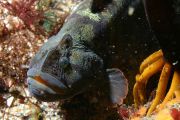
Someone must have seen a resemblance to monkeys when naming these animals. Adult monkeyface pricklebacks, Cebidichthys violaceus, weigh around 6 pounds and can grow up to 2.5 feet long. They can live up to about 18 years of age. Despite their appearance, they are not eels, although their eel-like shape allows them to hide in crevices. They are native to the California coast and their home range is only a […]

Continue Reading →

Researchers discover a way to improve glucose regulation in fish

Many species of carnivorous fish have a difficult time metabolizing carbohydrates, resulting in hyperglycemia. In these affected species, lipids and glycogen (the storage form of glucose) build up in tissues and their growth is slowed when they are fed carbohydrate-rich diets. In addition, these fish continue to produce glucose (through gluconeogenesis) even if they consume it in their diets, which worsens their hyperglycemia. This is a major concern in the […]

Continue Reading →

Buoyancy and Balance

Existing species of coelacanths (pictured above) are descendants of a group of fish that existed about 410 million years ago, during the early Devonian period. They can be found in the Western Indian Ocean off the coast of Indonesia. These fish are really interesting because they have very low metabolic rates. In fact, their metabolism is among the lowest of any other existing vertebrate. Even sloths are jealous of their […]

Continue Reading →

Nitrites and noses

If you have ever had a fish tank, you may be familiar with monitoring ammonia levels in the water. Ammonia levels can rise due to overcrowding, overfeeding, as well as fish waste. Nitrite levels in the water also require monitoring as nitrite can bind to hemoglobin, which prevents oxygen from binding. In effect, by preventing oxygen from binding, the fish can succumb to hypoxia. Hannah Hughes, a graduate student working […]

Continue Reading →

EB 2022: Adapting to a changing climate

EB 2022 was a fantastic meeting (as usual) for comparative physiology. This meeting marked the last Experimental Biology conference as each society will be hosting their own meetings going forward. I soaked up as much as I could and will be sharing what I learned at the meeting over the coming weeks. “Predicting Species Physiological Responses to a Changing Climate” The first speaker in this symposium was Dr. Hollie Putnam […]

Continue Reading →

2022 August Krogh Distinguished Lecturer, Dr. Patricia Schulte

Each year, the Comparative and Evolutionary Physiology section of the American Physiological Society presents their highest award, the August Krogh Distinguished Lecture, to a comparative physiologist who “has made major and meritorious contributions” to the field. Dr. August Krogh (1874-1949) was a physiologist who won the Nobel Prize in Physiology or Medicine in 1920. He was very interested in zoology and joined the University of Copenhagen as an Associate Professor […]

Continue Reading →