Tag Archive for ‘heart attack’

Brain Power on a Budget: How Bullfrogs Survive Without Oxygen

Did you know that your brain is really greedy? It uses about 5.7 kilograms of ATP every day, which is an incredible amount of energy! To keep up with such demand, the brain depends on an adequate supply of oxygen and nutrients, such as glucose. When oxygen or nutrient delivery are limited, like during a heart attack, stroke or in low-oxygen environments, the brain is unable to produce enough ATP […]

Continue Reading →

Physiology on the Road: “Physiology in Ohio, The Heart of it All!”

The Ohio Physiological Society met October 6-7th at The University of Toledo located in Toledo, OH. True to the name of this year’s conference, the Keynote address was given by Dr. Joseph Wu, Director of the Stanford Cardiovascular Institute and current president of the American Heart Association. His research focuses on congenital heart disease in adults as well as cardiovascular imaging. His most recent clinical trials involve testing bone-derived stem […]

Continue Reading →

Understanding hypoxia tolerance

Hypoxia associated with ischemic stroke, heart attacks, and solid tumors causes significant pathologies in humans. However, some populations of humans that have lived at high altitudes for generations have adaptations that provide some measures of hypoxia tolerance that may lend insight into treatments for pathological hypoxia in disease states.    Researchers seeking to understand hypoxia tolerance compared the genome of Andean and Ethiopian highlander populations with the genome of Drosophila […]

Continue Reading →

New study discovers how zebrafish mend a broken heart

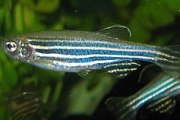
A new study has helped unravel the mystery explaining how zebrafish regenerate a broken heart. Their findings, published in Nature Genetics, reveal how these amazing little fish can regrow up to 20% of their heart in only 2 months following an injury. This regeneration is driven by signals released from special cells called fibroblasts. When the heart of zebrafish is injured by a stimulus that mimics a heart attack (using […]

Continue Reading →

More on the uniqueness of humans when it comes to heart disease…

With Valentine’s Day just around the corner, heart-themed items seem to be everywhere. It is no surprise that I started thinking more and more about how humans are unique from other animals when it comes to heart disease. In my last entry, we talked about a few genetic variants that protect some humans from heart disease as well as the observation that many carnivores do not develop atherosclerosis, even when […]

Continue Reading →

Fish offer clues to fixing broken hearts

About a year ago we talked about how Mexican tetra (Astyanax mexicanus) may hold the clues to treating diabetes. New research shows that is not all these tiny fish can teach us. Researchers at the University College London and the University of Oxford now think these fish may hold clues to regenerating damaged heart tissue. Their findings were published in Cell Reports. Mexican tetra are freshwater fish. Over millions of years, […]

Continue Reading →

Ohio is talking about fixing broken hearts, the physiology of freezing, combating opioid addiction and more

The Ohio Physiological Society held their 33rd Annual Meeting at the University of Cincinnati this weekend. The keynote address was given by Dr. Mark Sussman from San Diego State University. He spoke about current research strategies that aim to improve the ability for the heart to repair itself after heart failure. Dr. Perwez Alam (University of Cincinnati) also spoke about using siRNA to try to repair heart tissue after heart attacks and […]

Continue Reading →