
Tag Archive for ‘hummingbird’

How hummingbirds beat the heat
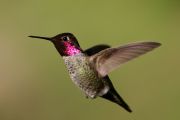
On this National Bird Day, let’s dive into some fascinating research about one of nature’s most amazing species: hummingbirds. Last spring, Dr. Derrick Groom and his team in The Avian Energetics Lab at San Francisco State University, including students Cecilia Doan and Christian Guerzon, presented their research at the 2024 American Physiology Summit. Their study explored how these tiny birds manage water loss in a warm environment (30 degrees C). […]


Continue Reading →

Hummingbirds can choose how deep to sleep

Could you imagine drinking a can of soda every minute just to support your high metabolism? Amazingly, that is the equivalent to how much sugar a hummingbird needs to support their rapid wingbeats during flight. In fact, hummingbird flight muscles are the fastest on record, allowing the birds to flap their wings at a rate of up to 200 beats per second! That explains why they are always at my […]

Continue Reading →

Very high intensity exercise: hovering

I just read an interesting review published in Physiology of flight energetics and fuel use in nectar feeding hummingbirds and bats. While flight is considered pretty high intensity exercise, hovering flight is even more demanding. Hummingbirds and nectar feeding bats are really tiny and thus have very high metabolisms to maintain body heat. Some of these animals are also migratory, which is an even greater energy demand. Remarkably, they sustain […]

Continue Reading →

Flight advantages in older hummingbirds

In a new study published in The Auk, scientists report that well-fueled older tiny Ruby-throated Hummingbirds (Archilochus colubris) might be capable of non-stop flights of over 4,000 kilometers, wind conditions permitting. They made this remarkable observation while studying birds from 2010-2014 as the animals made stopovers at a wildlife refuge during their annual migration to South America. In general, older birds not only showed up at the wildlife refuge in Alabama earlier than younger birds, they also tended […]

Continue Reading →