Tag Archive for ‘hypoxia’

Primed for survival: How sea hares inspire new clues to protect the brain from low oxygen conditions such as stroke

Sea hares (Aplysia californica) live in coastal environments where oxygen levels can fluctuate unpredictably. Knowing this, researchers set out to explore how these animals tolerate regular exposure to hypoxia (low oxygen) with the hope of discovering clues that could teach us how to protect humans from hypoxia-related conditions, such as stroke. To do this, they compared offspring from two types of parents: those collected from the wild that likely experienced […]


Continue Reading →

Brain Power on a Budget: How Bullfrogs Survive Without Oxygen

Did you know that your brain is really greedy? It uses about 5.7 kilograms of ATP every day, which is an incredible amount of energy! To keep up with such demand, the brain depends on an adequate supply of oxygen and nutrients, such as glucose. When oxygen or nutrient delivery are limited, like during a heart attack, stroke or in low-oxygen environments, the brain is unable to produce enough ATP […]

Continue Reading →

Physiologists in California meet today to discuss the latest research

The California Society of Physiologists is hosting their annual meeting today at the University of California Davis campus! Adapting to high altitude The keynote address will be given this evening by Dr. Tatum Simonson (Associate Professor, University of California San Diego) who will speak about, “Variation in human responses to low oxygen: Insights from Mount Everest to Machu Picchu.” Together with Dr. Francisco Villafuerte (Universidad Peruana Cayetano Heredia, Lima, Peru) […]

Continue Reading →

Speaking of hypoxia tolerance…

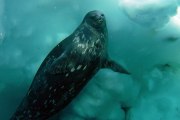
Amy Klink, a graduate student working in the laboratory of Dr. Allyson Hindle at the University of Nevada, Las Vegas, has been studying hypoxia tolerance of Weddell seals. These remarkable animals can hold their breath for 90 minutes and dive as deep as 900 meters! During such long and deep dives, these seals slow down their heart rate and constrict blood vessels in visceral as well as peripheral organs. As […]

Continue Reading →

What sea turtles can teach us about hypoxia tolerance

Imagine being able to explore the Earth’s oceans without needing special oxygen equipment. Loggerhead sea turtles have this ability and can actually hold their breath for up to 7 hours! According to the Guiness Book of World Records, Budimir Šobat from Croatia set the record in 2021 for being able to hold his breath for 24 minutes and 37.36 seconds underwater. While quite remarkable, he would need to hold his […]

Continue Reading →

Flexible hypoxia tolerance in frogs

In a new study published in The Journal of Neuroscience and presented at the American Physiology Summit earlier this month, graduate student Nikolaus Bueschke, postdoctoral fellow Dr. Lara Amaral-Silva and Dr. Joseph Santin (University of Missouri, Columbia) together with researchers Min Hu and Alvaro Alvarez (University of North Carolina at Greensboro), explored how bullfrogs (Lithobates catesbeianus) emerging from hibernation tolerate hypoxia while they kickstart physiological functions in ice-covered ponds. This […]

Continue Reading →

High altitude survival and adaptation

Life at high altitude presents unique physiological challenges for organisms that were explored in a recent review published in the American Journal of Physiology – Regulatory, Integrative and Comparative Physiology. For placental mammals, offspring born at high altitude (>2500 m above sea level) typically weigh less at birth compared to lowland animals. Fetal growth restriction is problematic as it is associated with long-term health risks and reduced survival. It is […]

Continue Reading →

Extreme Physiology of Diving

Can you imagine what would happen to your body if you dove up to 1700 meters deep in the ocean for an hour and a half, or experienced months of food deprivation? In the case of deep diving, the high pressure causes the collapse of the lungs of terrestrial mammals (including humans!) and depletion of body oxygen stores, whereas long fasting periods compromise health and induce muscle wasting. Northern elephant […]

Continue Reading →

Surviving the cold

The ability to regulate body temperature is critical for animals. This is especially true for small mammals as they have a larger surface area resulting in more heat loss to the environment than larger animals. Animals that stay active during the winter likewise have to spend more energy to stay warm. To do this well, they need to balance heat loss with heat generation through shivering as well as non-shivering […]

Continue Reading →

Anoxia tolerance in goldfish

The reason mammals are not very good at tolerating hypoxic (i.e. low oxygen) environments, is because the brain relies heavily on oxygen for metabolism. It is so stingy, it uses about 20% of the oxygen in the body to make ATP. Without oxygen, the brain has to rely on glycolysis to make ATP and this process is not good at meeting the energy requirements of the neurons, ultimately resulting in […]

Continue Reading →