Tag Archive for ‘medicine’

Primed for survival: How sea hares inspire new clues to protect the brain from low oxygen conditions such as stroke

Sea hares (Aplysia californica) live in coastal environments where oxygen levels can fluctuate unpredictably. Knowing this, researchers set out to explore how these animals tolerate regular exposure to hypoxia (low oxygen) with the hope of discovering clues that could teach us how to protect humans from hypoxia-related conditions, such as stroke. To do this, they compared offspring from two types of parents: those collected from the wild that likely experienced […]


Continue Reading →

Best Friend or Stress Test? What Pets Do to Our Bodies

According to the National Institutes of Health (NIH), 68% of households in the United States have a pet. Pets are thought to help people by decreasing stress and improving cardiovascular health. The NIH and Mar’s Corporation WALTHAM Centre for Pet Nutrition have teamed up to support research examining such questions, but the results have been mixed. According to Dr. Layla Esposito, who leads the NIH Human-Animal Interaction Research Program, people […]

Continue Reading →

Why leadership stresses everyone out: From birds to bosses

From birds to people, research demonstrates that leadership roles can be really stressful. In this post, let’s explore the physiology of stress and how it affects such relationships. Stress as defined by the founder of Stress Theory, Dr. Hans Selye (1907-1982), is the “nonspecific response of the body to any demand” (Tan and Yip, 2018). Our bodies were designed to deal will short bouts of stress by releasing special stress […]

Continue Reading →

Muscle adaptations to endurance exercise

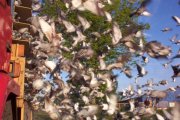
Happy Pigeon Appreciation Day! Okay, I know it sounds strange to celebrate pigeons – the animal best known for gathering in large numbers, causing a raucous, as well as perching and pooping on just about everything. For just a moment though, I would like to consider the unique athletic attributes of these popcorn and park loving birds vs humans engaged in endurance exercise. Have you ever heard of pigeon racing […]

Continue Reading →

Time Machine: Keeping it hot…or not

In todays’ Time Machine, we are taking a look back at a paper written by Dr. Henry Gray Barbour during his time in the Department of Pharmacology at Yale University School of Medicine. Published in Physiological Reviews in 1921, his paper examined how body heat is regulated in various species. In this review, Dr. Barbour explains that water is the best medium for conducting heat throughout the body. This is […]

Continue Reading →

The electrophysiology of sudden cardiac death in high-performance athletes

Humans and racehorses have something in common when it comes to risk of sudden cardiac death. In fact, sudden cardiac death is the 2nd most common cause of death during exercise among these athletes. Although rare, it typically affects young, seemingly healthy individuals. Research suggests that exercise itself is not to blame, but rather an underlying predisposition for irregular heart rates that exercise uncovers. The most common inherited causes of […]

Continue Reading →

No air? No problem: Nature’s ultimate survivalists

Hypoxia and anoxia tolerance was a hot topic at the 2025 American Physiology Summit last month. Here are the highlights: Hafsa Yaseen and Natalie Anne Heath presented their research from Dr. Joseph Santin’s laboratory at the University of Missouri exploring how adult bullfrogs (Aquarana catesbeianus) protect their brain function following hibernation, a period when oxygen and glucose levels are often very low. The team discovered that bullfrogs could adjust their […]

Continue Reading →

New study explores whether diet and blood sugar affect cancer risk

A new study published by researchers at Arizona State University, led by Dr. Carlo Maley, in Nature Communications set out to examine whether vertebrates that have high blood sugar are at greater risk of developing cancer. The current study follows on the heels of prior work by his team that was published in Evolution, Medicine, and Public Health last summer showing that cancer prevalence is lower in birds than other […]

Continue Reading →

Surviving the heat: How humans and animals adapt to hot environments

Heat is a major physiological stressor that can damage proteins in the body, promote dehydration and even lead to death. Organisms living in hot environments must develop both behavioral and physiological mechanisms to prevent heat-related damage or illness. A recent review published in Physiology examined how humans and experimental animals adapt to heat (Laitano et al., 2025).    Organisms that tolerate heat effectively can maintain normal physiological functions even when […]

Continue Reading →

The gatekeepers of life: Exploring the complex role of GPCRs

Cell membranes are incredibly complex environments that play crucial roles in interacting with other cells, sensing specific molecules in the body, controlling what crosses the membrane, and other vital functions. The composition of these membranes varies between organs in an animal, between similar organs in different species, and even between individuals of the same species. Think of cell membranes as gatekeepers, responsible for detecting various chemical signals (such as ions […]

Continue Reading →