Tag Archive for ‘mental-health’

Best Friend or Stress Test? What Pets Do to Our Bodies

According to the National Institutes of Health (NIH), 68% of households in the United States have a pet. Pets are thought to help people by decreasing stress and improving cardiovascular health. The NIH and Mar’s Corporation WALTHAM Centre for Pet Nutrition have teamed up to support research examining such questions, but the results have been mixed. According to Dr. Layla Esposito, who leads the NIH Human-Animal Interaction Research Program, people […]

Continue Reading →

Why leadership stresses everyone out: From birds to bosses

From birds to people, research demonstrates that leadership roles can be really stressful. In this post, let’s explore the physiology of stress and how it affects such relationships. Stress as defined by the founder of Stress Theory, Dr. Hans Selye (1907-1982), is the “nonspecific response of the body to any demand” (Tan and Yip, 2018). Our bodies were designed to deal will short bouts of stress by releasing special stress […]

Continue Reading →

No air? No problem: Nature’s ultimate survivalists

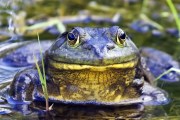
Hypoxia and anoxia tolerance was a hot topic at the 2025 American Physiology Summit last month. Here are the highlights: Hafsa Yaseen and Natalie Anne Heath presented their research from Dr. Joseph Santin’s laboratory at the University of Missouri exploring how adult bullfrogs (Aquarana catesbeianus) protect their brain function following hibernation, a period when oxygen and glucose levels are often very low. The team discovered that bullfrogs could adjust their […]

Continue Reading →

Weddell seals dampen inflammatory response to combat dive induced hypoxemia injury

We are very excited to share this winning guest blog post from Amy Klink, doctoral student at the University of Nevada – Las Vegas. Amy received the Dr. Dolittle travel award to present this research at the 2025 American Physiology Summit in Baltimore. Congratulations Amy! As a kid growing up in Lake County, Illinois, I spent more than half of my summer in some lake or body of water competing […]

Continue Reading →

Brain Power on a Budget: How Bullfrogs Survive Without Oxygen

Did you know that your brain is really greedy? It uses about 5.7 kilograms of ATP every day, which is an incredible amount of energy! To keep up with such demand, the brain depends on an adequate supply of oxygen and nutrients, such as glucose. When oxygen or nutrient delivery are limited, like during a heart attack, stroke or in low-oxygen environments, the brain is unable to produce enough ATP […]

Continue Reading →

Physiology on the road: 17th annual Arizona Physiological Society conference

Physiologists in Arizona also shared their research this past weekend at the 17th annual Arizona Physiological Society conference held at the University of Arizona in Tucson. 2024 Arizona Physiological Society Established Scientist Keynote Address The Established Scientist Keynote Address was given by Dr. Meredith Hay, Professor and former Executive Vice President and Provost of The University of Arizona in Tucson. Dr. Hay also served as President of the American Physiological […]

Continue Reading →

Even shy animals find overcrowded conditions more stressful than bold animals

In a newly published study in the American Journal of Physiology – Regulatory, Integrative and Comparative Physiology, researchers examined the relationship between behavioral and physiological responses to stress in a model organism, zebrafish. Following a series of behavioral tests, the fish were classified as either shy or bold and were then exposed to either overcrowded (32 fish per liter) or control conditions (1.6 fish per liter). After 10 days, the […]

Continue Reading →

Flexible hypoxia tolerance in frogs

In a new study published in The Journal of Neuroscience and presented at the American Physiology Summit earlier this month, graduate student Nikolaus Bueschke, postdoctoral fellow Dr. Lara Amaral-Silva and Dr. Joseph Santin (University of Missouri, Columbia) together with researchers Min Hu and Alvaro Alvarez (University of North Carolina at Greensboro), explored how bullfrogs (Lithobates catesbeianus) emerging from hibernation tolerate hypoxia while they kickstart physiological functions in ice-covered ponds. This […]

Continue Reading →