Tag Archive for ‘metabolism’

Brown adipose tissue: not just a heater or fat-burning machine
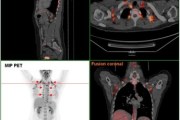
Once dismissed as a feature only babies possess, brown adipose tissue (BAT), is widely recognized as the body’s metabolism-boosting, heat-generating fat. This Time Machine episode takes a look back at early research and new discoveries about this metabolism-boosting fat. According to a 2007 paper published in the American Journal of Physiology – Endocrinology and Metabolism, it was the ability for BAT to take up glucose that enabled its discovery in […]


Continue Reading →

Time Machine: Keeping it hot…or not

In todays’ Time Machine, we are taking a look back at a paper written by Dr. Henry Gray Barbour during his time in the Department of Pharmacology at Yale University School of Medicine. Published in Physiological Reviews in 1921, his paper examined how body heat is regulated in various species. In this review, Dr. Barbour explains that water is the best medium for conducting heat throughout the body. This is […]

Continue Reading →

Time Machine: Do horses produce more heat per day than humans, and what happened to Tusko?

In this post, we travel back to 1947 to explore a fascinating review by Dr. Max Kleiber from the University of California – Davis. Published in Physiological Reviews, this review examined the relationship between body size and metabolism. Simply asking the question of whether horses produce more heat per day than humans or rats will lead one to conclude that indeed they do because of their larger body size. However, […]

Continue Reading →

Time Machine: What in the world is ‘anhydremia’?

You’ve probably heard the term “dehydration”, but have you heard about “anhydremia”? We obtain water through food and drinks as well as metabolism. In fact, metabolic processes account for about 5-10% of water input (Lorenzo et al., 2019). We lose water daily through evaporation, breathing, urine, and feces. If an organism loses more water than they ingest, or can produce through metabolic processes, the water volume in their blood declines […]

Continue Reading →

New research shows that muscles in hibernating animals consume energy

Hibernation allows animals to reduce their energy needs during winter, when food may be scarce and high amounts of energy would be required to maintain body temperature. These animals prepare for winter by storing body fat that can be used as fuel during hibernation. Skeletal muscles in particular have high energy needs as they make up nearly half of an animal’s body mass. They also play important roles in regulating […]

Continue Reading →

Let’s stop lactate-shaming

As wisely stated in an editorial by Dr. George Brooks, UC Berkeley (2001), “Nature is smarter, and things are more complex than we mortals imagine.” Sure lactate is produced during exercise and is often blamed for causing muscles to fatigue, but there is much more to the story. In fact, research has shown that lactate plays many important physiological roles in the body such as serving as a metabolic fuel […]

Continue Reading →

“Gatorcicles”

Freezing temperatures are no match for alligators. Recent images emerging from Texas and North Carolina show frozen ponds and swamps dotted with alligators. Similar to animals that experience torpor, alligators are able to reduce their metabolism and heart rate to as little as three beats per minute to survive freezing temperatures. This torpor-like state is called brumation. Poking their snouts above the ice before it freezes, allows them to continue […]

Continue Reading →

Targeting smells to fight obesity

Admittedly, this is not necessarily a comparative physiology topic. But I couldn’t help exploring this idea as I am munching on a chocolate chip cookie that smelled just too appetizing to walk by. Some restaurants have been accused of intentionally “pumping” out enticing smells to attract customers. After all, the aromas of cooking and baking can attract hungry customers, as well as those who had no intention of seeking out […]

Continue Reading →

Now we know how life underground reduces metabolism

…at least for mole-rats. African mole-rats live in dark underground dwellings where oxygen and food are scarce, and humidity and temperatures are high. These animals have low metabolic rates and body temperatures uniquely adapted to their life underground. Metabolism is controlled in part by thyroid hormones. To understand the role of thyroid hormone in mole-rats, researchers examined the thyroid gland and hormones in naked mole-rats (Heterocephalus glaber) as well as […]

Continue Reading →

Migratory birds create their own water to prevent dehydration

Migratory birds are amazingly adapted for long-distance flights and can switch the fuels they rely on to support their endurance activities. Unlike humans that burn mainly carbohydrates for endurance exercise, avian flight is fueled mainly by fats and some proteins. In a recent study published in the American Journal of Physiology – Regulatory, Integrative and Comparative Physiology researchers examined how white-throated sparrows (Zonotrichia albicollis) prepared for migration. By altering the […]

Continue Reading →