Tag Archive for ‘Physiological Reviews’

Time Machine: Keeping it hot…or not

In todays’ Time Machine, we are taking a look back at a paper written by Dr. Henry Gray Barbour during his time in the Department of Pharmacology at Yale University School of Medicine. Published in Physiological Reviews in 1921, his paper examined how body heat is regulated in various species. In this review, Dr. Barbour explains that water is the best medium for conducting heat throughout the body. This is […]


Continue Reading →

The gatekeepers of life: Exploring the complex role of GPCRs

Cell membranes are incredibly complex environments that play crucial roles in interacting with other cells, sensing specific molecules in the body, controlling what crosses the membrane, and other vital functions. The composition of these membranes varies between organs in an animal, between similar organs in different species, and even between individuals of the same species. Think of cell membranes as gatekeepers, responsible for detecting various chemical signals (such as ions […]

Continue Reading →

Time Machine: Do horses produce more heat per day than humans, and what happened to Tusko?

In this post, we travel back to 1947 to explore a fascinating review by Dr. Max Kleiber from the University of California – Davis. Published in Physiological Reviews, this review examined the relationship between body size and metabolism. Simply asking the question of whether horses produce more heat per day than humans or rats will lead one to conclude that indeed they do because of their larger body size. However, […]

Continue Reading →

Time Machine: Homeostasis and ‘The Wisdom of the Body’

In this time machine post, we travel back to 1929 to discuss an article written by Dr. Walter B. Cannon, published in Physiological Reviews. Among other achievements, Dr. Cannon is perhaps best known for being the first to coin the term “homeostasis” and to describe “fight or flight responses” in organisms. As a review article, Dr. Cannon summarized observations made by others about how organisms appear to “maintain their own […]

Continue Reading →

Time Machine: Destruction of Red Corpuscles

In 1966, Dr. Peyton Rous of The Rockefeller Institute for Medical Research received the Nobel Prize in Physiology or Medicine for his discoveries on viral origins of some cancers. In an experiment, he collected cancerous connective tissue from a hen. He then filtered the tissue to remove bacteria as well as cancer cells and administered the purified filtrate to healthy chickens. The chickens that received the filtered substance began to […]

Continue Reading →

Time Machine: What in the world is ‘anhydremia’?

You’ve probably heard the term “dehydration”, but have you heard about “anhydremia”? We obtain water through food and drinks as well as metabolism. In fact, metabolic processes account for about 5-10% of water input (Lorenzo et al., 2019). We lose water daily through evaporation, breathing, urine, and feces. If an organism loses more water than they ingest, or can produce through metabolic processes, the water volume in their blood declines […]

Continue Reading →

Hydrogen sulfide – the gas we hate to smell, but can’t live without

Although hydrogen sulfide (H2S) is most often associated with manure and the smells of rotten eggs, research has shown it plays important physiological roles. In fact, our bodies actually produce H2S within our cells. Other source of H2S include sulfate-producing bacteria in our gut and dietary intake (such as garlic and cruciferous vegetables). H2S is a member of a group of gasotransmitters, referred to as the ‘reactive species interactome’, that […]

Continue Reading →

Keeping it cool when it gets hot

Human thermoregulation in a warm environment Thermoregulation is the ability for an organism to control body temperature within a specified physiological range even when environmental temperatures vary. A recent article published in Physiological Reviews explored thermoregulation in humans and how various factors such as age, body shape, adaptation, and biological sex impact a person’s ability to maintain body temperature. They also explored how various diseases such as multiple sclerosis, diabetes, […]

Continue Reading →

The biological importance of carbonic anhydrase enzyme

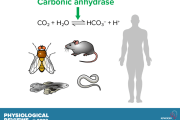
Carbonic anhydrase is an important enzyme that regulates the acid-base balance of an organism. In fact, carbonic anhydrase (CA) is so important to homeostasis, it is found in all living organisms studied to date – from microorganisms (like bacteria) to mammals. As the name implies, this enzyme is responsible for catalyzing the hydration of carbon dioxide, which is a reversible process (see figure above). In other words, it speeds up […]

Continue Reading →

The complex interplay between pathogens and our immune system

I read an interesting review article explaining how cells evolved the ability to kill off pathogens and, in turn, how pathogens evade death. It is kind of like a perpetual game of ‘cat and mouse’ in which the interaction between animals and pathogens drives the evolution of host defenses against infections while at the same time driving the evolution of pathogen strategies to avoid detection. According to the review article, […]

Continue Reading →