Tag Archive for ‘physiology’

Mosquitoes suck! (and pee, too)

As if sucking our blood wasn’t bad enough, I was horrified to learn that mosquitoes also pee on us while they’re drinking. Yuck! In this time machine, we revisit a 1987 paper published in Physiology that explains why. Female mosquitoes require blood meals to obtain the proteins necessary for egg production. During a single meal, they can consume up to twice their body mass in blood. That’s like a 150-pound […]

Continue Reading →

Time Machine: Is lactic acid really to blame for muscle fatigue?

Have you ever experienced muscle fatigue? You know the feeling where your muscles start to burn and no matter how hard you try, you simply cannot summon any more strength? It is often assumed that the burning sensation associated with muscle fatigue is due to lactic acid building up in the muscles. But is that the full story? In this time machine post, we examine the science behind muscle fatigue […]

Continue Reading →

Ocean oddity: how teleost fish stay hydrated in saltwater

It may sound strange to hear that saltwater fish need to stay hydrated. After all, they live in water. However, a review published in Physiology describes how nearly all saltwater fish are thought to have evolved from freshwater ancestors, and many maintain similar levels of salt in their blood as freshwater animals. Living in a saltwater environment means that these fish have to find a way to get rid of […]

Continue Reading →

Brain Power on a Budget: How Bullfrogs Survive Without Oxygen

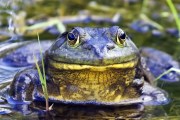
Did you know that your brain is really greedy? It uses about 5.7 kilograms of ATP every day, which is an incredible amount of energy! To keep up with such demand, the brain depends on an adequate supply of oxygen and nutrients, such as glucose. When oxygen or nutrient delivery are limited, like during a heart attack, stroke or in low-oxygen environments, the brain is unable to produce enough ATP […]

Continue Reading →

Little-known functions of the spleen: Q&A with Dr. Frank van Breukelen and Gilbecca Smith, University of Las Vegas

We are excited to feature Dr. Frank van Breukelen and his graduate student, Gilbecca Rae Smith, from the University of Las Vegas, Nevada. They presented exciting new research at the 2024 American Physiology Summit examining some little-known functions of the spleen.  Q: We often associate the spleen with its ability to filter blood and make white blood cells to fight infections. We don’t often consider the importance of its ability to […]

Continue Reading →

Time Machine: Multitasking Melatonin

Back in 2012, the American Physiological Society put together an amazing list of the top ten articles cited in each of their journals every quarter of a century in honor of their 125th anniversary. In looking through the website this week, I stumbled upon this collection and was reminded about the amazing early foundational work and excellence in physiology research found within this body of work. So, I’d like to […]

Continue Reading →

2024 August Krogh Award Recipient: Dr. Martin Grosell

Congratulations to Dr. Martin Grosell, recipient of the 2024 August Krogh Distinguished Lectureship from the Comparative and Evolutionary Physiology section of the American Physiological Society! Dr. Grosell is professor and chair of the Department of Marine Biology and Ecology at the University of Miami Rosenstiel School of Marine, Atmospheric, and Earth Science in Florida. The Krogh award is sponsored by Novo Nordisk Foundation and is awarded to a member of […]

Continue Reading →

Physiology on the Road: What’s happening in the Midlands

The Midlands Society of Physiological Sciences held their annual conference on October 21st at the University of Nebraska Medical Center. The Keynote Lecture was given by Dr. Manolis Kellis, Professor at Massachusetts Institute of Technology. He spoke about the use of artificial intelligence approaches to examine how fly and human genes are regulated. Other highlights: Anuj Singh (University of Nebraska Medical Center): Opioid use is a major healthcare concern and […]

Continue Reading →

Physiology on the Road: “Physiology in Ohio, The Heart of it All!”

The Ohio Physiological Society met October 6-7th at The University of Toledo located in Toledo, OH. True to the name of this year’s conference, the Keynote address was given by Dr. Joseph Wu, Director of the Stanford Cardiovascular Institute and current president of the American Heart Association. His research focuses on congenital heart disease in adults as well as cardiovascular imaging. His most recent clinical trials involve testing bone-derived stem […]

Continue Reading →

The physiology of ‘frogsicles’ and the quest for life after death

Cope’s gray treefrogs, Dryophytes chrysoscelis, are remarkable animals that can actually survive being frozen…multiple times each year. In fact, these animals live in an environment in which temperatures commonly dip below freezing. When temperatures drop, up to 65% of their body water literally freezes. In anticipation of freezing temperatures, they begin to accumulate cryoprotectant chemicals during the fall to help protect their organs. Until now, the effects of repeated cycles […]

Continue Reading →