Tag Archive for ‘physiology’

Physiology 2016

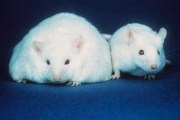
I am very excited to report that the American Physiological Society in partnership with The Physiological Society held a joint meeting from July 29-31 in Dublin, Ireland. The keynote lectures were given by Dr. Jerry Friedman from Rockefeller University and Dr. W Jon Lederer from the University of Maryland.   Dr. Friedman spoke about his research on obesity and how genetic factors might play a role. In fact, his team was […]

Continue Reading →

The trouble with lights

A new study published in Current Biology presents data showing that persistent exposure to artificial lights causes mice to age prematurely. Not only did exposure to bright light alter circadian rhythm, mice living in 24 hour light lost bone density and developed inflammation and weakness in their muscles. Humans are not immune to the effects of disrupted circadian rhythms. In fact, people who work the night shift are reportedly more likely […]

Continue Reading →

How the rectum helps prevent dehydration in saltwater

Teleost fish living in saltwater environments are constantly compensating for water loss. This happens because their surroundings have higher concentrations of salts than their plasma and the rule of thumb in Biology is: water follows salt.  Thus these fish must somehow compensate for water loss in order to prevent dehydration. One way they do this is by drinking a lot of water. Ions are then removed from the water in the intestines which […]

Continue Reading →

Male hamsters pack on the pounds while females stockpile food for winter

During hibernation common hamsters (Cricetus cricetus) alternate their time between bouts of torpor during which their metabolic rate drops and body temperature is low and arousal during which body temperature is normal. Hibernation allows animals to conserve energy although it is not without costs as it often results in memory deficits, cell damage and reduced immune function. Thus some studies have suggested that animals with sufficient food stores will not undergo hibernation […]

Continue Reading →

Muscle Aging in American Quarter horses

Skeletal muscle function and structure change as we age. Humans typically experience a loss of muscle mass or muscle weakness which can greatly reduce mobility and stability. While much is known about aging skeletal muscle in humans and rodents, less is known about horses, which are rather athletic animals that are living longer due to advancements in veterinary care and retirement programs. Researchers from the University of Florida decided to explore how aging effects skeletal […]

Continue Reading →

Secret to safer stem cell therapy or cure for cancer?

Researchers trying to find cures for cancer find naked mole rats rather interesting. Not only are these animals long-lived by rodent standards, they are also resistant to the development of cancer. By long-lived, we are talking up to 30 years! A team of researchers from Hokkaido University and Keio University in Japan have now isolated stem cells from the skin of naked mole rats and induced them to revert back to pluripotent stem […]

Continue Reading →

Keeping arteries healthy, lessons from seals?

Heart rate decreases during diving in seals and other animals. Thus the ascending aorta becomes very important during diving as it helps to maintain blood pressure during prolonged dives. A new study published in the American Journal of Physiology – Regulatory, Integrative and Comparative Physiology was designed to examine the ascending aorta of hooded seals (Cystophora cristata) and the tiny blood vessels that supply nutrients to it, called the vasa vasorum. The […]

Continue Reading →

Big-brained birds

Birds get such a bad rap when it comes to intelligence. Sure they have relatively small brains, but scientists have known they are similar to primates with respect to their cognitive abilities. New research published in the Proceedings of the National Academy of Sciences presents data showing how this apparent dichotomy is possible. They found that the brains of songbirds and parrots pack two times the number of neurons as a primate […]

Continue Reading →

Cartilaginous fish need to regulate sulfate too

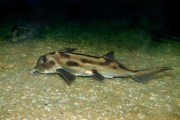
Seawater contains sulfate concentrations that are nearly 40 times those measured in plasma. Therefore, it is easy to see why fish would need to develop mechanisms to keep sulfate within a physiologically normal range. The kidneys of teleost fish have been known to excrete excess sulfate in the urine. However until now, it was not known whether the kidneys of cartilaginous fish do the same thing as their kidneys are rather complex. In a new […]

Continue Reading →

Recap of 2016 Michigan Physiological Society

The Michigan Physiological Society, a chapter of the American Physiological Society, held their 3rd annual meeting last week. As mentioned in a prior post, the keynote address was given by Comparative Physiologist Dr. Hannah Carey (University of Wisconsin School of Veterinary Medicine). You can read about her research in the prior post. Here are other highlights from the meeting: Seminars: or as I prefer to view them… Kelsy Kusch (Undergraduate Student, […]

Continue Reading →