Tag Archive for ‘physiology’

Meet the monkeyface prickleback (that is not a typo):
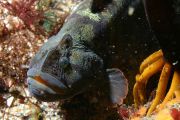
Someone must have seen a resemblance to monkeys when naming these animals. Adult monkeyface pricklebacks, Cebidichthys violaceus, weigh around 6 pounds and can grow up to 2.5 feet long. They can live up to about 18 years of age. Despite their appearance, they are not eels, although their eel-like shape allows them to hide in crevices. They are native to the California coast and their home range is only a […]


Continue Reading →

Meet the honey possum

Meet the honey possum (Tarsipes rostratus). These animals are small and rather unusual marsupials with few teeth and a specially adapted tongue to aid in the consumption of a diet consisting of only nectar and pollen. Because they feed primarily at night, rely on fresh flowers, and tend to stress easily, they are difficult to study. In fact, their adrenal gland, which produces the stress hormone cortisol, weighs about 1,600 […]

Continue Reading →

Cardioprotective adaptations to high altitude

While studies have shown that Tibetans protect their tissues from damage caused by low oxygen levels at high altitude, other studies have shown that people adapted to life in the Andes mountains have genetic variations that protect their hearts. In a recent study presented at the 2023 American Physiology Summit, scientists discovered that 68% of Andean highlanders carry a single nucleotide variation in the gene responsible for encoding the protein […]

Continue Reading →

Sniffing out pathogens

Rainbow trout are able to mount an immune response after simply smelling a virus or bacteria, even before they are infected. In a new study shared at the 2023 American Physiology Summit, researchers examined whether smell-induced activation of the immune response also triggers avoidance behaviors in the fish. By creating a maze that included a pathogen at one end, they discovered that the fish do in fact avoid the smell […]

Continue Reading →

Mechanisms behind hornworm self-defense discussed at the 2023 American Physiology Summit

Graduate student Christian Valtierra presented research conducted in Dr. Megumi Fuse’s lab (San Francisco State University) at the 2023 American Physiology Summit last month. The research was focused on examining the defensive strike response in Manduca sexta hornworms. Animals respond to potentially damaging stimuli with the help of sensory neurons, called nociceptors, that specialize in detecting these stimuli. In humans, activation of these receptors is what causes us to perceive […]

Continue Reading →

2023 August Krogh Distinguished Lecturer – Dr. Tobias Wang, Aarhus University

Congratulations to Dr. Tobias Wang (Aarhus University), recipient of the 2023 August Krogh Distinguished Lectureship at the American Physiology Summit. Dr. Wang’s lecture, titled Digesting snakes are a feast for integrative physiology”, was fascinating! This was such a well-deserved honor. In fact, not only did he give a lecture describing his research on the digestive physiology of snakes, but he also gave an invited talk about blood pressure regulation in […]

Continue Reading →

You Can Sweat, But the Seals Can’t!

Congratulations to this year’s Dr. Dolittle Travel Award winner, Emily Lam from the University of California, Berkeley! Emily presented her research at the inaugural American Physiology Summit conference this past weekend in Long Beach, California (Lam E, Mouly M, Congdon C, Henderson K, Vazquez-Medina J. Physiological and behavioral responses of northern elephant seals (Mirounga angustirostris) to global change among three northern California rookeries). Here is a guest blog describing her […]

Continue Reading →

Hydrogen sulfide – the gas we hate to smell, but can’t live without

Although hydrogen sulfide (H2S) is most often associated with manure and the smells of rotten eggs, research has shown it plays important physiological roles. In fact, our bodies actually produce H2S within our cells. Other source of H2S include sulfate-producing bacteria in our gut and dietary intake (such as garlic and cruciferous vegetables). H2S is a member of a group of gasotransmitters, referred to as the ‘reactive species interactome’, that […]

Continue Reading →

Now we know how life underground reduces metabolism

…at least for mole-rats. African mole-rats live in dark underground dwellings where oxygen and food are scarce, and humidity and temperatures are high. These animals have low metabolic rates and body temperatures uniquely adapted to their life underground. Metabolism is controlled in part by thyroid hormones. To understand the role of thyroid hormone in mole-rats, researchers examined the thyroid gland and hormones in naked mole-rats (Heterocephalus glaber) as well as […]

Continue Reading →

It’s getting cold outside…what’s a squirrel to do?

As the weather cools down, animals must find ways to stay warm. This is especially important for small animals as they lose body heat faster than larger animals. One way to stay warm is by increasing your metabolism to create body heat, although this process requires a lot of energy. That can be a problem in areas where food may be scarce in the winter. Although some animals, like the […]

Continue Reading →