Tag Archive for ‘regeneration’

Researchers discover starfish are even more strange than previously thought

If you asked a starfish (aka: sea star) to pick “heads or tails”, and they could understand what you were talking about, they would pick heads every time. In fact, researchers recently discovered that starfish are simply heads without a body: It gets better…starfish do not even have a brain or blood, and they eject their stomach out of their mouth to eat. Terrible table manners. Aside from these extreme […]

Continue Reading →

Scientists find clues to tissue regeneration and aging in Hydractinia

Most complex animals, like humans, lack the ability to regenerate. In contrast, some simpler life forms are able to regenerate tissues and sometimes their whole body, if necessary. In a new study published in Cell Reports, scientists discover clues to tissue and whole-body regeneration in cnidarian Hydractinia symbiolongicarpus. They discovered that aging cells send out signals that transform neighboring cells into stem cells. These stem cells are then able to […]

Continue Reading →

New study discovers how zebrafish mend a broken heart

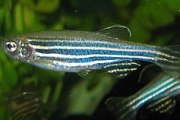
A new study has helped unravel the mystery explaining how zebrafish regenerate a broken heart. Their findings, published in Nature Genetics, reveal how these amazing little fish can regrow up to 20% of their heart in only 2 months following an injury. This regeneration is driven by signals released from special cells called fibroblasts. When the heart of zebrafish is injured by a stimulus that mimics a heart attack (using […]

Continue Reading →

Regenerating Lost Limbs

When most animals lose a limb, it is lost forever. However, several animals such as salamanders and lizards are known to regrow lost limbs. In a new study, researchers have been able to regenerate a lost limb in adult African clawed frogs, Xenopus laevis, which is a species that normally does not regrow lost limbs. Regeneration was achieved by applying a wearable silicon bioreactor cap called a BioDome containing a […]

Continue Reading →

And a Happy New….Kidney!

Spiny mice (Acomys cahirinus) are amazing animals. For starters, they are reportedly one of the only known species to date, in addition to primates, that menstruate (McKenna et al., 2021). They are also capable of regenerating skin tissue, complete with hair follicles and blood vessels without scarring, after an injury (Siefert et al., 2012). This is an important skill for animals that escape predators by shedding their skin. Add to […]

Continue Reading →

Metabolic costs of reproduction, eating, and increasing temperatures

Planarians are rather cute little flatworms, although they tend to wreak havoc in fish tanks. Researchers have long been fascinated by their ability to regenerate body parts when injured with the help of adult stem cells. More recently, they have gained attention for their ability to survive long periods of time without eating by “degrowing”, i.e. getting smaller but still keeping their shape and functions intact. I would shrink too […]

Continue Reading →

Final highlights from the 2019 Arizona Physiological Society conference

Here are some additional comparative physiology highlights from the 2019 Arizona Physiological Society poster session: Researchers at Arizona State University compared the physiology of Gambel’s quail (Callipepla gambelii) living in urbanized and less developed areas. They found that birds living in more urbanized areas were larger and had more circulating lipids than birds living in areas that were less developed. (A Funk, P Hutton, S Earl, P Deviche, and K Sweazea. […]

Continue Reading →

Regenerating limbs…and heads

Mandy M. Schofield, Christian A. Okafor, and Jack D. Shepard from Towson University presented an interesting poster at the 6th annual Greater Washington DC Area Physiological Society on how planarians are a useful “Model Organism for Investigation and Education.” Planarians are indeed very interesting little animals. They have remarkable abilities to regenerate as shown in this YouTube video: Aside from this impressive ability and its application to limb regeneration, planaria […]

Continue Reading →

Highlights from EB 2019

There were so many poster presentations on comparative and evolutionary physiology today at the 2019 Experimental Biology conference that it was impossible to see them all. Here are some highlights: Dr. Michael Hedrick from California State University – East Bay, presented his research on African cheetahs (Acinonyx jubatus) examining adaptations that cheetahs have evolved to supply their muscles with oxygen so efficiently, given they maintain the world record for being […]

Continue Reading →