Tag Archive for ‘science’

Primed for survival: How sea hares inspire new clues to protect the brain from low oxygen conditions such as stroke

Sea hares (Aplysia californica) live in coastal environments where oxygen levels can fluctuate unpredictably. Knowing this, researchers set out to explore how these animals tolerate regular exposure to hypoxia (low oxygen) with the hope of discovering clues that could teach us how to protect humans from hypoxia-related conditions, such as stroke. To do this, they compared offspring from two types of parents: those collected from the wild that likely experienced […]

Continue Reading →

Ocean oddity: how teleost fish stay hydrated in saltwater

It may sound strange to hear that saltwater fish need to stay hydrated. After all, they live in water. However, a review published in Physiology describes how nearly all saltwater fish are thought to have evolved from freshwater ancestors, and many maintain similar levels of salt in their blood as freshwater animals. Living in a saltwater environment means that these fish have to find a way to get rid of […]

Continue Reading →

Discovered by accident: Queen bumblebees can hibernate underwater!

Dr. Sabrina Rondeau, a postdoctoral fellow at the University of Ottawa, made a surprising discovery that has created quite the buzz. While checking on queen bumblebees hibernating in the refrigerator, she noticed that condensation had formed inside some of the containers housing the queen bumblebees. Interestingly, the bees survived the ordeal. Intrigued by how exposure to water might affect queen bees during hibernation, Dr. Rondeau conducted an experiment in Bombus […]

Continue Reading →

The electrophysiology of sudden cardiac death in high-performance athletes

Humans and racehorses have something in common when it comes to risk of sudden cardiac death. In fact, sudden cardiac death is the 2nd most common cause of death during exercise among these athletes. Although rare, it typically affects young, seemingly healthy individuals. Research suggests that exercise itself is not to blame, but rather an underlying predisposition for irregular heart rates that exercise uncovers. The most common inherited causes of […]

Continue Reading →

Some like it hot: Genetic twists in warm hibernation

Hibernation was also a hot…I mean warm…topic at the American Physiology Summit last month in Baltimore, MD. Thomas Crippen presented research conducted with team members Dr. Dylan Barth, Zac Carlson, Dr. Frank van Breukelen, and Dr. Allyson Hindle at the University of Nevada, Las Vegas. Their study focused on golden-mantled ground squirrels, Callospermophilus lateralis, which are remarkable even among hibernators. These squirrels can enter torpor across a range of environmental […]

Continue Reading →

No air? No problem: Nature’s ultimate survivalists

Hypoxia and anoxia tolerance was a hot topic at the 2025 American Physiology Summit last month. Here are the highlights: Hafsa Yaseen and Natalie Anne Heath presented their research from Dr. Joseph Santin’s laboratory at the University of Missouri exploring how adult bullfrogs (Aquarana catesbeianus) protect their brain function following hibernation, a period when oxygen and glucose levels are often very low. The team discovered that bullfrogs could adjust their […]

Continue Reading →

Understanding Giant Pandas’ Unique Bamboo Diet

Happy National Panda Day!! Today, we celebrate one of the most beloved animals around the world. Giant pandas, Ailuropoda melanoleuca, are native to China and are the only living member of the genus, Ailuropoda. Pandas are members of the carnivorous Ursidae bear family. However, they have evolved to eat a diet consisting of close to 99% bamboo. Their jaws, teeth, digestive system and even their paws with a “false thumb” […]

Continue Reading →

Buzz-off! Nature’s hornet, wasp, bee and predator control

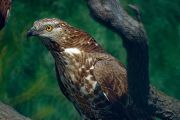
On this “Buzzards Day”, we celebrate the return of buzzards from winter migration and, although not native to the United States, we celebrate pest controlling honey buzzards as well. Turkey vultures, aka turkey buzzards, have a strange self-defense strategy. To ward off predators, they are capable of projectile vomiting their last meal up to 10 feet…gross…but effective. Do not startle these birds on their return flight from migration!! Check out […]

Continue Reading →

Happy ‘Love Your Pet Day’! Show your love by blinking

Do you ever find yourself intentionally blinking when you notice other people blinking? It’s as if we all have something stuck in our eyes at the same time. A new study published in Royal Society Open Science found that dogs appear to have the same reaction when seeing other dogs blink, which suggests that blinking may be a form of non-verbal canine communication. They also observed increased blinking in response […]

Continue Reading →